Northern Mockingbird: Profile, Habitat, Diet, Behaviour and Facts

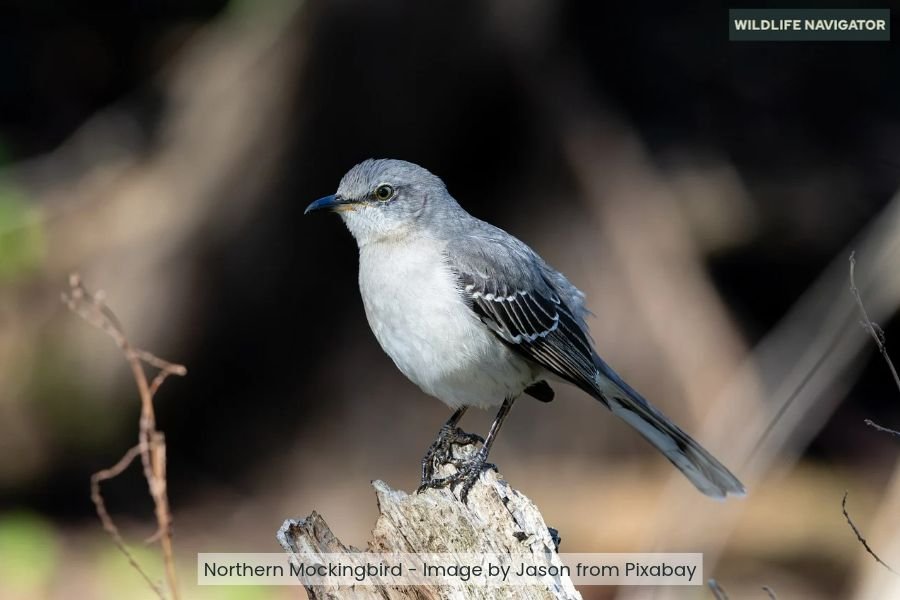
The Northern Mockingbird (Mimus polyglottos) is one of the most recognisable and vocal songbirds in North America, renowned for its remarkable ability to imitate the songs of other birds and a wide variety of environmental sounds. Its slender body, grey plumage, long tail and distinctive white wing patches make it relatively easy to identify, particularly when it flies between trees, shrubs and open spaces. Belonging to the family Mimidae, this adaptable bird inhabits a wide range of environments, including woodlands, grasslands, agricultural landscapes, parks, gardens and residential neighbourhoods.
Unlike many songbirds that rely on a relatively limited collection of vocalisations, the Northern Mockingbird possesses an extensive and continually developing song repertoire. It can reproduce the calls of numerous bird species, as well as sounds produced by insects, amphibians and human activities. Its singing is particularly noticeable during the breeding season, when males use complex vocal displays to establish territories and attract potential mates. Some individuals also sing during the night, making the species a familiar sound in many North American neighbourhoods.
The Northern Mockingbird is also recognised for its territorial behaviour, seasonal feeding habits and ability to adapt to human-modified environments. It feeds primarily on insects during warmer months and increasingly relies on berries and fruits during autumn and winter. Although it remains widespread and is currently classified as a species of Least Concern, population monitoring indicates that its numbers have experienced a gradual decline in recent decades.
Introduction to the Northern Mockingbird
The Northern Mockingbird is a medium-sized passerine bird native to North America and parts of the Caribbean. It belongs to the genus Mimus, which includes several mockingbird species recognised for their vocal abilities. Its scientific name, Mimus polyglottos, reflects its exceptional talent for mimicry. The word polyglottos refers to the ability to produce many different sounds or vocal expressions.
The species is especially associated with open and semi-open landscapes where scattered trees, shrubs and accessible ground provide suitable feeding and nesting opportunities. It is commonly observed in suburban gardens, parks, roadside vegetation, agricultural fields and woodland edges. Its adaptability has allowed it to coexist successfully with human settlements, making it one of the familiar birds of residential areas across much of the United States.
One of its most distinctive characteristics is its complex vocal behaviour. Northern Mockingbirds do not simply repeat a single call or imitate one particular species. Instead, individuals can develop extensive repertoires containing numerous distinct phrases, often repeating each phrase several times before moving to another sound. Their songs may include imitations of other birds, alongside their own characteristic vocal patterns.
Northern Mockingbirds are generally found alone or in pairs and are strongly territorial, particularly during the breeding season. They defend nesting and feeding areas against other mockingbirds and may aggressively chase away much larger animals when protecting their nests.
Scientific classification
| Classification | Details |
|---|---|
| Kingdom | Animalia |
| Phylum | Chordata |
| Class | Aves |
| Order | Passeriformes |
| Family | Mimidae |
| Genus | Mimus |
| Species | Mimus polyglottos |
| Common name | Northern Mockingbird |
The Northern Mockingbird is the official state bird of Arkansas, Florida, Mississippi, Tennessee and Texas, reflecting its cultural and ecological significance across the southern United States.
Physical Characteristics and Identification
The Northern Mockingbird has a slender, streamlined body, relatively long legs, a narrow bill and an elongated tail. Its overall appearance is understated compared with brightly coloured songbirds, but its distinctive proportions and contrasting wing markings make it relatively easy to recognise.
Size and body structure
Adult Northern Mockingbirds generally measure approximately 20–28 cm (8–11 inches) in body length, including their long tails. Their wingspan typically ranges from 31–38 cm (12–15 inches), while their body weight is usually around 40–58 grams.
The bird has a relatively lightweight body suited to frequent short flights, ground-based foraging and movement through shrubs and trees. Its long tail is an important identifying feature and is often held slightly raised when the bird walks or hops along the ground.
Its legs are relatively long and strong for its body size, allowing it to move efficiently across lawns, open ground and low vegetation. The wings are broad enough to support controlled flight and conspicuous aerial displays.
Plumage and colouration
The adult Northern Mockingbird has predominantly grey upperparts, including the head, back and wings. Its underparts are whitish to pale grey, creating a noticeable contrast with the darker upper body.
The wings are dark grey to nearly black, with two prominent white wingbars and large white patches that become especially visible during flight. These markings are among the most reliable identification features of the species.
Its long, dark tail has conspicuous white outer feathers. When the bird spreads its tail during flight or territorial displays, the white markings become particularly noticeable.
Beak, eyes and other identifying features
The Northern Mockingbird has a relatively short, narrow and slightly curved dark bill. Its eyes are generally yellowish to pale yellow, with a darker line extending through the eye area.
The combination of grey plumage, long tail, white wing patches and slender body distinguishes it from many other similarly coloured North American birds.
Male and female differences
Male and female Northern Mockingbirds look remarkably similar. Both sexes possess the same general grey-and-white plumage, long tails and distinctive wing markings.
Males are often slightly larger than females, although the difference is subtle and cannot always be determined reliably through visual observation alone.
Behaviour and vocal activity may provide additional clues. Males generally sing more frequently and are particularly active in territorial defence and courtship displays. Females also sing but usually less persistently.
Juvenile appearance
Young Northern Mockingbirds have a somewhat different appearance from adults. Juveniles typically display noticeable dark spots or streak-like markings across their breast and underparts, while their upperparts may have a slightly more mottled appearance.
As they mature and develop adult plumage, these markings gradually become less prominent. Their long tails and overall body shape already resemble those of adult birds.
Habitat and Geographical Distribution
The Northern Mockingbird occupies a broad geographical range across North America, extending from southern Canada through the United States into Mexico. It is also established across much of the Greater Antilles in the Caribbean.
Its distribution is closely associated with open landscapes containing a mixture of low vegetation, shrubs, trees and accessible ground. Unlike many forest-dependent birds, it does not require extensive woodland cover and can successfully inhabit highly modified environments.
Geographical distribution
The Northern Mockingbird is widely distributed throughout the continental United States and occurs across much of Mexico. Its breeding range extends northward into southern Canada, particularly southern Ontario, Quebec, Manitoba and the Maritime provinces.
It is also found throughout the Greater Antilles, including islands such as Cuba, Jamaica, Hispaniola and Puerto Rico.
The species has been introduced and established in some additional locations, including Hawaii and Bermuda. Its presence in these areas is associated with human-mediated introductions rather than its original continental distribution.
Northern Mockingbirds living in warmer parts of their range are generally year-round residents. However, populations occupying colder northern regions or higher elevations may move southward during winter. Migration patterns vary according to local climate, food availability and geographical location.
Preferred habitats
Northern Mockingbirds use several habitat types, provided that suitable vegetation and feeding areas are available.
- Woodland edges: Areas along forest boundaries provide shrubs, trees, nesting locations and access to open feeding grounds.
- Shrublands: Dense shrubs and thickets offer shelter, nesting opportunities and protection from predators.
- Grasslands and agricultural landscapes: Open ground supports ground-based feeding, while hedgerows and scattered trees provide perching sites.
- Desert environments: In parts of the southwestern United States and Mexico, the species occupies desert scrub and other relatively dry habitats.
- Urban and suburban areas: Parks, gardens, cemeteries, residential neighbourhoods and roadside vegetation provide suitable conditions for feeding and reproduction.
Habitat adaptation
The ability to use human-modified landscapes is an important reason for the Northern Mockingbird’s widespread presence. Residential gardens often provide fruit-bearing trees, ornamental shrubs, lawns and hedges that support its feeding and nesting activities.
It frequently uses elevated perches such as fences, rooftops, utility lines and exposed tree branches to observe its surroundings. From these locations, it can identify potential prey, monitor territorial boundaries and produce its characteristic songs.
However, successful urban adaptation does not mean the species is unaffected by environmental changes. The removal of vegetation, extensive pesticide use, loss of native plants and disturbance around nesting sites can reduce the quality of otherwise suitable habitats.
Diet and Feeding Habits
The Northern Mockingbird is an omnivorous bird with a diet consisting mainly of insects, other small invertebrates, berries and fruits. Its feeding habits change throughout the year according to seasonal food availability. During spring and summer, insects provide a major source of protein, particularly when adults are breeding and raising their young. During autumn and winter, fruits and berries become increasingly important.
This flexible feeding strategy allows the species to survive in different habitats and maintain access to food throughout changing environmental conditions.
Primary food sources
Insects and other invertebrates form a substantial part of the Northern Mockingbird’s diet, particularly during warmer months. Common food items include beetles, grasshoppers, caterpillars, ants, bees, wasps, moths, butterflies, spiders and earthworms.
It may also consume smaller invertebrates such as snails and sowbugs. Occasionally, individuals take small vertebrates, including tiny lizards.
Plant-based foods become particularly important when insect populations decline. Northern Mockingbirds consume a variety of berries and fruits, including mulberries, blackberries, hawthorn fruits and other wild or cultivated fruits.
They may also feed on ornamental fruits in residential gardens, demonstrating their ability to exploit food sources associated with human settlements.
Seasonal dietary changes
The bird’s diet changes noticeably between seasons.
During spring and summer, insects are particularly abundant and provide the nutrients needed for reproduction, egg production and chick development. Adult birds also collect insects to feed their nestlings because animal-based food provides essential protein for rapid growth.
During autumn and winter, the availability of insects decreases in many parts of its range. Northern Mockingbirds consequently increase their consumption of berries and fruits, which provide carbohydrates and energy during colder periods.
In warmer regions, where insects remain available for longer periods, the seasonal transition may be less pronounced.
Foraging techniques
Northern Mockingbirds use several techniques to locate and capture food.
One of their most familiar feeding behaviours involves walking, running and hopping across lawns while searching for insects on the ground. They may pause frequently to inspect the grass and surrounding vegetation before making a quick movement to capture prey.
They also hunt from low branches, fences and other elevated perches. After spotting an insect, the bird may fly down to the ground, capture it and return to a nearby perch.
When feeding on fruits, it usually searches among branches and shrubs, picking individual berries directly from vegetation. It can also briefly hover to reach fruit hanging from branches.
Feeding behaviour and food selection
Northern Mockingbirds generally forage individually or within their defended territories. They may become particularly aggressive when other birds approach productive feeding locations.
Unlike many seed-eating backyard birds, they do not depend heavily on conventional bird feeders. However, they may occasionally visit feeding stations that provide fruit or suitable supplementary foods.
Their preference for insects during the breeding season and fruit during colder months makes them adaptable consumers within a variety of terrestrial ecosystems.
Behaviour and Daily Activities
The Northern Mockingbird is an active, highly vocal and strongly territorial songbird. Its behaviour is characterised by complex vocal communication, persistent territorial defence, ground-based foraging and frequent movement between exposed perches and vegetation.
Although it is often observed alone or in pairs, its behaviour becomes particularly noticeable during the breeding season, when males sing frequently and defend nesting territories against potential intruders.
Vocalisation and remarkable mimicry
Vocal mimicry is the most distinctive behavioural characteristic of the Northern Mockingbird. It is capable of learning and reproducing the songs and calls of numerous other bird species, sometimes incorporating sounds from insects, amphibians and the surrounding human environment.
Its scientific name, Mimus polyglottos, appropriately reflects this remarkable ability to imitate different sounds.
A male Northern Mockingbird may develop a repertoire containing hundreds of different song types throughout its lifetime. It often repeats an individual phrase several times before switching to another sound, creating a long and varied sequence of vocalisations.
Its repertoire can include imitations of:
- Other songbirds and their characteristic calls.
- Insects and amphibians.
- Environmental sounds from surrounding habitats.
- Certain mechanical and human-made noises, including alarms and other artificial sounds.
However, not every sound is necessarily a perfect imitation. Northern Mockingbirds combine learned vocal elements with their own characteristic phrases and variations.
Both males and females sing, although males generally produce songs more frequently and persistently. Females may sing more quietly, particularly outside the main breeding period.
Singing behaviour and communication
Singing serves several important functions in the life of a Northern Mockingbird. Males use vocal displays to establish territories, communicate their presence and attract potential mates.
Their songs are particularly frequent during spring and summer, when breeding activity is high. Singing may also continue during autumn as individuals maintain or establish territories.
One particularly interesting characteristic is nocturnal singing. Unmated males are especially likely to sing during the night, sometimes producing extended vocal sequences when other birds are relatively quiet. Nighttime singing has also been associated with brighter moonlight.
The song is therefore not simply a form of communication between nearby individuals. It is also an important part of territorial and reproductive behaviour.
Territorial behaviour
Northern Mockingbirds are strongly territorial throughout much of the year, with territorial defence becoming especially important during breeding.
Males typically defend areas containing potential nesting sites, feeding locations and suitable perches. They may confront other male mockingbirds that attempt to enter their territories.
Territorial disputes can involve chasing, repeated flights towards intruders, aggressive posturing and physical contact. When two birds encounter each other near a territorial boundary, they may face one another and move from side to side before one eventually retreats.
Females also defend territories, particularly against other females.
Their aggressive behaviour is not restricted to members of their own species. Northern Mockingbirds may chase other birds, domestic cats, dogs and even people when they perceive a threat near their nests.
Wing-flashing displays
Another distinctive behaviour is the wing-flashing display, in which the bird partially or completely spreads its wings to expose the large white patches.
This display is frequently observed while the bird moves along the ground or changes position on a perch.
The exact function of wing flashing is not fully understood. One proposed explanation is that the sudden exposure of white markings startles insects, making them easier to detect and capture. It may also have a role in visual communication or territorial displays.
Despite these possible explanations, the behaviour remains an interesting feature of the species.
Daily activity and movement
Northern Mockingbirds are primarily active during daylight hours. They spend much of the day searching for food, singing, observing their surroundings and maintaining their territories.
They frequently perch on exposed branches, fences, rooftops and utility lines, where they can monitor nearby activity. When feeding, they move between elevated perches and open ground.
They generally remain alone or in pairs rather than forming large feeding flocks. Their movement patterns vary according to food availability, weather and seasonal changes.
Reproduction and Breeding Cycle
Northern Mockingbirds reproduce primarily during spring and summer, although the exact breeding period varies according to geographical location and local environmental conditions. In warmer southern regions, nesting activity may begin earlier and continue for a longer period than in colder northern areas.
The species is generally monogamous during a breeding attempt, and established pairs may maintain their association across successive breeding seasons. Both parents contribute to raising the young, although their responsibilities differ during nest construction and incubation.
Breeding season and courtship
The breeding season usually begins during late winter or early spring in the southern parts of the species’ range and continues through the warmer months.
Male Northern Mockingbirds establish territories before or during courtship. Their extensive songs help advertise their presence and attract potential mates.
Courtship may involve chasing displays, aerial movements, wing movements and vocal performances. Males may also show potential nesting locations to females.
A male sometimes begins constructing several nests within his territory. The female may inspect these locations before selecting a suitable site for the breeding attempt.
Nest construction and placement
Northern Mockingbirds generally construct their nests in shrubs, small trees, dense vegetation and occasionally climbing plants. Nest locations are usually around 1–3 metres (3–10 feet) above the ground, although they may occur considerably higher.
The nest is a relatively bulky, open cup constructed primarily from small twigs. The inner lining consists of finer materials such as grasses, rootlets, leaves and other plant fibres.
Interestingly, human-made materials may also become incorporated into the nest. Small pieces of paper, plastic, aluminium foil and other available materials have occasionally been recorded.
The male usually constructs much of the outer twig foundation, while the female contributes significantly to the finer lining and preparation of the nest interior.
Northern Mockingbirds generally construct a new nest for each breeding attempt rather than repeatedly reusing an old one.
Eggs and incubation
A typical clutch contains approximately 2–6 eggs, although three or four eggs are common.
The eggs are generally pale blue, greenish-white or bluish-green, with reddish-brown or darker markings. Their appearance may vary between individual females and nesting attempts.
The female performs most of the incubation, which usually lasts approximately 12–13 days.
During this period, the male remains active around the nesting territory and may help defend the site against predators and other intruders.
Nestlings and parental care
Northern Mockingbird chicks hatch in an underdeveloped condition. They are initially naked or sparsely covered with down, with their eyes closed and limited ability to move independently.
Both parents participate in feeding the nestlings. They bring insects and other small invertebrates to the nest, providing the nutrients required for rapid development.
The nestling period generally lasts around 12–13 days. After this period, young birds leave the nest, although they are not immediately capable of sustained, independent flight.
Recently fledged birds often remain close to their parents, depending on them for food and protection while gradually developing their flying and foraging abilities.
Number of broods and parental responsibilities
Northern Mockingbirds may produce two or three broods in a breeding season, with the possibility of additional nesting attempts under favourable conditions.
An interesting feature of their reproductive behaviour is that the male may continue feeding fledglings from an earlier brood while the female begins another nesting attempt.
This overlapping parental activity allows the pair to make use of a relatively long breeding season.
The availability of insects, suitable nesting vegetation, weather conditions and the success of earlier nesting attempts all influence reproductive success.
Predators, Threats and Natural Survival
The Northern Mockingbird is an adaptable species, but its eggs, nestlings and adults remain vulnerable to several natural predators and environmental threats.
Its territorial behaviour, awareness of its surroundings and ability to use dense vegetation provide important survival advantages. However, these defensive characteristics cannot eliminate the risks associated with predation, habitat degradation and human activities.
Natural predators
Northern Mockingbirds face predation from several groups of animals.
Common predators and potential nest predators include:
- Birds of prey: Hawks and other raptors may capture adult birds, particularly when they are exposed while feeding or defending territories.
- Snakes: Some climbing snakes locate and consume eggs and nestlings.
- Mammals: Raccoons and other small to medium-sized mammals may raid nests.
- Domestic cats: Free-roaming cats can capture adult mockingbirds and recently fledged juveniles.
- Other nest predators: Various animals may exploit accessible nests, particularly when they are located close to the ground.
Eggs and nestlings are especially vulnerable because they cannot escape independently.
Habitat loss and fragmentation
Habitat destruction is an important environmental pressure affecting wildlife across North America.
Although Northern Mockingbirds can use suburban and urban environments, the removal of shrubs, hedgerows and trees may reduce suitable nesting locations and natural food sources. The fragmentation of natural habitats can also increase exposure to predators and human disturbance.
Pesticides and food availability
Northern Mockingbirds rely heavily on insects during the breeding season. Consequently, extensive pesticide application may reduce the availability of their natural prey.
Chemical exposure can also create additional risks for birds through contaminated food sources. The decline of insect populations in some landscapes may affect the availability of food for adult birds and developing nestlings.
Collisions and human-related threats
Urban environments introduce several additional hazards. Collisions with windows can injure or kill birds, particularly where reflective glass creates the appearance of open vegetation or sky.
Road traffic is another potential source of mortality, especially when birds forage near roadsides. Domestic cats represent an additional threat to birds in residential neighbourhoods, including recently fledged individuals that may spend considerable time close to the ground.
Natural defence mechanisms
Northern Mockingbirds use several behavioural strategies to reduce predation risks. Their strong territorial instincts allow them to respond quickly to potential threats near nesting sites. Adults may produce alarm calls, approach intruders aggressively and chase predators away.
They are also known for mobbing behaviour, in which one or more birds confront a perceived threat through repeated approaches, vocalisations and aggressive movements. Their choice of nesting sites in dense shrubs and vegetation can provide additional protection by making nests less accessible and less visible.
Ecological Importance and Role in the Environment
The Northern Mockingbird contributes to the functioning of terrestrial ecosystems through its feeding activities, interactions with vegetation and participation in local food webs.
Its omnivorous diet allows it to perform several ecological functions, particularly insect consumption and the dispersal of seeds from fruit-bearing plants.
Role in insect population regulation
Insects and other small invertebrates are important components of the Northern Mockingbird’s diet. By consuming beetles, grasshoppers, caterpillars, ants and other invertebrates, it contributes to the natural regulation of insect populations.
Its feeding activity is particularly important during spring and summer, when insects are abundant and birds require additional protein to support breeding and chick development. Although it is not a specialist insect predator, its broad feeding habits allow it to exploit different prey species according to availability.
Seed dispersal and plant regeneration
The consumption of fruits and berries gives the Northern Mockingbird an important role in seed dispersal. When it eats fruits, some seeds pass through its digestive system and are later deposited in droppings at different locations.
This process can help transport seeds away from parent plants and contribute to the establishment of vegetation in suitable environments. The effectiveness of seed dispersal depends on the plant species, seed characteristics and the locations where seeds are deposited.
Contribution to biodiversity
Northern Mockingbirds form part of the wider food webs of North American ecosystems. They consume insects and fruits, while also serving as potential prey for larger predators. Their nesting activities provide additional ecological interactions with other organisms that use shrubs and trees.
Their ability to occupy both natural and human-modified landscapes also makes them a familiar component of urban biodiversity.
Relationship with humans
Northern Mockingbirds are frequently encountered in gardens, parks and residential neighbourhoods.
Their ability to imitate other birds makes them particularly interesting to birdwatchers and wildlife enthusiasts. Their songs often provide an early indication of their presence, even when the birds themselves are difficult to locate.
However, their territorial behaviour can sometimes create conflicts with people. During the breeding season, individuals may aggressively approach pedestrians, pets or other animals that come too close to their nests.
Despite these occasional interactions, they generally coexist successfully with human settlements.
Maintaining fruit-bearing trees, native shrubs, and insect-friendly garden spaces can help provide suitable feeding and nesting opportunities.
Conservation Status and Population
The Northern Mockingbird is currently classified as Least Concern (LC) on the International Union for Conservation of Nature (IUCN) Red List. Its extensive geographical distribution and large global population mean that it is not presently considered globally threatened.
However, its widespread presence should not be interpreted as evidence that its population is increasing everywhere. Long-term monitoring has identified declines in abundance across parts of its North American range.
IUCN conservation status
The Northern Mockingbird is assessed as a species of Least Concern. This classification reflects its large geographical range and substantial population. Nevertheless, conservation assessments and population monitoring are important for identifying changes that may affect the species over time.
Population and distribution trends
The species remains common throughout much of the United States, Mexico and the Caribbean. According to Partners in Flight estimates reported by the Cornell Lab of Ornithology and the American Bird Conservancy, the global breeding population is approximately 43 million individuals.
However, Cornell’s summary of North American Breeding Bird Survey data indicates that the population declined by approximately 30% between 1966 and 2019.
This demonstrates why conservation status and population trends should be considered separately. A species can remain widespread and abundant while still experiencing measurable long-term declines.
Historical conservation challenges
During the nineteenth and early twentieth centuries, Northern Mockingbirds were heavily captured for the commercial cage-bird trade. Their remarkable singing ability made them desirable as captive songbirds, resulting in substantial pressure on wild populations in some regions.
Birds were captured from the wild, while nestlings were also removed from nests for sale. The practice contributed to local declines, particularly along parts of the eastern United States. After restrictions on the capture and trade of wild birds were introduced, populations recovered in many areas.
Current conservation challenges
Although the species is not currently considered globally threatened, several environmental pressures may affect local populations.
These include:
- Loss and fragmentation of suitable nesting habitats.
- Reduction in natural insect food sources.
- Pesticide exposure.
- Collisions with buildings and vehicles.
- Predation by free-roaming domestic cats.
- Disturbance around nesting areas.
- Environmental changes affecting breeding and food availability.
Conservation measures
Protecting suitable vegetation in both natural and developed landscapes is important for maintaining healthy populations.
Planting native shrubs and fruit-bearing trees can provide food and nesting opportunities. Reducing unnecessary pesticide use can help maintain insect populations, while bird-friendly window treatments can reduce collision risks.
Keeping domestic cats indoors or under controlled supervision can also reduce pressure on local bird populations. Continued population monitoring, habitat protection and responsible urban planning will help maintain suitable conditions for Northern Mockingbirds and other native songbirds.
Interesting Facts About the Northern Mockingbird
The Northern Mockingbird is particularly interesting because of its vocal intelligence, territorial behaviour and adaptability. Beyond its familiar appearance, several characteristics make it one of the most remarkable songbirds in North America.
- It can imitate hundreds of different sounds: Northern Mockingbirds are exceptional vocal mimics and can learn numerous songs and calls from other birds, along with sounds from their surrounding environment.
- Its scientific name reflects its vocal abilities: The name Mimus polyglottos refers to its remarkable ability to reproduce many different sounds.
- It continues learning songs throughout its life: Rather than developing a completely fixed repertoire at a young age, individuals can continue adding new sounds as they mature.
- Males sometimes sing throughout the night: Unmated males are particularly known for nocturnal singing, especially during the breeding season and periods of bright moonlight.
- Females can sing too: Although males are generally more persistent singers, females also produce songs and other vocalisations.
- It aggressively protects its territory: Northern Mockingbirds may chase away other birds, cats, dogs and even people that approach their nests.
- Its white wing patches are especially noticeable during flight: These contrasting markings become highly visible when the bird spreads its wings.
- It changes its diet with the seasons: Insects are particularly important during spring and summer, while berries and fruits become more prominent during autumn and winter.
- It is the official state bird of five US states: Arkansas, Florida, Mississippi, Tennessee and Texas have all adopted the Northern Mockingbird as their state bird.
- It was once heavily captured for the cage-bird trade: Its exceptional singing ability made it a popular captive bird during the nineteenth century, contributing to historical population declines.
- It can produce multiple broods in one breeding season: Under favourable conditions, a pair may raise two or three broods, with nesting attempts sometimes overlapping.
- It is highly adaptable to residential environments: Gardens, parks, hedgerows and suburban landscapes can provide many of the resources it needs to survive and reproduce.
- It has a surprisingly long recorded lifespan: One banded Northern Mockingbird was documented living at least 14 years and 10 months, demonstrating that individuals can survive considerably longer than many people might expect.
Frequently Asked Questions About the Northern Mockingbird
References and Sources
- Cornell Lab of Ornithology – Northern Mockingbird – Identification, vocalisations, behaviour and general species information.
- Cornell Lab of Ornithology – Northern Mockingbird Life History – Habitat, diet, nesting, reproduction and population trends.
- American Bird Conservancy – Northern Mockingbird – Distribution, conservation status, population and ecological information.
- Audubon – Northern Mockingbird – Physical characteristics, feeding habits, breeding and conservation.
- Texas Breeding Bird Atlas – Northern Mockingbird – Distribution and breeding information.
- Environment and Climate Change Canada – Northern Mockingbird – Canadian population and conservation information.
Curating and documenting wildlife and protected areas through detailed guides and the continuously updated WN Index.
- Rosan Prasad
- Rosan Prasad
- Rosan Prasad
- Rosan Prasad