Tallest Animal in the World: Top 10 Giants

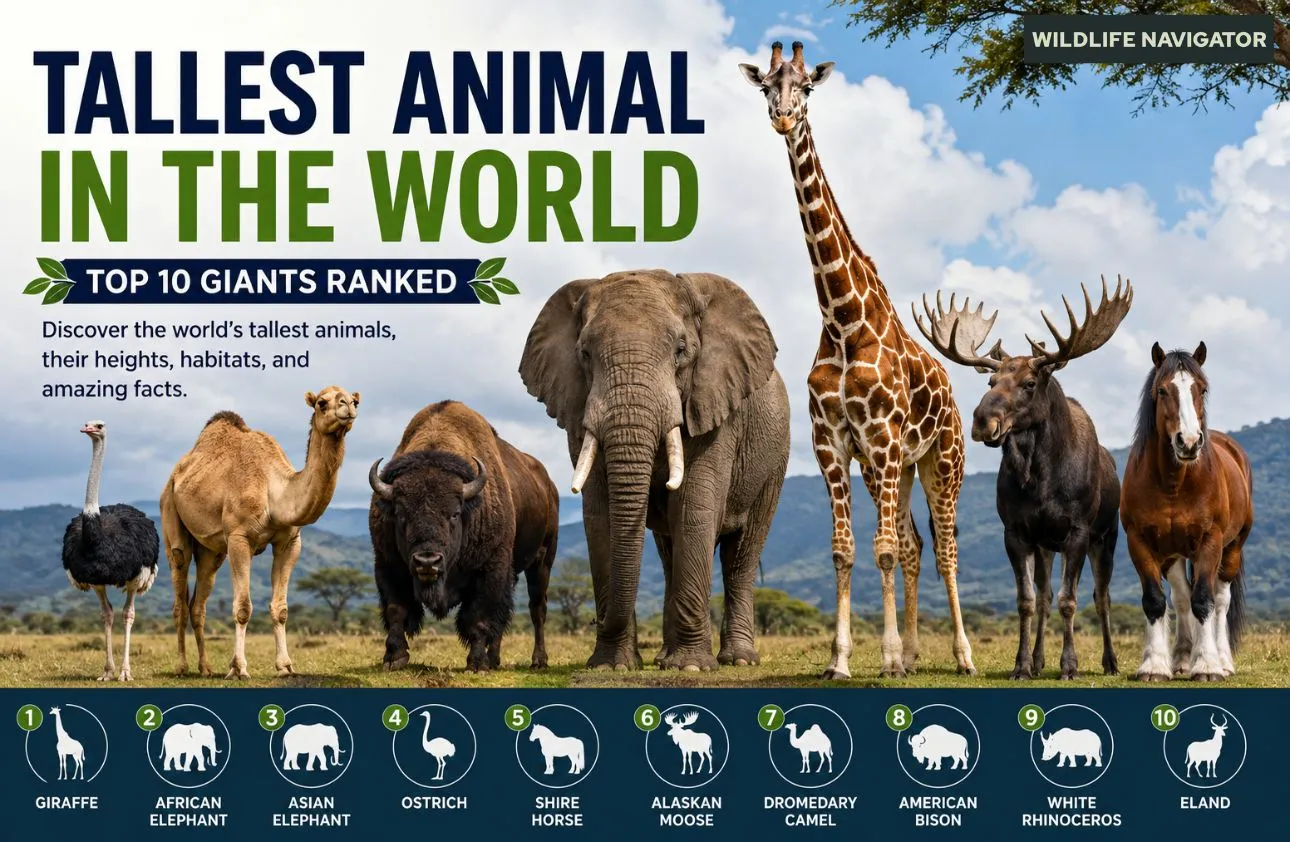
When it comes to towering wildlife, one species stands head and shoulders above the rest. The giraffe is the tallest animal in the world, reaching an astonishing height of up to 19 feet (5.9 meters). With its incredibly long neck and legs, this African giant has evolved to browse treetops that few other animals can reach, earning its place as nature’s ultimate skyscraper.
But giraffes aren’t the only giants roaming the planet. From massive elephants and towering ostriches to giant moose and powerful bison, several animals have evolved impressive heights that help them find food, spot predators, travel efficiently, and survive in challenging environments. Each of these species showcases a unique adaptation that has allowed it to become one of the tallest creatures on Earth.
In this guide, we’ll explore the top 10 tallest animals in the world, ranked by their maximum natural height. You’ll discover how tall these remarkable animals can grow, where they live, fascinating facts about their biology, and the evolutionary advantages that helped them become some of the most impressive giants in the animal kingdom.
Giraffe – The Tallest Animal in the World
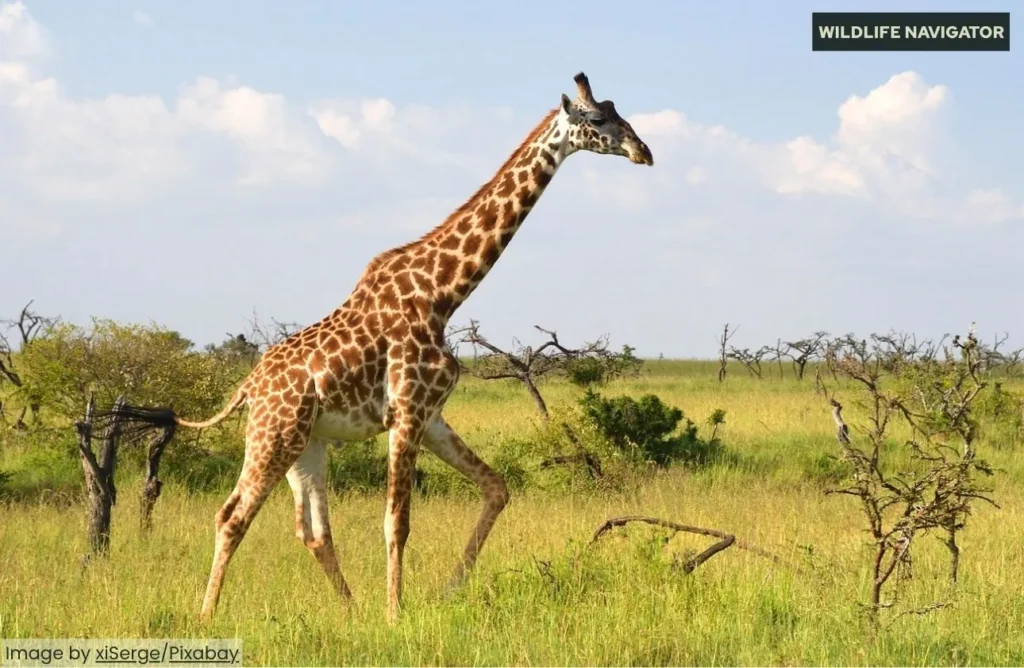
- Scientific Name: Giraffa camelopardalis
- Maximum Height: Up to 19.3 feet (5.9 meters)
- Habitat: Savannas, grasslands, and open woodlands across sub-Saharan Africa.
The giraffe is nature’s tallest masterpiece. No other living land animal comes close to matching its incredible height. A fully grown male giraffe can stand taller than a two-story building Up to 19.3 feet (5.9 meters), while females typically reach heights of 14 to 17 feet.
Much of this height comes from the giraffe’s neck, which alone can measure over six feet long. Interestingly, despite having one of the longest necks in the animal kingdom, giraffes possess only seven neck vertebrae—the same number as humans.
Their towering stature offers significant survival advantages. Giraffes can feed on leaves high in acacia trees, reducing competition with other herbivores. Height also allows them to spot predators such as lions from far away.
Fascinating Facts About Giraffes
- The tongue can grow up to 20 inches (50 cm) long.
- Their heart weighs around 24 pounds (11 kg).
- Giraffes can run at speeds of up to 37 mph (60 km/h).
- Each giraffe has a unique coat pattern, similar to a human fingerprint.
- Newborn calves are already about 6 feet tall.
Conservation Status
Although giraffes remain widespread in parts of Africa, several populations have experienced significant declines due to habitat loss, human encroachment, and illegal hunting.
African Bush Elephant – The Largest Land Animal
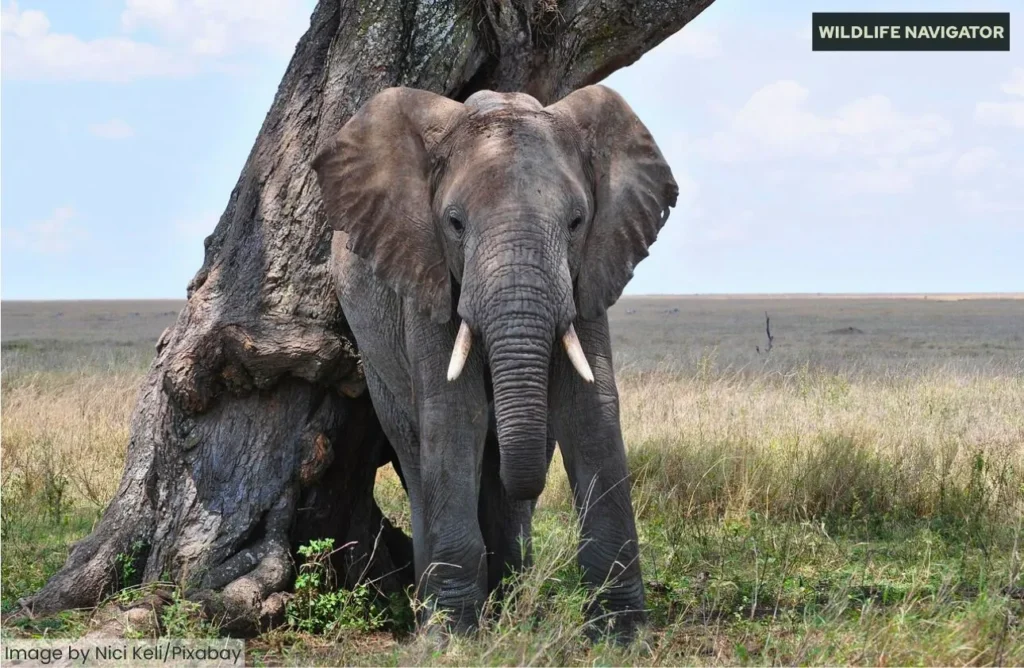
- Scientific Name: Loxodonta africana
- Maximum Height: Up to 13 feet (4 meters) at the shoulder
- Habitat: Savannas, forests, and grasslands throughout Africa.
The African bush elephant is the second-tallest animal in the world and the largest land animal by weight. Adult males can exceed 13 feet at the shoulder and weigh more than 10 tons.
Unlike giraffes, elephants evolved massive bodies rather than elongated necks. Their powerful trunks serve as versatile tools for feeding, drinking, communication, and even social bonding.
An elephant’s size provides natural protection against predators. Adult elephants have few natural enemies, though calves may occasionally be targeted by lions or hyenas.
Fascinating Facts About African Elephants
- Their trunks contain over 40,000 muscles.
- They can consume more than 300 pounds of vegetation daily.
- Elephants are highly intelligent and display complex social behaviour.
- They communicate through low-frequency sounds that can travel long distances.
Why Their Height Matters
Height enables elephants to access vegetation unavailable to smaller animals and helps support their enormous body mass.
Asian Elephant – Asia’s Giant Herbivore
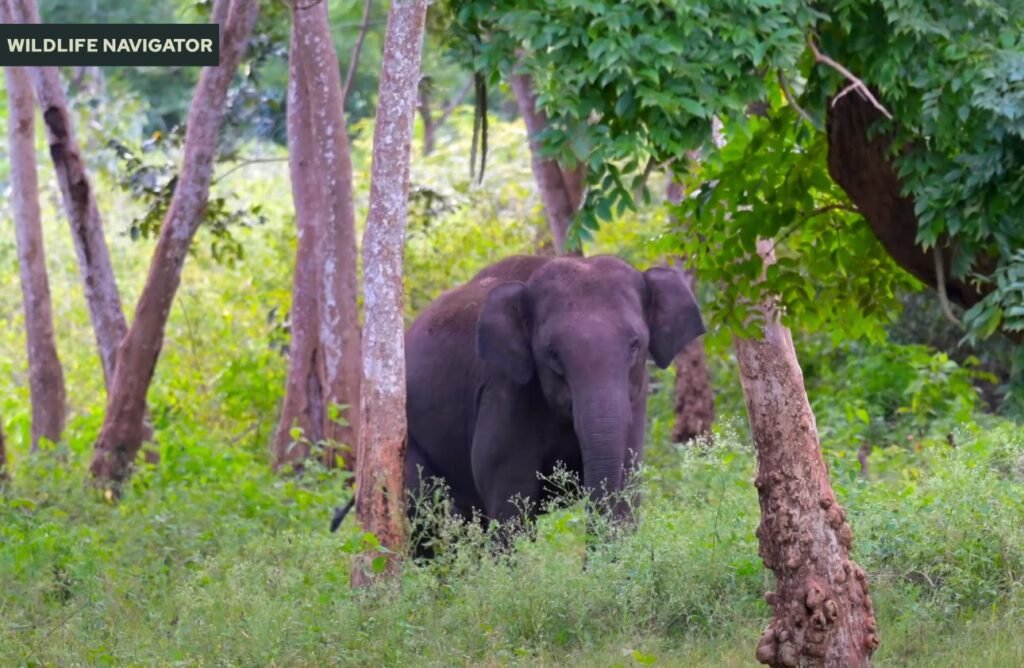
- Scientific Name: Elephas maximus
- Maximum Height: Up to 12 feet (3.7 meters)
- Habitat: India, Sri Lanka, Nepal, Bhutan, Myanmar, Thailand, and Southeast Asia.
The Asian elephant is slightly smaller than its African relative but remains one of the tallest mammals on Earth. These gentle giants play a crucial role in maintaining forest ecosystems by dispersing seeds and creating pathways through dense vegetation.
Asian elephants are deeply intertwined with the cultures and histories of many countries across Asia. They have been featured in religious ceremonies, festivals, and royal traditions for centuries.
Fascinating Facts
- Asian elephants have smaller ears than African elephants.
- Only some males develop large tusks.
- They are excellent swimmers and often cross rivers with ease.
- Their trunks can perform delicate tasks such as picking up a single blade of grass.
Conservation Challenges
Habitat fragmentation and human-elephant conflict remain among the greatest threats facing this species.
Ostrich – The Tallest Bird in the World
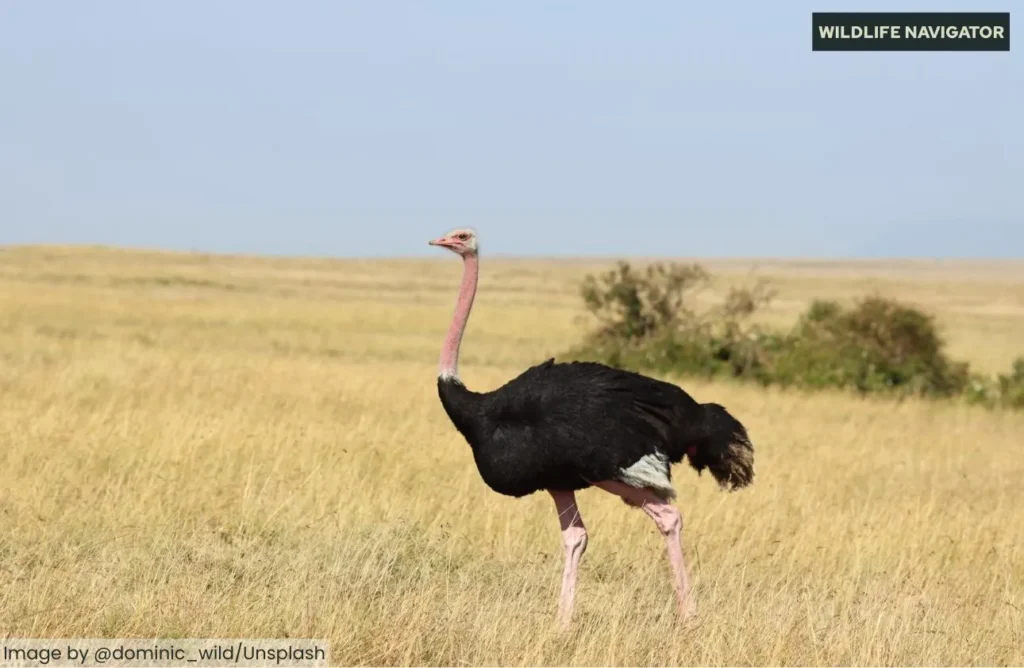
- Scientific Name: Struthio camelus
- Maximum Height: Up to 9.5 feet (2.9 meters)
- Habitat: African savannas, deserts, and open grasslands.
The ostrich holds the title of the tallest and heaviest bird on Earth. Although it cannot fly, it compensates with extraordinary speed and powerful legs.
Adult ostriches can reach heights of nearly 10 feet, making them taller than many professional basketball players. Their long necks provide excellent visibility across open landscapes, helping them detect predators from considerable distances.
Incredible Ostrich Facts
- Can run at speeds exceeding 43 mph (70 km/h).
- Possess the largest eyes of any land vertebrate.
- Lay the largest eggs of any living bird.
- Can cover up to 16 feet in a single stride.
Survival Advantages
Their height and speed make ostriches exceptionally difficult prey. Instead of flying away from danger, they simply outrun it.
Shire Horse – The Tallest Horse Breed
- Scientific Name: Equus ferus caballus
- Maximum Height: Up to 8 feet (2.4 meters)
- Origin: England
The Shire horse is widely regarded as the tallest horse breed in the world. Developed in England for agricultural work and heavy hauling, these horses combine immense strength with a remarkably calm temperament.
Historically, Shire horses were used to pull wagons, plows, and even medieval war equipment. Today, they are admired for their impressive size and gentle nature.
Interesting Facts
- Some Shire horses exceed 2.1 meters at the withers.
- They can weigh over 2,000 pounds (900 kg).
- Despite their size, they are known for being friendly and easy to handle.
- Their feathered lower legs are one of the breed’s most distinctive features.
Why They Became So Large
Selective breeding favored animals capable of pulling extremely heavy loads, resulting in one of the tallest horse breeds ever developed.
Alaskan Moose – The Giant of the Deer Family
- Scientific Name: Alces alces gigas
- Maximum Height: Up to 7.5 feet (2.3 meters) at the shoulder
- Habitat: Alaska and northwestern Canada.
The Alaskan moose is the largest member of the deer family and one of the tallest mammals in North America. Adult bulls tower over most other deer species and can weigh more than 1,500 pounds.
Their long legs allow them to move through deep snow, wetlands, and dense forests with remarkable ease.
Fascinating Moose Facts
- Antlers can span over 6 feet across.
- They are excellent swimmers.
- Moose can dive underwater to feed on aquatic plants.
- Adult males shed and regrow their antlers annually.
Adaptations for Survival
Their enormous size helps them withstand cold northern climates while providing protection from predators such as wolves.
Dromedary Camel – The Desert Giant
- Scientific Name: Camelus dromedarius
- Maximum Height: Up to 7.5 feet (2.3 meters)
- Habitat: Deserts and arid regions of North Africa, the Middle East, and parts of Asia.
Known for its single hump and remarkable endurance, the dromedary camel is one of the tallest animals adapted to life in some of the harshest environments on Earth. While many people focus on the hump, the camel’s long legs contribute significantly to its impressive height.
These long legs help elevate the animal’s body away from the scorching desert ground, reducing heat absorption and improving cooling efficiency. Combined with broad feet that prevent sinking into sand, camels are perfectly designed for desert survival.
Fascinating Facts About Dromedary Camels
- Can survive for days without drinking water.
- The hump stores fat, not water.
- Can close their nostrils during sandstorms.
- Possess thick eyelashes that protect their eyes from blowing sand.
- Can carry heavy loads over long distances.
Why Height Matters
A taller body position helps reduce exposure to ground heat while allowing camels to travel efficiently across vast desert landscapes.
American Bison – North America’s Largest Land Mammal
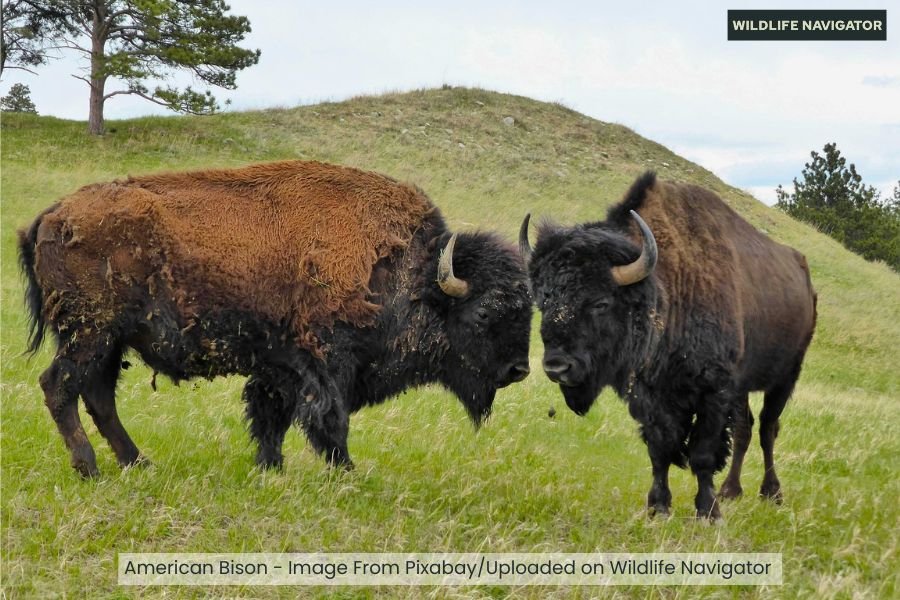
- Scientific Name: Bison bison
- Maximum Height: Up to 6.6 feet (2 meters) at the shoulder
- Habitat: Grasslands, prairies, and protected reserves across North America.
The American bison is one of the most iconic animals of North America. Although not as tall as giraffes or elephants, its massive shoulder hump and powerful build make it one of the most imposing animals on the continent.
Male bison can weigh over 2,000 pounds and are surprisingly agile despite their size. They can run at speeds approaching 35 mph and jump obstacles with ease.
Interesting Facts
- Largest land mammal in North America.
- Can sprint faster than many horses over short distances.
- Once numbered in the tens of millions.
- Nearly went extinct during the 19th century.
- Plays an important role in maintaining prairie ecosystems.
Conservation Success Story
Thanks to conservation programs and protected areas, bison populations have recovered significantly from the brink of extinction.
White Rhinoceros – The Giant Grazer
- Scientific Name: Ceratotherium simum
- Maximum Height: Up to 6 feet (1.85 meters) at the shoulder
- Habitat: Grasslands and savannas of southern Africa.
The white rhinoceros is the largest rhino species and one of the heaviest land mammals on Earth. Despite its enormous size, it is primarily a peaceful grazer that spends much of its day feeding on grasses.
Its broad mouth is specially adapted for grazing, distinguishing it from other rhino species that browse shrubs and trees.
Fascinating Facts
- Can weigh over 5,000 pounds (2,300 kg).
- Possesses two horns made of keratin.
- Has relatively poor eyesight but excellent hearing and smell.
- Often forms small social groups.
Conservation Challenges
Poaching remains the greatest threat to rhino populations due to the illegal demand for rhino horns.
Eland – Africa’s Largest Antelope
- Scientific Name: Taurotragus oryx
- Maximum Height: Up to 6 feet (1.8 meters) at the shoulder
- Habitat: Savannas, woodlands, and grasslands across eastern and southern Africa.
The eland is the largest antelope species in the world. Although many people are unfamiliar with this impressive animal, it ranks among the tallest herbivores on Earth.
Despite weighing nearly a ton, elands are surprisingly agile and can leap over obstacles exceeding 8 feet in height.
Fascinating Facts
- Largest antelope species in existence.
- Both males and females have spiral horns.
- Can survive in dry environments with limited water.
- Known for their remarkable jumping ability.
Adaptations for Survival
Their size helps deter predators, while their powerful legs allow them to move efficiently across open landscapes.
Conclusion
The animal kingdom is home to some truly extraordinary giants, but none surpass the giraffe, the tallest animal in the world. Standing nearly 19 feet tall, this iconic African mammal remains unmatched in height. Yet giraffes are only one part of a fascinating group of towering species that includes elephants, ostriches, moose, camels, bison, rhinos, and elands.
These animals demonstrate how evolution can shape height as a survival advantage, helping species access food, avoid predators, travel efficiently, and adapt to diverse environments. While their immense size makes them some of nature’s most impressive creations, many face growing threats from habitat destruction, climate change, and human activities.
By understanding and protecting these remarkable giants, we can help ensure that future generations continue to marvel at the tallest animals on Earth.
Frequently Asked Questions
Curating and documenting wildlife and protected areas through detailed guides and the continuously updated WN Index.
- Rosan Prasad

- Rosan Prasad

- Rosan Prasad

- Rosan Prasad