Raccoon Dog: Facts, Habitat, Diet, Behaviour, and Conservation

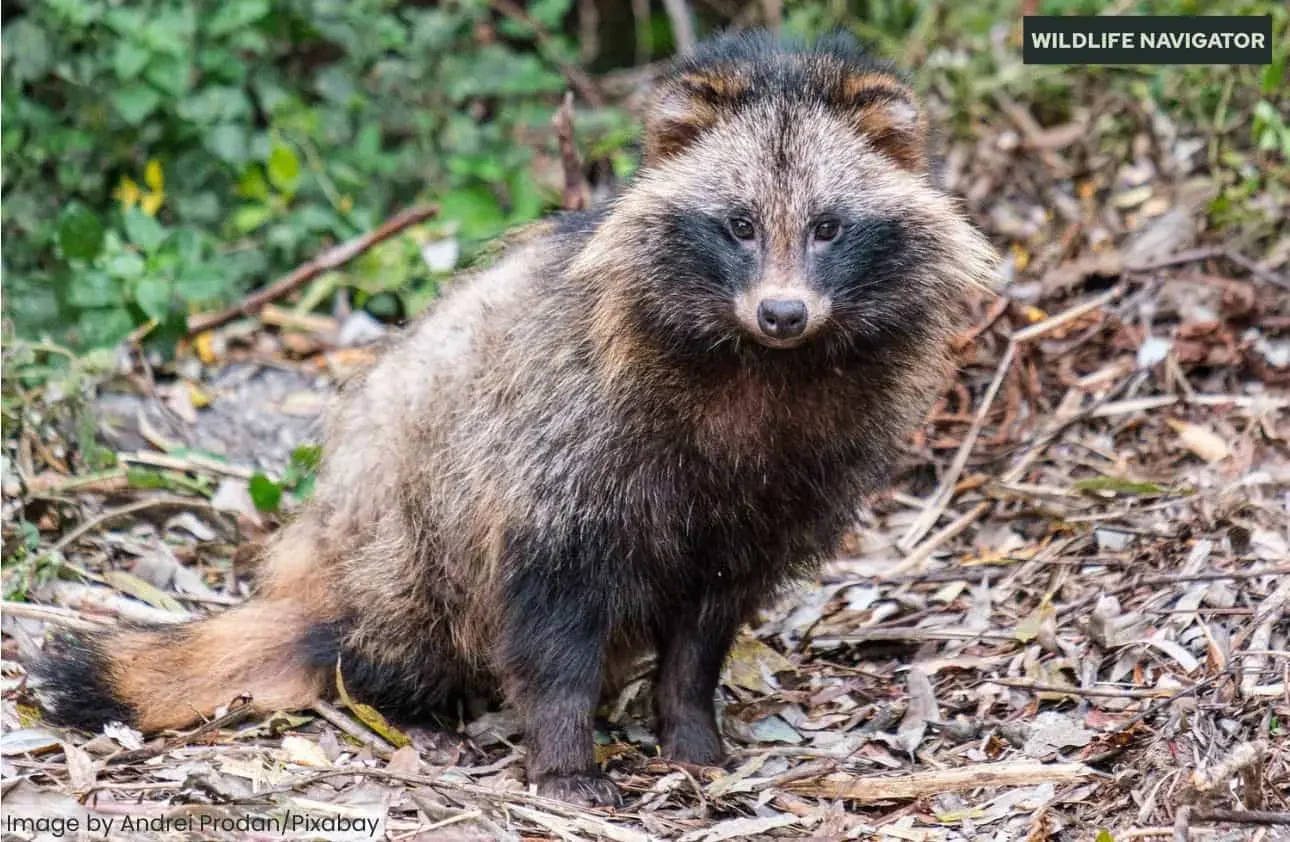
The raccoon dog (Nyctereutes procyonoides) is one of the most unusual members of the dog family. At first glance, its dark facial mask, fluffy fur, and compact body make it look remarkably similar to a raccoon. However, despite its name and appearance, the raccoon dog is not related to raccoons at all. Instead, it belongs to the family Canidae, making it a close relative of wolves, foxes, jackals, and domestic dogs.
Native to East Asia, raccoon dogs are found in countries such as China, Japan, Korea, and parts of Vietnam. Over the past century, they have also spread across several European countries after being introduced outside their natural range. Their adaptability, omnivorous diet, and ability to thrive in a variety of habitats have contributed to their success in many regions.
Known as tanuki in Japan, raccoon dogs hold a special place in folklore and culture. Beyond their cultural significance, they play an important ecological role as predators, scavengers, and seed dispersers. This article explores everything you need to know about raccoon dogs, including their habitat, diet, behaviour, reproduction, and conservation status.
What Is a Raccoon Dog?
The raccoon dog is a small-to-medium-sized wild canid native to East Asia. It is the only living species in the genus Nyctereutes, a lineage that has existed for millions of years. Unlike many other members of the dog family, raccoon dogs possess several unique characteristics that distinguish them from their relatives.
One of the most recognizable features of the raccoon dog is its black facial mask, which resembles that of a raccoon. This resemblance is purely coincidental and is an example of convergent evolution, where unrelated species develop similar physical traits due to similar environmental pressures.
Raccoon dogs are highly adaptable animals capable of surviving in forests, wetlands, grasslands, agricultural areas, and even regions close to human settlements. Their flexible diet and tolerance of different climates have allowed them to expand their range significantly.
Scientific Classification
| Classification | Details |
|---|---|
| Kingdom | Animalia |
| Phylum | Chordata |
| Class | Mammalia |
| Order | Carnivora |
| Family | Canidae |
| Genus | Nyctereutes |
| Species | Nyctereutes procyonoides |
Physical Characteristics
Raccoon dogs are compact, stocky animals with dense fur that provides protection against cold weather. Their appearance varies slightly across different regions, but several key characteristics remain consistent.
Size and Weight
Adult raccoon dogs typically measure between 50 and 70 centimetres (20–28 inches) in body length. Their tails add another 15 to 25 centimetres (6–10 inches). Most adults weigh between 4 and 10 kilograms (9–22 pounds), although individuals may become heavier before winter as they accumulate fat reserves.
Fur and Colouration
Their fur is thick and soft, usually grayish-brown, yellowish-brown, or blackish-brown. The dark mask around the eyes is their most distinctive feature. The tail is bushy but lacks the prominent rings found on raccoon tails.
Adaptations for Cold Climates
Raccoon dogs possess one of the thickest winter coats among canids. This dense fur helps them survive harsh winters in northern regions, including parts of Russia and Scandinavia.
Where Do Raccoon Dogs Live?
Raccoon dogs are native to East Asia but have expanded their range into Europe and other regions.
Native Range
Their natural distribution includes:
- China
- Japan
- North and South Korea
- Northern Vietnam
- Eastern Siberia
These regions provide a mix of forests, wetlands, river valleys, and agricultural landscapes that support raccoon dog populations.
Introduced Range
During the 20th century, raccoon dogs were intentionally introduced into parts of the former Soviet Union for fur farming and hunting purposes. From there, they spread across Europe.
Today, raccoon dogs can be found in:
- Finland
- Sweden
- Norway
- Germany
- Poland
- Estonia
- Latvia
- Lithuania
- Denmark
- Czech Republic
Their expansion has raised concerns in some countries because they may compete with native wildlife and spread diseases.
Preferred Habitat
Raccoon dogs prefer habitats with abundant vegetation and water sources. Common habitats include:
- Deciduous forests
- Mixed woodlands
- Wetlands
- Marshes
- Riverbanks
- Agricultural fields
- Shrublands
Unlike many canids, they are particularly associated with wet environments and often forage near water bodies.
What Do Raccoon Dogs Eat?
Raccoon dogs are omnivores, meaning they consume both plant and animal matter. Their opportunistic feeding behaviour allows them to adapt to changing food availability throughout the year.
Animal-Based Foods
Their diet may include:
- Rodents
- Frogs
- Toads
- Fish
- Insects
- Crustaceans
- Bird eggs
- Small birds
- Reptiles
Plant-Based Foods
They also consume:
- Fruits
- Berries
- Seeds
- Nuts
- Grasses
- Agricultural crops
Seasonal Feeding Habits
Raccoon dogs adjust their diet according to seasonal availability. During autumn, they increase food consumption and accumulate fat reserves to survive winter conditions. In some regions, their body weight may increase significantly before the onset of cold weather.
Behaviour and Adaptations
Raccoon dogs exhibit several behaviours that are unusual among members of the dog family.
Nocturnal Lifestyle
Raccoon dogs are primarily nocturnal, meaning they are most active during the night. They may also be active during dawn and dusk when temperatures are cooler and food is more readily available.
During the daytime, they rest in dense vegetation, burrows, hollow logs, or abandoned dens created by other animals.
Winter Torpor
One of the most remarkable features of raccoon dogs is their ability to enter a state known as winter torpor.
Unlike true hibernation, torpor is a temporary reduction in metabolic activity and body temperature. During periods of severe cold and limited food availability, raccoon dogs may remain inactive for extended periods while relying on stored body fat.
They are the only canid known to exhibit this behaviour regularly.
Climbing Ability
Although they are not as agile as some tree-dwelling mammals, raccoon dogs can climb trees. They may climb low branches to escape danger, search for food, or rest in elevated locations.
This ability is relatively uncommon among canids and contributes to their adaptability.
Swimming Skills
Raccoon dogs are capable swimmers and frequently use aquatic habitats. Their comfort around water allows them to exploit food resources that may be inaccessible to other terrestrial predators.
Social Structure
Unlike many wild canids that live in packs or remain solitary, raccoon dogs often form long-term monogamous pairs.
A male and female may remain together for multiple breeding seasons, sharing responsibilities related to territory defense and parental care.
Pairs usually maintain small home ranges and cooperate in raising their young. This strong pair bond is one of the defining features of raccoon dog social behaviour.
Reproduction and Life Cycle
- Breeding Season: The breeding season generally occurs between late winter and early spring, although timing varies depending on geographic location and climate.
- Gestation Period: After mating, females undergo a gestation period lasting approximately 60 days.
- Litter Size: Raccoon dogs are highly productive breeders. Females commonly give birth to 4 to 8 pups, occasionally more than 10 pups. Large litter sizes contribute to their ability to establish and expand populations rapidly.
- Parental Care: Both parents participate in raising the young. The male often helps gather food and protect the den while the female nurses the pups. Young raccoon dogs remain with their parents until they become independent and capable of surviving on their own.
- Lifespan: In the wild, raccoon dogs generally live between 6 and 8 years. In captivity, where threats such as predation and disease are reduced, they may survive for over 10 years.
Raccoon Dog vs Raccoon
Many people assume raccoon dogs and raccoons are closely related due to their similar appearance. In reality, they belong to entirely different animal families.
| Feature | Raccoon Dog | Raccoon |
|---|---|---|
| Family | Canidae | Procyonidae |
| Native Range | Asia | North America |
| Diet | Omnivore | Omnivore |
| Tail | Bushy, usually unringed | Distinctly ringed |
| Social Behavior | Often pair-living | Mostly solitary |
| Closest Relatives | Dogs, foxes, wolves | Coatis and kinkajous |
The facial mask shared by both species is a striking example of convergent evolution rather than close evolutionary relationship.
Predators and Threats
Although raccoon dogs are adaptable animals, they face various threats throughout their range.
Natural Predators
Predators may include:
- Wolves
- Eurasian lynx
- Large birds of prey
- Bears in some regions
Young pups are especially vulnerable to predation.
Human-Related Threats
Human activities pose additional challenges, including:
- Habitat destruction
- Road mortality
- Hunting
- Trapping for fur
- Disease transmission
In some areas, raccoon dogs are also considered invasive species, leading to population control measures.
Ecological Importance
Raccoon dogs contribute to ecosystem health in several ways.
- Seed Dispersal: By consuming fruits and berries, they disperse seeds through their droppings, helping plants spread across landscapes.
- Population Regulation: Their predation on insects, rodents, and other small animals helps regulate prey populations.
- Scavenging: Raccoon dogs also consume carrion, contributing to nutrient recycling and reducing the accumulation of animal remains in ecosystems.
Raccoon Dogs in Japanese Folklore
In Japan, raccoon dogs are known as tanuki and occupy a prominent place in mythology and folklore.
Traditional stories often portray tanuki as mischievous shape-shifters capable of transforming into humans or other creatures. These tales emphasize intelligence, humor, and magical abilities.
Today, tanuki statues are commonly displayed outside restaurants, shops, and homes throughout Japan as symbols of prosperity, good fortune, and hospitality.
While folklore has greatly influenced public perception of raccoon dogs, the real animal is a shy and generally harmless wild canid.
Conservation Status
According to the International Union for Conservation of Nature (IUCN), the raccoon dog is currently classified as Least Concern. Several factors contribute to this status:
| Category | Information |
|---|---|
| Scientific Name | Nyctereutes procyonoides |
| Common Name | Raccoon Dog |
| Family | Canidae |
| IUCN Status | Least Concern (LC) |
| Population Trend | Stable |
| Native Range | East Asia |
| Main Threats | Habitat loss, road mortality, disease, hunting, trapping |
| Ecological Role | Seed disperser, predator, scavenger |
In Europe, management efforts often focus on controlling the spread of introduced populations while protecting native ecosystems.
Interesting Facts About Raccoon Dogs
- Raccoon dogs are members of the dog family, not the raccoon family.
- They are the only canids known to regularly enter winter torpor.
- Both parents help raise their offspring.
- They are excellent swimmers and often live near wetlands.
- Their Japanese name is tanuki.
- They have one of the thickest winter coats among canids.
- Large litters help them expand rapidly into new areas.
- Their facial markings evolved independently from those of raccoons.
Conclusion
The raccoon dog is one of the most fascinating and unusual members of the canine family. With its raccoon-like appearance, omnivorous diet, climbing ability, swimming skills, and unique winter torpor behaviour, it stands apart from most other wild canids.
Native to East Asia and widely distributed across parts of Europe, the raccoon dog has demonstrated remarkable adaptability to different environments. Whether known as a raccoon dog or the legendary Japanese tanuki, this species continues to capture the interest of wildlife enthusiasts, researchers, and nature lovers around the world.
Understanding the ecology and behaviour of raccoon dogs helps highlight their role in maintaining healthy ecosystems while promoting greater appreciation for one of nature’s most distinctive wild canids.
Must Read: Dhole (Asiatic Wild Dog): The Complete Guide to the Endangered Predator
Frequently Asked Questions
Curating and documenting wildlife and protected areas through detailed guides and the continuously updated WN Index.
- Rosan Prasad

- Rosan Prasad

- Rosan Prasad

- Rosan Prasad