California Condor: Facts, Habitat, Diet, Behaviour and Conservation

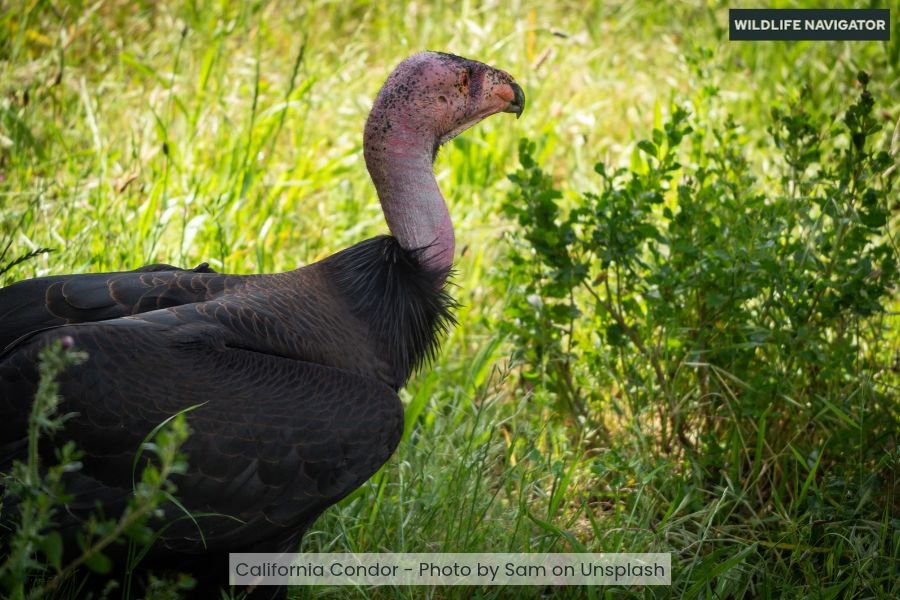
The California Condor (Gymnogyps californianus) is one of the largest flying birds in the world and the largest land bird in North America. Recognised by its enormous wingspan, broad black wings, distinctive white underwing patches and bare reddish-orange head, this rare scavenging bird is an important part of western North America’s natural ecosystems. It belongs to the New World vulture family, Cathartidae, and feeds primarily on the carcasses of large mammals.
Historically, California Condors ranged across much of western North America, from parts of Canada to Mexico. However, habitat changes, hunting, poisoning and other human-related threats caused their population to decline dramatically. By the 1980s, only 22 individuals remained, bringing the species close to extinction in the wild. A major captive-breeding and reintroduction programme subsequently helped establish new wild populations in California, Arizona, Utah and Baja California, Mexico.
Despite this progress, the California Condor remains critically endangered. Lead poisoning from ammunition fragments in animal carcasses continues to be one of its most serious threats. Its recovery represents one of the most significant wildlife conservation efforts in North American history.
Scientific Classification of the California Condor
The California Condor is a member of the family Cathartidae, which includes New World vultures such as turkey vultures, black vultures and Andean Condors. Its scientific name, Gymnogyps californianus, places it within the genus Gymnogyps, of which it is the only living species.
| Classification | Details |
|---|---|
| Kingdom | Animalia |
| Phylum | Chordata |
| Class | Aves |
| Order | Cathartiformes |
| Family | Cathartidae |
| Genus | Gymnogyps |
| Species | Gymnogyps californianus |
| Common name | California Condor |
The California Condor is classified among the New World vultures, a group of birds found primarily in the Americas. Although they share several characteristics with Old World vultures, such as featherless heads and scavenging diets, New World vultures belong to a separate evolutionary lineage.
The genus Gymnogyps also has an important fossil history. Several extinct relatives once inhabited North America, showing that large condors were more widely represented in the continent’s prehistoric ecosystems. Today, the California Condor is the only surviving member of its genus.
Physical Characteristics and Identification
The California Condor has a massive body, broad wings and a relatively small, featherless head. Its appearance is particularly distinctive when it is soaring above mountainous landscapes, where its enormous wings allow it to remain airborne for extended periods with very little flapping.
Size and body structure
Adult California Condors generally measure approximately 109–140 cm (43–55 inches) in body length. Their weight typically ranges from around 7–14 kg (15–31 lb), although individual measurements vary.
Its wingspan is particularly impressive, reaching approximately 2.7–3.0 metres (9–10 feet). This makes it one of the widest-winged birds in the world and gives it an advantage when travelling across large areas in search of food.
The wings are long, broad and adapted for soaring. Their structure allows the bird to take advantage of rising air currents, reducing the amount of energy required for flight.
Plumage and distinctive markings
Adult California Condors have predominantly black plumage covering their bodies and wings. A characteristic feature is the broad white patch underneath each wing, which becomes particularly visible when the bird is flying.
Their flight feathers are long and finger-like at the tips, helping them maintain stability and control while soaring.
Unlike many birds, the California Condor has a largely featherless head and neck. Adult birds develop reddish-orange, pinkish and yellowish skin coloration, which can change in intensity depending on their physiological condition and social interactions.
Head, beak and feet
The head is relatively small compared with the bird’s enormous body. Its powerful, hooked beak is adapted for tearing flesh from animal carcasses.
The featherless skin around the head and neck helps prevent blood and other organic material from accumulating in the plumage while feeding.
Its feet are strong enough to support its large body, but they are not specialised for carrying prey or capturing live animals. Like other vultures, the California Condor is primarily a scavenger rather than an active predator.
Differences between adults and juveniles
Juvenile California Condors look noticeably different from mature individuals. Young birds generally have darker greyish or blackish skin on their heads and necks, while their body plumage lacks the fully developed appearance of adults.
As they mature, their head coloration gradually changes, and their characteristic adult appearance develops over several years.
Differences between males and females
Male and female California Condors are similar in overall appearance. Both have comparable plumage patterns, bare heads and large wingspans.
Males are generally somewhat larger and heavier than females, but visual identification based on appearance alone can be difficult.
Distribution and Geographic Range
The California Condor historically occupied a much broader geographical range than it does today. Fossil evidence and historical observations indicate that the species once occurred across large portions of western North America, including areas of Canada, the United States and Mexico.
Its historical distribution extended across different landscapes, including coastal regions, mountain ranges, grasslands and inland valleys. These environments provided access to the large animal carcasses required for its survival.
Historical range and population decline
During the nineteenth and twentieth centuries, California Condor populations experienced a substantial decline. Human settlement, habitat changes, hunting, poisoning and the increasing availability of contaminated carcasses contributed to the disappearance of the species from much of its former range.
By the middle of the twentieth century, its distribution had become restricted to a small area of California. The remaining birds were increasingly concentrated in mountainous regions where suitable nesting and roosting locations were available.
Present-day distribution
Following decades of captive breeding and reintroduction, California Condors now occupy several designated recovery regions.
Their present-day distribution includes:
- California: Wild populations occur in the central and southern parts of the state, including areas around Big Sur, Pinnacles National Park, the Los Padres National Forest and southern California mountain ranges.
- Arizona: Reintroduced birds occupy parts of northern Arizona, particularly the Grand Canyon region.
- Utah: Condors from the southwestern recovery population also use areas of southern Utah.
- Baja California, Mexico: A reintroduced population inhabits mountainous areas of the Sierra de San Pedro Mártir.
These populations are supported by ongoing conservation programmes, monitoring and management.
Although the species has returned to several parts of its former range, its present distribution remains considerably smaller and more fragmented than its historical range.
Habitat and Environment
California Condors inhabit landscapes that provide suitable nesting locations, safe roosting sites and sufficient food resources. They require extensive areas because their feeding behaviour involves travelling considerable distances to locate animal carcasses.
Unlike birds that depend on a single type of vegetation or habitat, California Condors use a combination of environments throughout their daily activities.
Mountainous regions and rugged terrain
Mountain ranges are particularly important for California Condors because they provide suitable nesting and roosting locations. Rocky cliffs, steep slopes and remote mountain formations offer relatively undisturbed areas where birds can rest and reproduce.
These elevated locations also provide favourable conditions for launching into flight and accessing rising air currents.
Coastal landscapes
Coastal environments are important feeding areas for some California Condor populations, particularly along the central California coastline.
Carcasses of marine mammals, including seals and sea lions, can provide substantial food resources. Beaches and coastal areas therefore contribute to the availability of carrion.
Grasslands and open woodlands
Open grasslands, oak woodlands, foothills and agricultural landscapes can serve as important foraging areas.
These environments may contain carcasses of deer, cattle and other large mammals. Their relatively open structure also makes it easier for condors to locate potential food sources.
Nesting and roosting habitats
California Condors generally nest in naturally protected locations, including caves, rock cavities and crevices in cliffs. Some individuals also use large tree cavities.
For roosting, they select elevated locations such as cliffs and tall trees, where they can rest and observe the surrounding landscape.
The availability of suitable nesting and roosting sites is essential for maintaining stable breeding populations.
Diet and Feeding Behaviour
The California Condor is an obligate scavenger, meaning that it depends on the carcasses of animals rather than regularly hunting live prey. Its diet consists primarily of large mammals, although it can feed on a variety of other animal remains.
By consuming carrion, the species plays an important ecological role in removing dead animals from the environment.
Major food sources
California Condors feed on carcasses from both terrestrial and marine animals. Their diet varies according to geographical location, seasonal food availability and the types of animals present in their habitat.
Common food sources include:
- Deer and elk.
- Cattle and other livestock.
- Sheep and goats.
- Rabbits and other mammals.
- Coyotes and other medium-sized animals.
- Seals and sea lions.
- Whales and other marine mammals.
Large carcasses can provide substantial amounts of food and may attract several condors at the same time.
How California Condors locate food
Unlike vultures that rely heavily on their sense of smell, California Condors primarily use their excellent eyesight to locate food.
They often soar over extensive landscapes, scanning the ground for carcasses or observing the behaviour of other scavenging birds.
The presence of turkey vultures, ravens and other scavengers can sometimes help condors identify potential feeding opportunities.
Their large wingspan allows them to cover considerable distances while conserving energy. This adaptation is particularly useful because suitable food sources may be widely scattered.
Feeding adaptations
The California Condor has a strong, hooked beak that allows it to tear through skin and muscle tissue. Its featherless head and upper neck are also useful adaptations for feeding, as they reduce the accumulation of organic material in its plumage.
When a large carcass is available, condors may consume substantial quantities of food in a single feeding session. This allows them to survive periods when food is less readily available.
Social feeding behaviour
California Condors frequently feed in groups. Several individuals may gather around a carcass, where interactions are influenced by age, body size and social relationships.
Dominance behaviour can occur, particularly when food is limited. Larger or more dominant birds may gain access to preferred feeding positions, although feeding groups can contain individuals of different ages and social status.
Ecological importance
As scavengers, California Condors help remove animal remains from natural landscapes. This contributes to nutrient recycling and reduces the persistence of large carcasses in the environment.
Their feeding activities form part of the broader scavenger community, alongside ravens, eagles, vultures and other carrion-feeding animals.
Behaviour and Daily Activities
California Condors are highly social birds with complex interactions, strong associations between individuals and distinctive daily activity patterns. Much of their behaviour is influenced by the availability of food, weather conditions and the need to conserve energy while travelling across large landscapes.
Flight and soaring behaviour
One of the most remarkable characteristics of the California Condor is its ability to remain airborne for extended periods without frequent wingbeats.
Its enormous wings are adapted for gliding and soaring on thermal updrafts. These rising columns of warm air allow the bird to gain altitude and travel across large distances while using relatively little energy.
Condors generally keep their wings extended horizontally while soaring. Their broad wing surfaces provide lift, while their spread primary feathers help maintain stability and control.
Under favourable conditions, California Condors can travel more than 150–200 miles in a day. They may reach considerable altitudes while searching for food, sometimes soaring thousands of feet above the ground.
Their flight speed can exceed 55 miles per hour when conditions are favourable.
Social behaviour and group interactions
California Condors are social birds that regularly interact with other members of their population. They may gather around feeding sites, share communal roosting locations and establish long-term relationships with particular individuals.
Social interactions include preening, displaying, following other birds and competing for food.
Dominance relationships are particularly noticeable around carcasses. Older or more dominant birds often gain access to preferred feeding positions before younger individuals.
Roosting habits
Condors spend considerable time perched at elevated locations. Suitable roosting sites include large trees, dead standing trees, rocky outcrops and cliff ledges.
They frequently roost in groups, although the number of individuals at a particular location can vary.
Elevated roosting positions provide opportunities to rest, observe the surrounding environment and take advantage of favourable wind conditions when beginning flight.
Bathing and feather maintenance
Despite their appearance, California Condors maintain their plumage through regular cleaning and preening.
After feeding, they may visit water sources to bathe. They also spend considerable time preening their feathers, removing dirt and maintaining their flight plumage.
When water is unavailable, they may rub their heads and necks against vegetation, rocks or tree branches to remove accumulated material.
Playful and exploratory behaviour
California Condors are intelligent and curious birds. Younger individuals, in particular, may interact with objects such as sticks, feathers, grass and other materials.
They have been observed playing with objects, engaging in playful physical interactions and investigating unfamiliar items in their surroundings.
These activities demonstrate that their behaviour extends beyond feeding and reproduction. Their social interactions and curiosity are important aspects of their daily lives.
Reproduction and Life Cycle
California Condors have a particularly slow reproductive rate, which is one of the reasons their populations are vulnerable to sudden increases in mortality. They mature relatively late, generally produce only one egg per breeding attempt and require an extended period to raise their offspring.
Sexual maturity and courtship
California Condors generally reach sexual maturity between five and seven years of age. However, individuals may begin breeding later depending on their social relationships and environmental conditions.
Pairs often establish long-term bonds and may remain together across successive breeding seasons.
Courtship commonly begins during the winter months. Males perform distinctive displays that involve spreading their wings, lowering their heads, extending their necks and turning their bodies towards females.
Pairs may also engage in coordinated flights, mutual preening and repeated visits to potential nesting locations.
Nesting sites
California Condors do not construct elaborate nests like many other bird species. Instead, they generally lay their eggs in naturally protected locations.
Common nesting sites include:
- Caves and cavities in rocky cliffs.
- Sheltered ledges in steep mountain terrain.
- Cavities in large, old trees.
- Broken tree trunks and hollows formed by natural damage.
These locations provide protection from weather conditions and reduce exposure to potential predators and disturbances.
Egg laying and incubation
Female California Condors generally lay a single egg per breeding attempt. The egg is usually pale blue-green and is relatively large compared with the eggs of many other bird species.
Both parents participate in incubation, taking turns keeping the egg warm and protecting the nesting site.
The incubation period generally lasts approximately 54–58 days, although published estimates vary slightly.
If an egg is lost early in the breeding season, a female may sometimes lay a replacement egg. This behaviour is known as double clutching and can provide another opportunity for successful reproduction.
Chick development and parental care
California Condor chicks hatch covered in soft down feathers. During their early development, they depend entirely on their parents for warmth, protection and food.
Adult birds feed their chicks by regurgitating partially digested food. Both parents participate in feeding and caring for the young.
As the chick grows, its feathers gradually develop, and it becomes increasingly capable of maintaining its body temperature and moving around the nesting area.
Flight feathers are generally well developed by approximately six months of age, when the young bird is ready to leave the nest.
Fledging and independence
Leaving the nest does not mean that a young California Condor immediately becomes independent.
Juveniles continue to depend on their parents for food and guidance while learning to locate carcasses, recognise feeding opportunities and navigate their surroundings.
This extended period of parental care may continue for one to two years.
Because reproduction and parental investment take so much time, California Condors generally cannot replace lost individuals quickly. Many breeding pairs produce offspring only every other year, making adult survival particularly important for population recovery.
Lifespan
California Condors are long-lived birds. Their lifespan in the wild is difficult to determine precisely, but they are estimated to be capable of living for more than 60 years.
Their longevity is an important biological characteristic because individuals can reproduce over several decades if they survive the major threats affecting the species.
Predators and Natural Threats
Adult California Condors have few natural predators because of their enormous size and ability to spend much of their time in elevated or remote locations. However, eggs and young birds can be vulnerable to predators, while adults face several environmental and human-related threats.
The greatest challenges to their survival are associated with human activities rather than natural predation.
Lead poisoning
Lead poisoning is the most serious documented threat to California Condors.
When hunters use lead ammunition, small fragments can remain inside the bodies of animals that are shot but not recovered. Condors may later feed on these carcasses or remains and accidentally ingest the lead fragments.
Once inside the digestive system, lead can enter the bloodstream and interfere with normal biological functions.
Lead poisoning can cause neurological damage, weakness, impaired coordination and digestive problems. Severe exposure can result in death.
Because condors travel across large areas and regularly consume carcasses, even a relatively small number of contaminated food sources can expose multiple individuals.
Microtrash ingestion
Microtrash refers to small pieces of human-made material, including plastic fragments, metal objects, glass and other discarded items.
Young California Condors may accidentally ingest these materials, mistaking them for food or swallowing them while feeding.
Such objects can accumulate in the digestive tract and cause blockages, injuries and other serious complications.
Conservation teams monitor nesting areas and remove dangerous materials where necessary to reduce this risk.
Power-line collisions and electrocution
California Condors have large wingspans and frequently travel across open landscapes where power infrastructure may be present.
Collisions with electrical wires can cause severe injuries or death. Electrocution is also a potential risk when birds come into contact with poorly designed electrical equipment.
Power-line management, infrastructure improvements and monitoring are important components of recovery programmes.
Habitat disturbance
Although California Condors can use different types of landscapes, they require suitable nesting and roosting locations.
Human disturbance near breeding sites can affect nesting behaviour and reproductive success. Development, recreation, infrastructure and other activities may also reduce the availability of suitable habitat.
Protecting important nesting and feeding areas is therefore essential for maintaining healthy populations.
Other threats
Additional risks include disease, poisoning from other toxic substances, accidental drowning, wildfires and illegal shooting.
Some individuals may also face starvation or injuries when suitable food sources are limited or when environmental conditions make movement and foraging difficult.
The combined effects of these threats make continuous monitoring necessary, even in populations that are increasing in size.
Conservation Status and Protection
The California Condor is one of the most prominent examples of a species brought back from the brink of extinction through intensive conservation management. Its population decline was so severe that wildlife authorities eventually removed all remaining wild individuals and placed them into a captive-breeding programme.
Although this intervention prevented the species from disappearing, its recovery remains an ongoing challenge.
Historical population decline
During the nineteenth and twentieth centuries, California Condor populations declined because of hunting, poisoning, habitat disturbance and other human-related pressures.
By 1967, the species had been listed as endangered under United States federal law.
Despite conservation measures, the remaining population continued to decline. By 1982, only 23 California Condors survived worldwide.
In 1987, the last remaining wild individuals were captured and brought into captivity. This marked a major turning point in the species’ conservation history.
Captive breeding programme
The captive-breeding programme was established to increase the number of California Condors and prevent their extinction.
The remaining birds were maintained under carefully controlled conditions, where conservation specialists monitored their health, reproduction and genetic diversity.
Breeding facilities developed techniques to encourage successful reproduction and raise chicks for eventual release into the wild.
Several zoos and conservation organisations participated in this effort, including the San Diego Zoo Wildlife Alliance and the Peregrine Fund.
Captive breeding became an essential part of the recovery programme because the remaining population was too small to recover quickly through natural reproduction alone.
Reintroduction into the wild
In 1992, the first captive-bred California Condors were released into the wild in California.
Additional reintroduction programmes were subsequently established in other regions, including Arizona, Utah and Baja California, Mexico.
These releases helped establish multiple free-flying populations and gradually expanded the species’ geographical distribution.
The first successful wild-hatched chick after reintroduction was recorded in 2004, representing an important milestone for the recovery programme.
Over time, conservationists improved release techniques, monitoring systems and management practices to increase the survival of reintroduced birds.
Current population and recovery progress
The California Condor population has increased substantially since the 1980s.
According to the U.S. Fish and Wildlife Service’s 2025 Annual Population Status Report, published in February 2026, the worldwide population reached 607 individuals as of 31 December 2025.
The population included:
| Population category | Number of condors |
|---|---|
| Wild, free-flying population | 392 |
| Captive population | 215 |
| Total worldwide population | 607 |
The report also recorded 16 wild-fledged chicks during 2025 and 46 captive-bred birds released into the wild during the year.
These figures demonstrate the importance of continued captive breeding, reintroduction and wild population management. However, the species still depends heavily on conservation intervention to maintain its recovery. fws.gov+2
Lead poisoning prevention
Reducing lead exposure is one of the highest priorities for California Condor conservation.
Wildlife authorities and conservation organisations encourage the use of non-lead ammunition in areas occupied by condors.
Lead-free ammunition reduces the risk of fragments remaining in animal carcasses and subsequently entering the condors’ food supply.
Conservation teams also capture and examine wild condors periodically. Birds showing signs of lead exposure may receive veterinary treatment, including chelation therapy to help remove lead from their bodies.
However, preventing exposure in the first place remains the most effective long-term approach.
Monitoring and habitat protection
Wild California Condors are monitored through identification tags, radio transmitters and other tracking technologies.
These systems help researchers understand their movements, identify important feeding areas, monitor nesting activity and respond when individuals face potential threats.
Conservation programmes also protect nesting locations, manage human disturbance and remove hazardous materials from important breeding areas.
Captive breeding continues to provide birds for release, while research helps improve the survival of existing wild populations.
Conservation outlook
The recovery of the California Condor demonstrates that intensive conservation programmes can prevent the extinction of even extremely rare species.
Nevertheless, an increasing population does not automatically mean that the species has become secure. Lead poisoning, low reproductive rates, habitat disturbance and other threats continue to affect its long-term survival.
The ultimate objective is to establish self-sustaining wild populations that can survive and reproduce with progressively less human intervention.
The California Condor remains classified as Critically Endangered on the IUCN Red List and is also listed as endangered under the United States Endangered Species Act. Its future depends on continued cooperation between wildlife authorities, conservation organisations, researchers, landowners and local communities.
Frequently Asked Questions About the California Condor
References and Sources
- U.S. Fish and Wildlife Service – California Condor
- U.S. Fish and Wildlife Service – California Condor Recovery Program
- 2025 California Condor Population Status Report – USFWS
- National Park Service – About California Condors
- Cornell Lab of Ornithology – California Condor Life History
- California Department of Fish and Wildlife – California Condor
- San Diego Zoo Wildlife Alliance – California Condor
Curating and documenting wildlife and protected areas through detailed guides and the continuously updated WN Index.
- Rosan Prasad

- Rosan Prasad
- Rosan Prasad

- Rosan Prasad