National Parks in Canada by Province and Territory (2026)

As of August 2026, Canada is home to 37 national parks, protecting some of the country’s most spectacular natural landscapes, from the Rocky Mountains and Pacific coast to vast prairie grasslands, boreal forests, Atlantic shores and Arctic tundra. These national parks are found across Canada’s provinces and territories and protect a remarkable range of ecosystems and wildlife.
In addition to its 37 national parks, Canada has 11 national park reserves. Parks Canada manages these places as part of the country’s national park system, although national park reserves are legally distinct from established national parks.
Together, these 37 national parks and 11 national park reserves represent 31 of Canada’s 39 terrestrial natural regions and protect approximately 343,377 km² of land. These national parks are distributed across all 10 provinces and 3 territories.
National Parks in Canada by Province and Territory
Canada’s national parks are distributed across its ten provinces and three territories. British Columbia and Alberta are particularly well known for their Rocky Mountain parks, while northern Canada contains extensive Arctic and subarctic wilderness areas.
The following sections organize the national parks geographically. Wood Buffalo National Park spans Alberta and the Northwest Territories and is identified in both relevant sections without being counted twice in the national total.
National Parks in Alberta
Alberta is home to four national parks, including some of Canada’s best-known mountain parks. Its protected landscapes extend from the Canadian Rocky Mountains to the aspen parkland and boreal forest.
| National Park | Year Established | Key Feature |
|---|---|---|
| Banff National Park | 1885 | Canada’s first national park, known for mountain scenery, glacial lakes and alpine wildlife; part of the Canadian Rocky Mountain Parks UNESCO World Heritage Site. |
| Elk Island National Park | 1906 | Important for the conservation of plains and wood bison, as well as elk, moose, deer and numerous bird species. |
| Jasper National Park | 1907 | A vast Rocky Mountain landscape featuring the Columbia Icefield, Athabasca Glacier, forests and alpine habitats; part of the Canadian Rocky Mountain Parks UNESCO World Heritage Site. |
| Waterton Lakes National Park | 1895 | Known for its combination of prairie and mountain ecosystems; forms part of the Waterton-Glacier International Peace Park. |
Additional note: Wood Buffalo National Park extends into northeastern Alberta and the Northwest Territories. It is covered separately below to avoid counting it twice.
National Parks in British Columbia
British Columbia contains four national parks that protect the Columbia Mountains and Canadian Rockies. The province also has several national park reserves, including Pacific Rim, Gulf Islands and Gwaii Haanas, which are not included in this national-park table.
| National Park | Year Established | Key Feature |
|---|---|---|
| Glacier National Park | 1886 | Known for steep mountain terrain, glaciers, old-growth forests and Rogers Pass. |
| Kootenay National Park | 1920 | Protects a diverse landscape of mountain peaks, glaciers, hot springs, forests and dry interior valleys. |
| Mount Revelstoke National Park | 1914 | Features temperate rainforest, subalpine meadows and mountain scenery along the Columbia Mountains. |
| Yoho National Park | 1886 | Known for towering rock walls, waterfalls, alpine lakes and significant geological formations; part of the Canadian Rocky Mountain Parks UNESCO World Heritage Site. |
National Parks in Manitoba
Manitoba’s national parks protect prairie, boreal forest, wetlands and subarctic habitats. They provide important habitat for large mammals and numerous migratory and resident bird species.
| National Park | Year Established | Key Feature |
|---|---|---|
| Riding Mountain National Park | 1933 | A meeting point of boreal forest, aspen parkland and prairie, supporting bison, elk, black bears and other wildlife. |
| Wapusk National Park | 1996 | Protects extensive subarctic tundra and wetlands, including one of the world’s largest known polar bear maternity denning areas. |
National Parks in New Brunswick
New Brunswick’s national parks protect Acadian forest, coastal wetlands, estuaries, sand dunes and marine habitats along the Gulf of St. Lawrence and Bay of Fundy.
| National Park | Year Established | Key Feature |
|---|---|---|
| Fundy National Park | 1948 | Known for the dramatic tides of the Bay of Fundy, forested valleys, waterfalls and coastal ecosystems. |
| Kouchibouguac National Park | 1969 | Protects salt marshes, lagoons, barrier islands, sand dunes and habitats used by shorebirds and other coastal wildlife. |
National Parks in Newfoundland and Labrador
Newfoundland and Labrador contains three national parks, each protecting distinctive environments ranging from coastal boreal forest to rugged mountain wilderness. The province also contains Akami-Uapishkᵁ-KakKasuak-Mealy Mountains National Park Reserve, which is listed separately.
| National Park | Year Established | Key Feature |
|---|---|---|
| Gros Morne National Park | 1973 | Recognized as a UNESCO World Heritage Site for its exceptional geology, fjords, mountains and coastal landscapes. |
| Terra Nova National Park | 1957 | Protects sheltered Atlantic inlets, boreal forest, coastal wetlands and diverse marine-influenced habitats. |
| Torngat Mountains National Park | 2005 | A remote Arctic and subarctic landscape of rugged mountains, glaciers, fjords and wildlife, including polar bears and caribou. |
National Parks in Nova Scotia
Nova Scotia’s national parks protect the province’s Atlantic coastline, highland landscapes and forest ecosystems. Kejimkujik is also recognized for its Mi’kmaw cultural heritage and archaeological sites.
| National Park | Year Established | Key Feature |
|---|---|---|
| Cape Breton Highlands National Park | 1936 | Known for dramatic coastal cliffs, forested plateaus, deep river canyons and sections of the Cabot Trail. |
| Kejimkujik National Park | 1967 | Protects lakes, rivers, wetlands and Acadian forest, with important Mi’kmaw cultural landscapes and heritage sites. |
Kejimkujik also includes a National Historic Site designation. Sable Island National Park Reserve is a separate protected area and is not included in the two-park count above.
National Parks in Ontario
Ontario’s national parks protect a range of ecosystems, including Great Lakes shorelines, islands, wetlands and boreal forest. The province’s national parks differ considerably in size, setting and ecological character.
| National Park | Year Established | Key Feature |
|---|---|---|
| Bruce Peninsula National Park | 1987 | Protects rugged limestone cliffs, clear waters, forests and habitats associated with the Niagara Escarpment. |
| Georgian Bay Islands National Park | 1929 | Protects islands and rocky shorelines in Georgian Bay, including landscapes associated with the Canadian Shield. |
| Point Pelee National Park | 1918 | A significant migration stopover for birds, with wetlands, marshes and Carolinian forest near the southernmost mainland part of Canada. |
| Pukaskwa National Park | 1978 | Ontario’s only wilderness national park, featuring remote Lake Superior coastline, boreal forest and rugged Canadian Shield terrain. |
| Thousand Islands National Park | 1904 | Protects islands, waterways and shoreline habitats in the Thousand Islands region of the St. Lawrence River. |
Classification note: Rouge National Urban Park is also located in Ontario, but it is a national urban park rather than one of Canada’s 37 national parks. It is therefore excluded from this table.
National Parks in Prince Edward Island
Prince Edward Island has one national park, protecting a portion of the island’s distinctive Gulf of St. Lawrence coastline. Its beaches, dunes and wetlands provide habitat for coastal wildlife and migratory birds.
| National Park | Year Established | Key Feature |
|---|---|---|
| Prince Edward Island National Park | 1937 | Known for sandy beaches, red sandstone cliffs, coastal dunes, salt marshes and important shorebird habitat. |
Pituamkek National Park Reserve, established in 2024, is a separate reserve designation and should not be included in the established national-park count.
National Parks in Quebec
Quebec’s national parks protect landscapes shaped by glaciers, forests, rivers and the Gulf of St. Lawrence. The province also contains Mingan Archipelago National Park Reserve, which is classified separately.
| National Park | Year Established | Key Feature |
|---|---|---|
| Forillon National Park | 1970 | Located at the tip of the Gaspé Peninsula, with dramatic cliffs, boreal forest, coastal habitats and opportunities to observe marine wildlife. |
| La Mauricie National Park | 1970 | Protects forested hills, lakes, rivers and wetlands within the southern Canadian Shield. |
National Parks in Saskatchewan
Saskatchewan’s national parks represent two contrasting landscapes: the open prairie grasslands of the south and the forested lakes of the province’s north-central region.
| National Park | Year Established | Key Feature |
|---|---|---|
| Grasslands National Park | 1981 | Protects native mixed-grass prairie, prairie dog colonies, bison habitat and important archaeological and Indigenous cultural landscapes. |
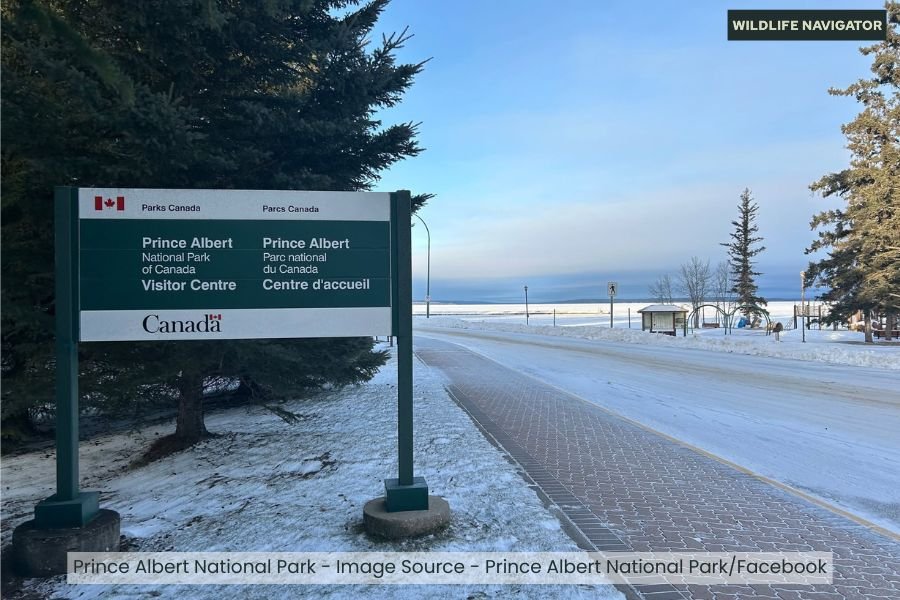
| Prince Albert National Park | 1927 | Protects boreal forest, lakes and wetlands, with wildlife that includes elk, black bears, wolves and numerous bird species. |
National Parks in the Northwest Territories
The Northwest Territories contains extensive wilderness, including tundra, boreal forest, river systems and habitats supporting Arctic and subarctic wildlife. Some protected areas in the territory are national park reserves rather than established national parks.
| National Park | Year Established | Key Feature |
|---|---|---|
| Aulavik National Park | 1992 | Protects Arctic tundra and the Thomsen River watershed on Banks Island, with important habitat for muskoxen and other northern wildlife. |
| Tuktut Nogait National Park | 1996 | Known for Arctic tundra, deep river canyons, waterfalls and habitat used by migratory caribou. |
| Wood Buffalo National Park | 1922 | One of the world’s largest national parks, protecting boreal plains, wetlands, wood bison and important habitat for whooping cranes. |
Wood Buffalo National Park crosses the boundary between the Northwest Territories and Alberta. It is counted as one national park in Canada’s total.
The Northwest Territories also contains Nahanni National Park Reserve, Nááts’įhch’oh National Park Reserve and Thaidene Nëné National Park Reserve. These are not included in the established national-park count.
National Parks in Nunavut
Nunavut contains five national parks, protecting some of the most remote and ecologically significant Arctic environments in Canada. These areas include polar desert, glaciers, rugged mountains, sea ice and extensive tundra.
| National Park | Year Established | Key Feature |
|---|---|---|
| Auyuittuq National Park | 1976 | Located on Baffin Island, with dramatic Arctic mountains, glaciers, ice fields and the well-known Akshayuk Pass. |
| Qausuittuq National Park | 2015 | Protects Arctic landscapes on Bathurst Island and habitat for the endangered Peary caribou. |
| Quttinirpaaq National Park | 1988 | Canada’s northernmost national park, featuring polar desert, glaciers and the northernmost terrestrial environments in the country. |
| Sirmilik National Park | 2001 | Protects Arctic mountains, glaciers, coastal areas and important seabird habitats around Baffin Island. |
| Ukkusiksalik National Park | 2003 | Surrounds Wager Bay and protects tundra, coastal landscapes, Arctic wildlife habitats and extensive archaeological evidence of Inuit history. |
National Parks in Yukon
Yukon’s national parks protect remote northern landscapes, from mountain ranges and vast ice fields to Arctic tundra and boreal habitats. They are also closely connected to the cultural heritage and traditional territories of Indigenous peoples.
| National Park | Year Established | Key Feature |
|---|---|---|
| Ivvavik National Park | 1984 | Protects Arctic tundra and the British Mountains, including important calving habitat for the Porcupine caribou herd. |
| Kluane National Park and Reserve | 1976 | Known for vast ice fields, high mountain peaks and glaciers, including Mount Logan, Canada’s highest mountain. |
| Vuntut National Park | 1995 | Protects northern Yukon tundra, wetlands and habitat used by migratory birds and the Porcupine caribou herd. |
Kluane has a combined national park and reserve designation. It is included here as a national park, but its official name should be retained in the article.
National Parks in Canada: Complete Summary Table
The following table provides a consolidated provincial and territorial overview of the national parks listed above. Wood Buffalo National Park is shown in both jurisdictions because of its cross-border location; this does not mean it is two separate parks.
| Province or Territory | National Parks | Number Listed |
|---|---|---|
| Alberta | Banff, Elk Island, Jasper, Waterton Lakes | 4 |
| British Columbia | Glacier, Kootenay, Mount Revelstoke, Yoho | 4 |
| Manitoba | Riding Mountain, Wapusk | 2 |
| New Brunswick | Fundy, Kouchibouguac | 2 |
| Newfoundland and Labrador | Gros Morne, Terra Nova, Torngat Mountains | 3 |
| Northwest Territories | Aulavik, Tuktut Nogait, Wood Buffalo | 3 |
| Nova Scotia | Cape Breton Highlands, Kejimkujik | 2 |
| Nunavut | Auyuittuq, Qausuittuq, Quttinirpaaq, Sirmilik, Ukkusiksalik | 5 |
| Ontario | Bruce Peninsula, Georgian Bay Islands, Point Pelee, Pukaskwa, Thousand Islands | 5 |
| Prince Edward Island | Prince Edward Island | 1 |
| Quebec | Forillon, La Mauricie | 2 |
| Saskatchewan | Grasslands, Prince Albert | 2 |
| Yukon | Ivvavik, Kluane, Vuntut | 3 |
National Park Reserves in Canada
National park reserves are protected areas managed under the Canada National Parks Act while outstanding Indigenous land claims are being settled or under applicable agreements. They are part of Canada’s wider national park system but should not be silently merged into the count of established national parks.
Parks Canada identifies the following national park reserves in its current inventory:
| National Park Reserve | Province or Territory | Notable Feature |
|---|---|---|
| Akami-Uapishkᵁ-KakKasuak-Mealy Mountains National Park Reserve | Newfoundland and Labrador | Mountain tundra, boreal forest, coastal landscapes and Indigenous cultural heritage. |
| Gulf Islands National Park Reserve | British Columbia | Islands, coastal ecosystems and wildlife habitats in the Salish Sea. |
| Gwaii Haanas National Park Reserve | British Columbia | Temperate rainforest, marine ecosystems and Haida cultural heritage. |
| Mingan Archipelago National Park Reserve | Quebec | Limestone islands, coastal habitats and distinctive geological formations. |
| Pacific Rim National Park Reserve | British Columbia | Temperate rainforest, rugged Pacific coastline and sandy beaches. |
| Sable Island National Park Reserve | Nova Scotia | Wild horses, grey seals, coastal dunes and important bird habitat. |
| Nahanni National Park Reserve | Northwest Territories | Deep river canyons, waterfalls, karst terrain and remote mountain wilderness. |
| Nááts’įhch’oh National Park Reserve | Northwest Territories | Mountainous headwaters of the South Nahanni River and important wildlife habitat. |
| Thaidene Nëné National Park Reserve | Northwest Territories | Boreal forest, lakes, rocky shorelines and Indigenous cultural landscapes. |
| Kluane National Park and Reserve | Yukon | Mountain and ice-field landscapes; its combined designation is noted in the Yukon section. |
| Pituamkek National Park Reserve | Prince Edward Island | Islands, coastal habitats and important Mi’kmaw cultural heritage. |
What Is the Difference Between a National Park and a National Park Reserve?
The terms can be confusing because both are part of Canada’s national park system.
- A national park is an established protected area under Canada’s national park legislation.
- A national park reserve is also protected under the national park framework but has a distinct legal status, commonly associated with ongoing negotiations or unresolved Indigenous land claims.
For visitors, both can represent spectacular protected landscapes, but their management arrangements and legal circumstances can differ. For this reason, Parks Canada counts them separately: 37 national parks + 11 national park reserves.
Wildlife in Canada’s National Parks
Canada’s national parks protect habitat for an extraordinary variety of wildlife. Depending on the park and region, visitors may encounter:
- Grizzly bears
- Black bears
- Polar bears
- Wolves
- Coyotes
- Canada lynx
- Moose
- Elk
- Caribou
- Wood bison
- Plains bison
- Mountain goats
- Bighorn sheep
- Pronghorn
- Arctic foxes
- Muskoxen
- Beavers
- Bald eagles
- Numerous migratory and resident bird species
The wildlife differs dramatically from region to region.
For example, Wapusk is particularly important for polar bears, Elk Island is famous for bison conservation, Grasslands protects prairie wildlife, and northern parks such as Vuntut and Ivvavik are closely associated with caribou.
Parks Canada manages the national parks with the objective of maintaining ecological integrity while allowing people to understand, appreciate and enjoy these protected areas.
Why Are Canada’s National Parks Important?
Canada’s national parks protect representative examples of the country’s natural regions. Their importance extends beyond scenery and recreation to wildlife conservation, ecological research, cultural heritage and the long-term protection of biodiversity.
- Wildlife conservation: Parks protect habitats for species such as bison, caribou, polar bears, wolves, migratory birds and many other animals.
- Landscape protection: The national park system includes mountain ranges, glaciers, forests, grasslands, wetlands, islands and Arctic wilderness.
- Indigenous heritage: Many parks contain ancestral lands, archaeological sites and cultural landscapes that remain significant to Indigenous peoples.
- Ecological research: Protected areas help scientists study ecosystems, climate change, habitat connectivity and changes in wildlife populations.
- Public education: Parks Canada provides interpretation and learning opportunities that help visitors understand natural processes and conservation.
Frequently Asked Questions
Sources and Verification
The primary source for this index is Parks Canada, the federal agency responsible for managing Canada’s national parks and national park reserves.
Curating and documenting wildlife and protected areas through detailed guides and the continuously updated WN Index.
- Rosan Prasad
- Rosan Prasad
- Rosan Prasad

- Rosan Prasad