Notable Dwarf Kingfisher Species Found Across the Globe

Dwarf kingfishers are small, brightly coloured kingfishers found across parts of South and Southeast Asia, the Philippines, Indonesia, New Guinea, Australia, and nearby islands. Most belong to the genus Ceyx, a diverse group that includes some of the smallest members of the kingfisher family.
Dwarf kingfishers are generally small forest or freshwater-associated kingfishers characterised by compact bodies, short tails, and often striking combinations of blue, orange, red, black, and white plumage. Although they share several physical characteristics, individual species can differ considerably in colouration, range, habitat preference, and behaviour.
The genus Ceyx has a particularly complex taxonomic history. Several species have historically been treated as subspecies or members of broader species complexes, while subsequent research has led to the recognition of additional species. As a result, the number of recognised dwarf kingfisher species can vary depending on the taxonomic authority and classification being followed.
The species featured in this Index represent notable recognised members of this group. Each profile focuses on the species’ scientific name, distribution, habitat, distinguishing characteristics, taxonomy, and conservation information where reliable sources are available.
As taxonomic classifications develop and additional species are formally recognised, Wildlife Navigator will update this Index accordingly.
Notable Dwarf Kingfisher Species Across the Globe
Azure Kingfisher
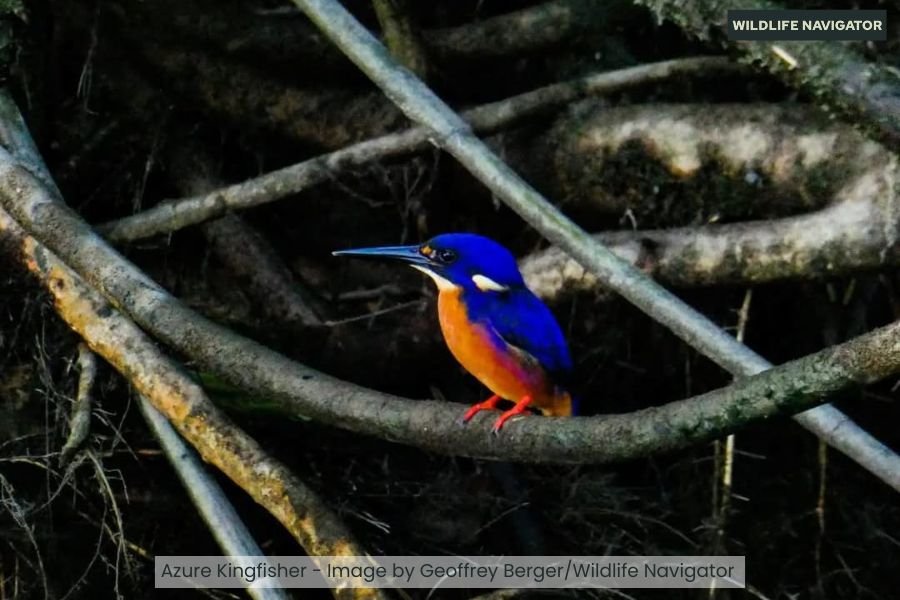
Scientific name: Ceyx azureus
Range: Australia, New Guinea and nearby islands
Habitat: Rivers, streams, creeks, lagoons and other freshwater habitats
Conservation status: Least Concern
The Azure Kingfisher is a small, vividly coloured kingfisher found across parts of Australia and New Guinea. It is recognised by its bright blue upperparts, orange to rufous underparts, and long dark bill. Despite its small size, its intense blue plumage makes it one of the more distinctive kingfishers within its range.
The species is closely associated with freshwater environments and is commonly found along slow-moving or still water where suitable perches allow it to watch for prey. It feeds mainly on aquatic and terrestrial animals, including small fish, crustaceans and insects.
The species has a broad distribution across Australia, including northern, eastern and southeastern regions, as well as Tasmania and parts of New Guinea and surrounding islands. Several subspecies have been recognised across this wide range.
Taxonomic note: Ceyx azureus has historically been placed in the genus Alcedo under the combination Alcedo azurea. Its classification and treatment of geographically distinct populations have changed between taxonomic authorities.
Indigo-banded Kingfisher

Scientific name: Ceyx cyanopectus
Range: Philippines
Habitat: Streams and tropical moist lowland forests
Conservation status: Least Concern
The Indigo-banded Kingfisher is a small kingfisher endemic to the Philippines. It occurs on several Philippine islands, including Luzon, Mindoro, Masbate and islands in the western Visayas. Its distribution is closely associated with forested areas containing streams and other suitable freshwater habitats.
The species is characterised by its compact body, blue and orange plumage, and distinctive indigo-blue banding across the breast. Differences in bill colour and plumage have also been reported between populations from northern and southern parts of its range.
Two subspecies have traditionally been recognised: C. c. cyanopectus in the northern part of the range and C. c. nigrirostris in the western Visayas. Some taxonomic treatments have considered these populations sufficiently distinct to warrant species-level separation.
Habitat loss and degradation are important concerns for this island-restricted species, particularly where forest and freshwater environments are affected by land-use change.
Taxonomic note: The species has a history of differing taxonomic treatment, with some authorities recognising northern and southern populations separately. Wildlife Navigator follows the taxonomic treatment used by the selected reference sources and will update the entry if the prevailing classification changes.
Northern Silvery Kingfisher

Scientific name: Ceyx flumenicola
Range: Bohol, Leyte and Samar in the Philippines
Habitat: Tropical moist lowland forest, streams and rivers
Conservation status: Near Threatened
The Northern Silvery Kingfisher is a small kingfisher endemic to the central Philippines. It occurs on Bohol, Leyte and Samar, where it is associated with forested landscapes and freshwater habitats such as streams and rivers.
It has predominantly blue and white plumage, with the pale throat, cheeks and underparts providing an important distinction from the related Southern Silvery Kingfisher. Its restricted island distribution makes the species particularly dependent on the continued availability of suitable forest and freshwater habitat.
The Northern Silvery Kingfisher was formerly treated as part of a broader Silvery Kingfisher species, Ceyx argentatus. The northern and southern populations were subsequently recognised as separate species, with Ceyx flumenicola representing the northern population.
Habitat loss is a major concern because much of the species’ range is confined to islands where forest cover and suitable freshwater environments have been reduced or fragmented.
Taxonomic note: The separation of the northern and southern Silvery Kingfishers illustrates how taxonomic revisions can change the number of recognised species within the dwarf kingfisher group.
Dimorphic Dwarf Kingfisher
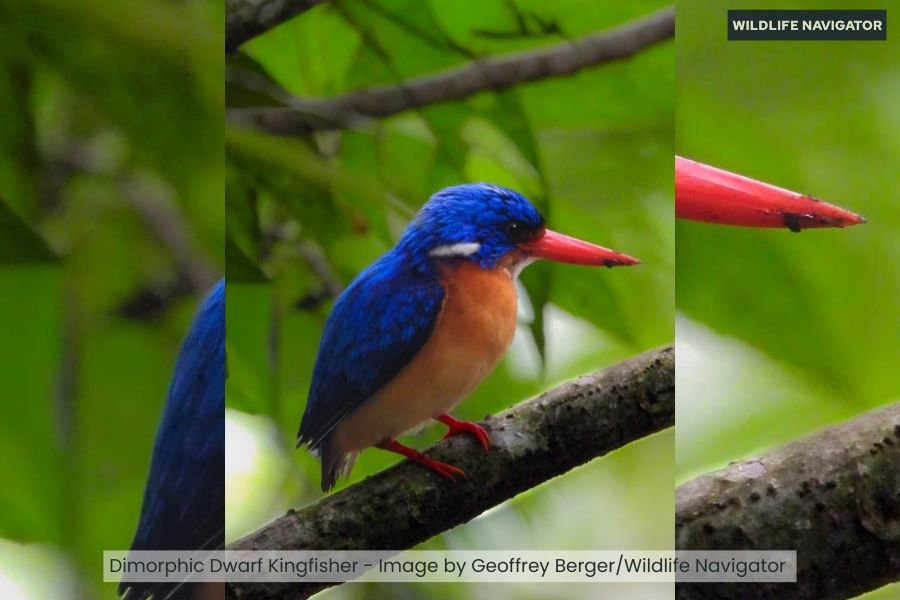
Scientific name: Ceyx margarethae
Range: Central and southern Philippines
Habitat: Tropical moist lowland forests
Conservation status: Least Concern
The Dimorphic Dwarf Kingfisher is a small kingfisher endemic to the central and southern Philippines. It occurs across a number of islands, including Negros, Cebu, Mindanao, Jolo and several smaller islands.
The species is particularly notable for its two distinct plumage forms, commonly described as dark and pale morphs. It has blue upperparts, orange underparts and a large red bill, while the throat is white and the facial pattern helps distinguish it from other closely related Ceyx species.
It inhabits tropical moist lowland forests, where it is associated with shaded environments and suitable areas for feeding and nesting. Its island distribution means that individual populations may be separated by substantial geographic barriers.
The Dimorphic Dwarf Kingfisher was formerly included within the broad species concept of the Variable Dwarf Kingfisher, Ceyx lepidus. Molecular and taxonomic research contributed to the subsequent recognition of several island populations as separate species.
Taxonomic note: The species-level recognition of Ceyx margarethae is part of a wider revision of the former Ceyx lepidus complex. This history is important when comparing older bird references with modern species lists.
Papuan Dwarf Kingfisher
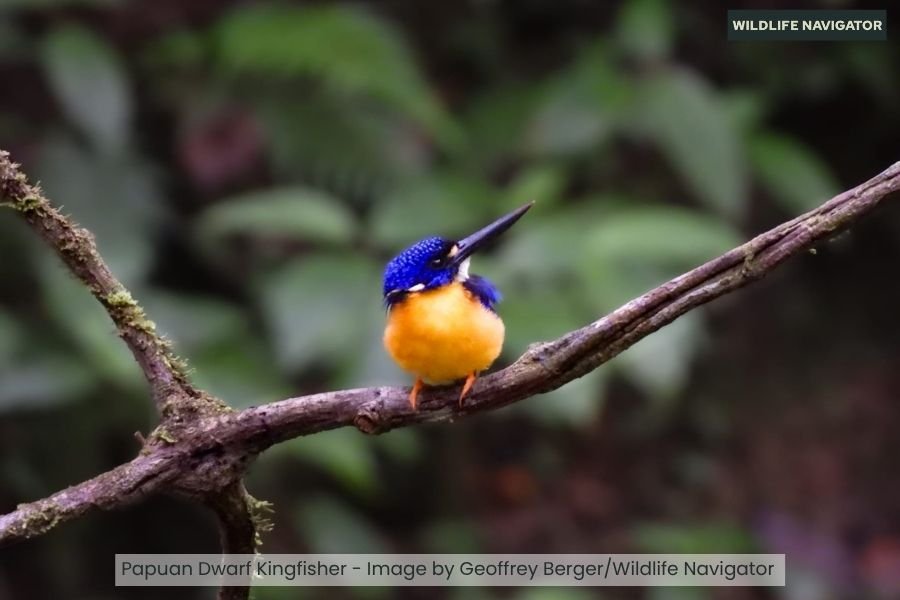
Scientific name: Ceyx solitarius
Range: New Guinea, western Papuan islands, Aru Islands and D’Entrecasteaux Archipelago
Habitat: Subtropical and tropical moist lowland forests
Conservation status: Least Concern
The Papuan Dwarf Kingfisher is a small forest-dwelling kingfisher distributed across parts of New Guinea and surrounding islands. Its range includes the western Papuan islands, the Aru Islands and the D’Entrecasteaux Archipelago.
It is associated primarily with moist lowland forest and belongs to the diverse group of small Ceyx kingfishers found across the Australasian and Southeast Asian regions.
Like several other island forms within the dwarf kingfisher group, the Papuan Dwarf Kingfisher has a significant taxonomic history. It was formerly treated as one of several subspecies within the Variable Dwarf Kingfisher, Ceyx lepidus. Research into the evolutionary relationships of these geographically isolated populations contributed to their recognition as separate species.
Its broad island distribution covers several distinct geographic areas, but populations remain dependent on suitable forest habitat.
Taxonomic note: Older literature may therefore list Ceyx solitarius under Ceyx lepidus. The species is now treated separately in the taxonomic sources followed for this Index.
Black-backed Dwarf Kingfisher

Scientific name: Ceyx erithaca
Range: Indian Subcontinent and mainland Southeast Asia
Habitat: Lowland forests, streams, ponds, wetlands and dense vegetation
Conservation status: Near Threatened
The Black-backed Dwarf Kingfisher is one of the smallest and most distinctive kingfishers found across the Indian Subcontinent and mainland Southeast Asia. It has a bright red bill, orange-yellow underparts, rufous to lilac upperparts and a contrasting blue-black back.
The species is closely associated with forest and wetland habitats, particularly areas containing streams, ponds and dense vegetation. Its diet includes a range of small animals, including insects, spiders, crustaceans, fish, frogs and lizards. Some populations are partially migratory, with seasonal movements occurring in parts of the range.
Its breeding distribution extends through parts of eastern Bangladesh, northeastern India, Myanmar, southern China, Laos, Cambodia and Thailand, with additional populations in western India and Sri Lanka. Some birds move southward during winter into the Malay Peninsula and Sumatra.
Habitat loss and degradation are important threats. The IUCN currently lists the species as Near Threatened, citing a suspected decline of approximately 20–29% over the past ten years.
Taxonomic note: The Black-backed Dwarf Kingfisher was formerly treated together with the Rufous-backed Dwarf Kingfisher in the broader Oriental Dwarf Kingfisher complex. It is now recognised as Ceyx erithaca.
Sulawesi Dwarf Kingfisher
Scientific name: Ceyx fallax
Range: Sulawesi, Indonesia
Habitat: Tropical forest, including dry and lowland forest
Conservation status: Least Concern
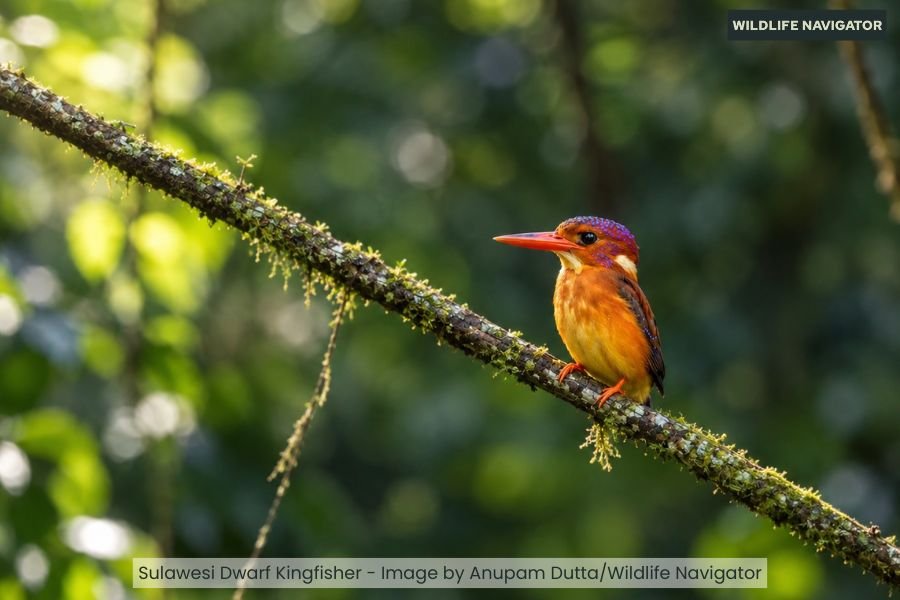
The Sulawesi Dwarf Kingfisher is a small kingfisher endemic to the Indonesian island of Sulawesi. It is also known by names including Celebes Dwarf Kingfisher and Celebes Forest Kingfisher.
Its compact body, blue crown and contrasting orange underparts give it the characteristic colourful appearance associated with many Ceyx kingfishers. The species is primarily associated with forest habitats on Sulawesi and is geographically isolated from many of its close relatives on other islands.
Its island-restricted distribution makes the protection of suitable forest habitat particularly important. Habitat loss and degradation are recognised conservation concerns for the species.
Taxonomic note: Ceyx fallax is a distinct species within the genus Ceyx. Its isolation on Sulawesi forms part of the broader pattern of diversification among dwarf kingfishers across the islands of Southeast Asia and the western Pacific.
The next section should broaden the perspective without repeating the seven profiles. I’d keep it geographical and use the section to establish the wider diversity of the group.
Rufous-backed Dwarf Kingfisher
Scientific name: Ceyx rufidorsa
Range: Malay Peninsula, parts of the Indonesian archipelago and parts of the Philippines
Habitat: Tropical forests, forest streams and other freshwater habitats
Conservation status: Least Concern
The Rufous-backed Dwarf Kingfisher is a small, brightly coloured kingfisher distributed across parts of Southeast Asia. It is closely related to the Black-backed Dwarf Kingfisher and has historically been treated within the same broader species concept.
The species is associated with forested habitats and freshwater environments, where its compact body and vivid plumage are characteristic of the small Ceyx kingfishers. Its range extends across the Malay Peninsula and parts of Indonesia, with additional populations on islands in the Philippines.
Its taxonomic history is particularly important. Ceyx rufidorsa was formerly lumped with Ceyx erithaca, but genetic and other evidence support their treatment as separate species.
Taxonomic note: The species was historically included within the broader Black-backed or Oriental Dwarf Kingfisher complex. It is now recognised separately as Ceyx rufidorsa.
Philippine Dwarf Kingfisher
Scientific name: Ceyx melanurus
Range: Philippines
Habitat: Tropical moist lowland forest
Conservation status: Vulnerable
The Philippine Dwarf Kingfisher is a small kingfisher endemic to the Philippines. Its range includes Luzon, Polillo, Catanduanes, Samar, Leyte, Mindanao and Basilan, although taxonomic treatments differ in how some of these populations are classified.
It inhabits tropical moist lowland forests and is characterised by the compact form and vivid blue, orange and rufous plumage typical of many Ceyx kingfishers.
The species has traditionally included several geographically separated populations. Differences in plumage and other characteristics have contributed to ongoing taxonomic discussion, with some authorities treating the northern and southern Philippine populations differently.
Habitat loss within its island range is an important conservation concern. The species is currently treated as Vulnerable in the 23-species classification used here.
Taxonomic note: The treatment of C. melanurus and its island populations should be checked against the specific taxonomic authority used for the final WN Index because some modern assessments recognise additional species-level divisions.
Sangihe Dwarf Kingfisher
Scientific name: Ceyx sangirensis
Range: Sangihe Islands, Indonesia
Habitat: Forest habitats
Conservation status: Critically Endangered
The Sangihe Dwarf Kingfisher is a highly range-restricted kingfisher endemic to the Sangihe Islands in northern Indonesia, northeast of Sulawesi. Its extremely limited distribution makes it one of the most geographically restricted members of the genus.
The species is associated with forest habitat on Sangihe, an island where natural vegetation has been substantially reduced. Its restricted range leaves the remaining population particularly vulnerable to habitat loss and other environmental pressures.
The species is currently listed as Critically Endangered, and some sources indicate that it may already be extinct or extremely difficult to detect in the wild.
Taxonomic note: Ceyx sangirensis is treated as a distinct species rather than as part of the broader Ceyx species complexes.
Moluccan Dwarf Kingfisher
Scientific name: Ceyx lepidus
Range: Moluccan Islands, Indonesia
Habitat: Tropical forest and associated freshwater environments
Conservation status: Least Concern
The Moluccan Dwarf Kingfisher is a small kingfisher occurring in the Moluccan Islands of Indonesia. It represents the remaining core population of a group that was formerly treated much more broadly as the Variable Dwarf Kingfisher.
It is associated with tropical forest habitats and forms part of the distinctive Ceyx fauna of the Moluccan region. Its range is geographically separated from several closely related species occurring on neighbouring islands.
The species became particularly important in kingfisher taxonomy following genetic research on the former Variable Dwarf Kingfisher complex. Most of the populations previously treated as subspecies were found to have diverged substantially, leading to several being recognised as separate species.
Taxonomic note: Ceyx lepidus was formerly known as the Variable Dwarf Kingfisher and included numerous subspecies. Following the revision of the complex, the name Moluccan Dwarf Kingfisher was adopted for C. lepidus.
Sula Dwarf Kingfisher
Scientific name: Ceyx wallacii
Range: Sula Islands, Indonesia
Habitat: Tropical forest
Conservation status: Near Threatened
The Sula Dwarf Kingfisher is an island-restricted kingfisher endemic to the Sula Islands of Indonesia. It occurs on islands including Taliabu, Seho, Mangole and Sanana.
Its isolated distribution and dependence on suitable forest habitat make it particularly representative of the island diversity found within the Ceyx group. Like several related species, it occupies a relatively small geographic range.
The species is currently assessed as Near Threatened. Continued loss and degradation of forest habitat across its island range could increase pressure on its populations.
Taxonomic note: Ceyx wallacii was formerly treated as one of the island populations within the Variable Dwarf Kingfisher complex before being recognised as a separate species.
Buru Dwarf Kingfisher
Scientific name: Ceyx cajeli
Range: Buru Island, Indonesia
Habitat: Tropical forest
Conservation status: Near Threatened
The Buru Dwarf Kingfisher is a small kingfisher endemic to Buru Island in the southern Moluccas of Indonesia. Its distribution is confined to this single island, making it one of the more geographically restricted species within the genus.
The species occurs in forested environments and is part of the distinctive group of island Ceyx species that evolved across the Indonesian archipelago.
Its restricted range makes habitat condition particularly important to its long-term survival. The species is currently assessed as Near Threatened.
Taxonomic note: Ceyx cajeli was formerly treated as a subspecies within the Variable Dwarf Kingfisher complex. It was elevated to species status following the taxonomic revision of that complex.
Manus Dwarf Kingfisher
Scientific name: Ceyx dispar
Range: Manus Island and the Admiralty Islands, Papua New Guinea
Habitat: Tropical forest
Conservation status: Near Threatened
The Manus Dwarf Kingfisher is a small island kingfisher endemic to the Admiralty Islands of Papua New Guinea. Its principal range is centred on Manus Island.
Its restricted island distribution is characteristic of the northern Melanesian Ceyx group, where closely related kingfishers occur on individual islands or island groups.
The species is associated with forest habitats and is currently assessed as Near Threatened. Its limited range means that changes to forest cover and habitat quality can have a significant effect on its population.
Taxonomic note: Ceyx dispar was formerly treated as part of the Variable Dwarf Kingfisher complex and is now recognised as a distinct species.
New Ireland Dwarf Kingfisher
Scientific name: Ceyx mulcatus
Range: New Ireland, New Hanover and Lihir Islands, Papua New Guinea
Habitat: Tropical forest
Conservation status: Least Concern
The New Ireland Dwarf Kingfisher is an island kingfisher found in the eastern Bismarck Archipelago of Papua New Guinea. Its known range includes New Ireland, New Hanover and the Lihir Islands.
It is part of a distinctive radiation of small Ceyx kingfishers across northern Melanesia. Its island distribution separates it geographically from several closely related species found on neighbouring islands.
The species is associated with forest habitats and is currently assessed as Least Concern, although continued monitoring of restricted island populations remains important.
Taxonomic note: Ceyx mulcatus was formerly included among the island forms of the Variable Dwarf Kingfisher complex before being recognised as a separate species.
New Britain Dwarf Kingfisher
Scientific name: Ceyx sacerdotis
Range: New Britain and Umboi Island, Papua New Guinea
Habitat: Tropical forest
Conservation status: Least Concern
The New Britain Dwarf Kingfisher is a small kingfisher endemic to the islands of the eastern Bismarck Archipelago. It occurs on New Britain and nearby Umboi Island.
Its distribution forms part of the remarkable island diversity of Ceyx in northern Melanesia. The species is associated with forest habitats and has a geographically distinct range separated from those of neighbouring island species.
It is currently assessed as Least Concern, although its island distribution means that changes in forest habitat remain relevant to its long-term conservation.
Taxonomic note: The species was formerly included in the Variable Dwarf Kingfisher complex and is now recognised as Ceyx sacerdotis.
North Solomons Dwarf Kingfisher
Scientific name: Ceyx meeki
Range: Western and central Solomon Islands
Habitat: Tropical forest
Conservation status: Least Concern
The North Solomons Dwarf Kingfisher is a small island kingfisher found across parts of the western and central Solomon Islands. Two subspecies have traditionally been recognised within the species.
Its distribution across the Solomon Islands places it within one of the most diverse regions for island Ceyx species. The species is associated with forest habitats and is separated geographically from several closely related dwarf kingfishers occurring farther south and east.
It is currently assessed as Least Concern.
Taxonomic note: Ceyx meeki was one of the island forms historically associated with the broader Variable Dwarf Kingfisher complex. Its present species-level treatment reflects the substantial geographic differentiation found among these island populations.
New Georgia Dwarf Kingfisher
Scientific name: Ceyx collectoris
Range: New Georgia group, Solomon Islands
Habitat: Tropical forest
Conservation status: Least Concern
The New Georgia Dwarf Kingfisher is a small kingfisher endemic to the New Georgia group in the Solomon Islands. Its distribution is centred on the western and central Solomon Islands.
Its restricted island range is typical of the northern Melanesian Ceyx species, many of which occur on individual islands or small island groups.
The species is associated with forest habitats and is currently assessed as Least Concern. Maintaining suitable natural habitat across its limited range remains important for the species.
Taxonomic note: Ceyx collectoris was formerly included among the island populations of the Variable Dwarf Kingfisher complex and is now recognised as a separate species.
Guadalcanal Dwarf Kingfisher
Scientific name: Ceyx nigromaxilla
Range: Guadalcanal, Solomon Islands
Habitat: Tropical forest
Conservation status: Least Concern
The Guadalcanal Dwarf Kingfisher is a small kingfisher endemic to Guadalcanal in the Solomon Islands. Two subspecies have traditionally been recognised.
The species occupies the forest environments of its island range and forms part of the exceptionally diverse assemblage of Ceyx kingfishers found across Melanesia.
Its restricted distribution makes it dependent on the continued availability of suitable habitat on Guadalcanal. It is currently assessed as Least Concern.
Taxonomic note: Like several other Melanesian dwarf kingfishers, Ceyx nigromaxilla was formerly associated with the Variable Dwarf Kingfisher complex before receiving species-level recognition.
Makira Dwarf Kingfisher
Scientific name: Ceyx gentianus
Range: Makira Island, Solomon Islands
Habitat: Tropical forest
Conservation status: Least Concern
The Makira Dwarf Kingfisher is a small kingfisher endemic to Makira Island in the southeastern Solomon Islands. Its extremely localised distribution makes it one of the geographically distinctive members of the genus.
The species is associated with forest habitat on Makira and forms part of the wider radiation of island kingfishers across the Solomon Islands.
It is currently assessed as Least Concern, although the restricted island range makes continued monitoring of its habitat important.
Taxonomic note: Ceyx gentianus was formerly treated as an island population within the broader Variable Dwarf Kingfisher complex and is now recognised as a separate species.
Southern Silvery Kingfisher
Scientific name: Ceyx argentatus
Range: Mindanao and Basilan, Philippines
Habitat: Tropical forest and freshwater environments
Conservation status: Near Threatened
The Southern Silvery Kingfisher is a small kingfisher endemic to the southern Philippines. Its known range includes Mindanao and Basilan, where it occurs in forested environments associated with freshwater habitats.
It has predominantly blue and pale plumage and is closely related to the Northern Silvery Kingfisher, which occurs farther north in the Philippines.
The species has a relatively restricted distribution and is currently assessed as Near Threatened. Habitat loss and fragmentation within its island range are important conservation considerations.
Taxonomic note: The Southern and Northern Silvery Kingfishers were historically treated more broadly before being recognised as separate species. Their separation reflects geographic and taxonomic differentiation within the former Silvery Kingfisher complex.
Bismarck Kingfisher
Scientific name: Ceyx websteri
Range: Bismarck Archipelago, Papua New Guinea
Habitat: Tropical lowland forest
Conservation status: Vulnerable
The Bismarck Kingfisher is a small kingfisher endemic to the Bismarck Archipelago of Papua New Guinea. It occurs primarily in lowland habitats across the island group.
Its restricted island distribution places it among the geographically specialised Ceyx species of the western Pacific. The species is associated with forest habitats and is separated from related kingfishers by the deep-water channels and islands of the Bismarck region.
The species is currently assessed as Vulnerable. Its restricted distribution and dependence on suitable lowland forest make habitat protection important for its conservation.
Taxonomic note: The Bismarck Kingfisher is a distinct species within Ceyx. Its placement in the genus reflects molecular and morphological work that resulted in several species historically assigned to Alcedo being transferred to Ceyx.
Little Kingfisher
Scientific name: Ceyx pusillus
Range: Northern Australia, Indonesia, Papua New Guinea and the Solomon Islands
Habitat: Streams, rivers, wetlands, mangroves and forested freshwater habitats
Conservation status: Least Concern
The Little Kingfisher is a small kingfisher with a broad distribution across northern Australia and parts of Indonesia, Papua New Guinea and the Solomon Islands. Its range spans a large portion of the Australasian region.
It is closely associated with freshwater environments and can occur around streams, rivers, wetlands and other suitable aquatic habitats. Its broad geographic range distinguishes it from many of the highly localised island species within Ceyx.
Several geographically distinct subspecies have traditionally been recognised across its range, reflecting the considerable distance between some of its populations.
The Little Kingfisher is currently assessed as Least Concern.
Taxonomic note: The species was historically placed in the genus Alcedo. Molecular studies of the alcedinine kingfishers contributed to its transfer to Ceyx, where it is now treated as Ceyx pusillus.
Dwarf Kingfisher Distribution and Diversity
Dwarf kingfishers occur across a broad region extending from the Indian Subcontinent and mainland Southeast Asia through the Philippines and Indonesia to New Guinea, Australia, and several surrounding islands. Their distribution is strongly influenced by the geography of South and Southeast Asia and the islands of the Indo-Australasian region, where isolated populations have evolved independently over long periods.
The greatest diversity occurs across the tropical islands of Southeast Asia and the western Pacific. Indonesia, the Philippines, New Guinea and neighbouring islands support numerous Ceyx species, many of which have relatively restricted geographic ranges. In contrast, some species, such as the Black-backed Dwarf Kingfisher and Azure Kingfisher, occupy substantially broader ranges.
South Asia
South Asia represents the western part of the distribution of several dwarf kingfishers. The Black-backed Dwarf Kingfisher occurs across parts of the Indian Subcontinent, including India and Sri Lanka, as well as extending eastward into mainland Southeast Asia.
Its presence in South Asia demonstrates that dwarf kingfishers are not restricted to island environments, although many species within the wider group have highly localised island distributions.
Southeast Asia
Mainland and island Southeast Asia contain an important concentration of dwarf kingfisher diversity. Forests, streams, rivers and other freshwater environments provide suitable habitats for several Ceyx species.
The region is also significant from a taxonomic perspective. Populations separated by mountains, islands, rivers and other geographic barriers have undergone evolutionary divergence, resulting in closely related species with relatively small ranges.
Philippines
The Philippines is particularly important for dwarf kingfisher diversity. Its numerous islands have produced a complex pattern of geographically restricted populations, several of which are now recognised as separate species.
Species such as the Indigo-banded Kingfisher, Northern Silvery Kingfisher and Dimorphic Dwarf Kingfisher illustrate this island-driven diversification. Their distributions are often limited to particular islands or island groups, making local habitat protection important for maintaining their populations.
Indonesia
Indonesia supports several dwarf kingfisher species across its extensive network of islands. Sulawesi, in particular, is home to the endemic Sulawesi Dwarf Kingfisher, while other Ceyx species occur across parts of the Indonesian archipelago.
The country’s complex island geography has played an important role in the diversification of its kingfishers. Populations isolated on different islands can develop distinctive characteristics and eventually become recognised as separate species.
Papua New Guinea and Australia
Papua New Guinea and its surrounding islands support several dwarf kingfishers, including the Papuan Dwarf Kingfisher. The region forms an important eastern centre of diversity for the group.
Australia is home to the Azure Kingfisher, which occurs mainly in association with freshwater habitats. Its distribution extends into New Guinea and nearby islands, linking the dwarf kingfisher fauna of Australia with that of the wider Australasian region.
Island Diversity and Species Evolution
The distribution of dwarf kingfishers demonstrates the strong influence of island geography on species diversity. Many populations have been separated from their closest relatives by stretches of ocean, allowing them to evolve independently.
This pattern is particularly evident within the Ceyx lineage, where closely related populations may occupy different islands or geographically isolated regions. As genetic, morphological and distributional evidence improves, some of these populations may be recognised differently by taxonomic authorities.
Consequently, the number of recognised dwarf kingfisher species is not necessarily fixed. Taxonomic revisions can change the boundaries between species, particularly where previously recognised subspecies or species complexes are reassessed.
For this reason, the distribution of dwarf kingfishers is best understood as an evolving picture of diversity rather than a permanently fixed list. Wildlife Navigator will update this Index as species classifications and reliable distribution information develop.
Dwarf Kingfisher Taxonomy
Most dwarf kingfishers are classified in the genus Ceyx, within the kingfisher family Alcedinidae. The genus includes small kingfishers distributed across South and Southeast Asia, the Philippines, Indonesia, New Guinea, Australia and surrounding islands.
The taxonomy of Ceyx has been revised as new morphological, geographical, vocal and genetic evidence has become available. Several populations once treated as subspecies or parts of wider species complexes are now recognised as distinct species.
This history is particularly relevant to island populations, where geographic isolation has produced closely related forms with restricted ranges. It also means that species numbers and names can differ between bird taxonomic authorities.
Taxonomic Note for This Index
Wildlife Navigator follows a defined taxonomic reference for the species list and records significant changes when the classification is revised. Individual species profiles include a taxonomic note only where it helps explain a relevant name change, species split or former species treatment.
Taxonomy is therefore treated as a maintained reference point rather than a fixed species count. The Index can be updated as recognised classifications change without requiring the overall structure of the article to be rewritten.
Frequently Asked Questions

Documenting Dwarf Kingfishers across the world.

Curating and documenting wildlife and protected areas through detailed guides and the continuously updated WN Index.
-
Rosan Prasad

-
Rosan Prasad

-
Rosan Prasad

-
Rosan Prasad