Ostrich – The World’s Largest Bird | Facts, Habitat & Adaptations

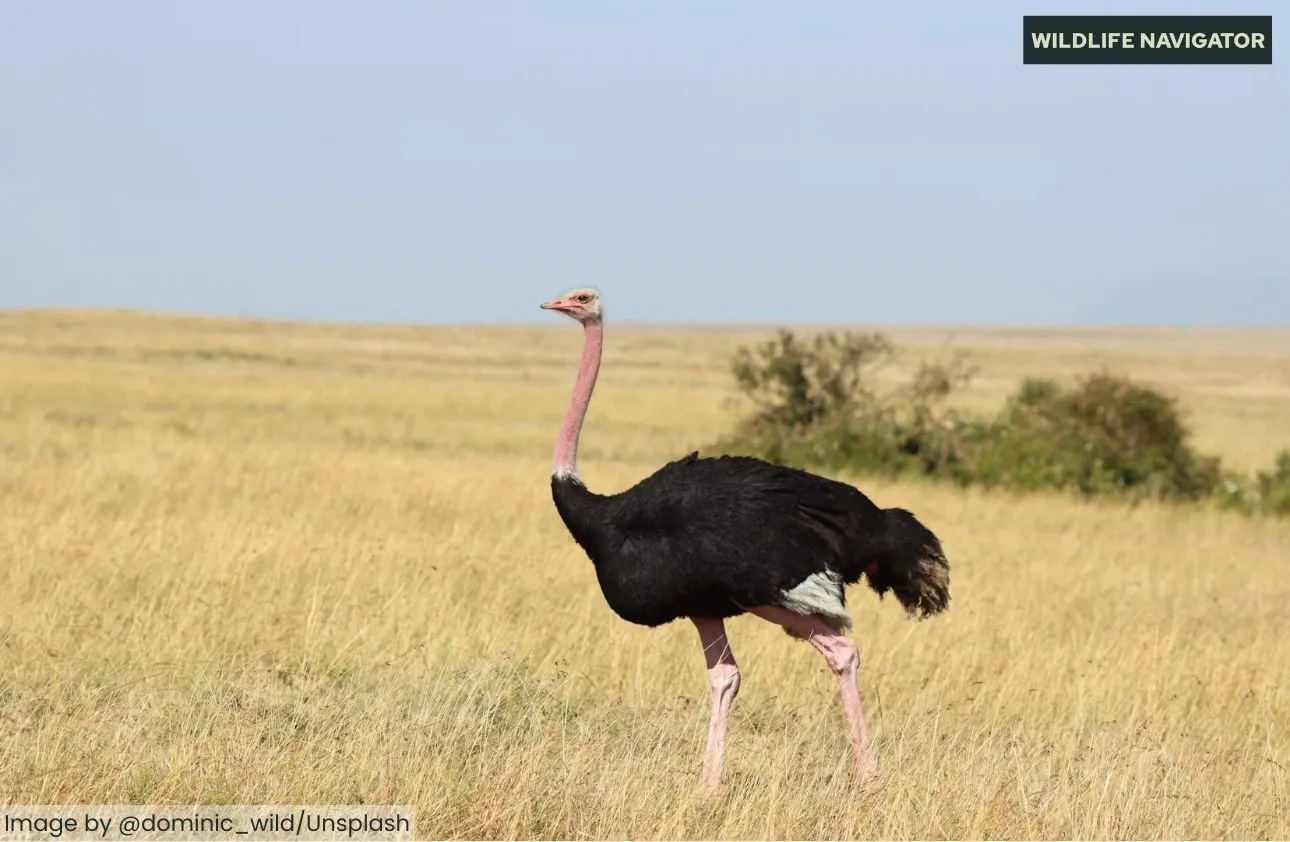
The ostrich is one of the most remarkable animals on Earth. Known as the world’s largest and heaviest living bird, the ostrich stands out for its impressive size, incredible speed, and unique adaptations. Unlike most birds, ostriches cannot fly. Instead, they have evolved powerful legs that allow them to run across the African savannas at extraordinary speeds, making them the fastest birds on land.
Native to Africa, ostriches have fascinated humans for centuries. Their large eyes, long necks, distinctive feathers, and giant eggs make them unlike any other bird species. From surviving harsh desert conditions to defending themselves against predators such as lions and hyenas, ostriches are perfectly adapted to life in some of Africa’s most challenging environments.
In this article, we’ll explore everything you need to know about ostriches, including their physical characteristics, habitat, behaviour, diet, reproduction, conservation status, and fascinating facts.
What Is an Ostrich?
The ostrich (Struthio camelus) is a large, flightless bird belonging to the family Struthionidae. It is the only living member of its genus and is considered one of the most ancient bird lineages still surviving today.
Ostriches belong to a group of flightless birds known as ratites, which also includes emus, cassowaries, kiwis, and rheas. Unlike flying birds, ratites have a flat breastbone without the keel structure needed to support powerful flight muscles.
Although they cannot fly, ostriches have developed other remarkable adaptations. Their strong legs enable them to outrun many predators, while their keen eyesight helps them detect danger from long distances.
Quick Facts About Ostriches
- Scientific Name: Struthio camelus
- Class: Aves
- Family: Struthionidae
- Native Range: Africa
- Height: Up to 2.7 meters (9 feet)
- Weight: Up to 150 kilograms (330 pounds)
- Lifespan: 30–40 years in the wild, up to 50 years in captivity
- Diet: Omnivorous
- Conservation Status: Least Concern
Physical Characteristics of an Ostrich
Ostriches are instantly recognizable due to their enormous size and unusual appearance.
Size and Weight
The ostrich is the largest living bird in the world. Adult males can reach heights of approximately 2.7 meters (9 feet), while females are slightly smaller.
Males typically weigh between 100 and 150 kilograms (220–330 pounds), whereas females usually weigh between 90 and 110 kilograms (198–242 pounds).
Their large body size provides several advantages, including improved heat regulation and enhanced defense against predators.
Feathers and Appearance
Male ostriches are known for their striking black feathers with white wing and tail plumes. Females have grayish-brown feathers that help them blend into their surroundings while nesting.
Unlike flying birds, ostrich feathers are soft and loose because they do not need the rigid structure required for flight.
Their long necks allow them to spot predators over great distances, while their small heads contain highly developed eyes and sensory organs.
Eyes and Vision
Ostriches possess some of the largest eyes of any land animal, measuring nearly 5 centimeters (2 inches) in diameter.
Their exceptional eyesight allows them to detect movement from several kilometers away. This adaptation is crucial in open grasslands where predators can approach from long distances.
Where Do Ostriches Live?
Geographic Distribution
Ostriches are native to Africa and can be found in several countries across the continent. Their range includes regions of:
- South Africa
- Namibia
- Botswana
- Kenya
- Tanzania
- Ethiopia
- Sudan
Historically, ostriches occupied a much larger range across Africa and parts of the Middle East.
Habitat
Ostriches thrive in open environments where they can easily spot approaching predators.
Their preferred habitats include:
- Savannas
- Grasslands
- Semi-desert regions
- Open woodlands
- Dry plains
Dense forests are generally unsuitable because limited visibility makes it difficult for ostriches to detect danger.
Ostrich Adaptations for Survival
The ostrich possesses several remarkable adaptations that allow it to survive in challenging environments.
Incredible Running Speed
Since ostriches cannot fly, they rely on speed as their primary defense.
They can run at speeds of up to 70 kilometers per hour (43 miles per hour), making them the fastest birds on land.
Their long legs allow them to cover distances of up to 5 meters (16 feet) in a single stride. Even at lower speeds, they can travel efficiently for long periods.
Powerful Legs and Defensive Kicks
Ostrich legs are among the strongest in the animal kingdom.
Each foot has only two toes, an unusual adaptation that increases running efficiency. The larger toe bears most of the bird’s weight and functions similarly to a hoof.
When threatened, ostriches can deliver powerful kicks capable of injuring or even killing predators.
Surviving Harsh Conditions
Ostriches are well adapted to hot climates.
Their feathers help regulate body temperature by providing insulation against both heat and cold. They can tolerate significant temperature fluctuations between day and night.
Additionally, ostriches can survive for extended periods without drinking water by obtaining moisture from the plants they consume.
What Do Ostriches Eat?
Ostriches are omnivores, meaning they eat both plant and animal matter.
Plant-Based Foods
Most of their diet consists of:
- Grass
- Leaves
- Seeds
- Flowers
- Fruits
- Shrubs
These food sources provide essential nutrients and moisture.
Animal Matter
Ostriches occasionally consume:
- Insects
- Beetles
- Locusts
- Small reptiles
- Other small animals
Animal foods provide additional protein, particularly during growth and breeding periods.
Unique Digestive System
Unlike mammals, ostriches do not have teeth.
Instead, they swallow small stones known as gastroliths. These stones remain in the bird’s gizzard, where they help grind food into smaller particles for digestion.
This adaptation allows ostriches to process tough plant material efficiently.
Ostrich Behaviour and Social Life
Daily Activities
Ostriches are active during daylight hours.
A typical day includes:
- Feeding
- Walking across grasslands
- Resting
- Grooming feathers
- Watching for predators
They spend much of their time searching for food while remaining alert to potential threats.
Social Structure
Ostriches often live in small groups ranging from five to fifty individuals.
Living in groups provides several advantages:
- Increased predator detection
- Improved breeding opportunities
- Enhanced protection for young birds
Ostriches frequently associate with grazing mammals such as zebras and antelopes. These mixed-species groups benefit from each other’s ability to detect predators.
Communication
Ostriches communicate using a combination of visual displays and vocal sounds.
Males produce deep booming calls during courtship and territorial displays. They may also hiss or grunt when threatened.
Body movements, wing displays, and posture changes are important forms of communication within ostrich groups.
Reproduction and Life Cycle
Courtship Behavior
The breeding season varies depending on location and environmental conditions.
During courtship, males perform elaborate displays that include:
- Wing spreading
- Dancing movements
- Head bobbing
- Deep vocalizations
These displays help attract females and establish dominance over rival males.
Nesting
Unlike many birds, ostriches create shallow nests directly on the ground.
A dominant male usually mates with several females, but one dominant female often lays her eggs in the center of the nest, where they are best protected.
Ostrich Eggs
Ostrich eggs are the largest eggs produced by any living bird.
A single egg can weigh between 1.2 and 2 kilograms (2.6–4.4 pounds) and is equivalent to approximately 20–24 chicken eggs.
The thick shell provides excellent protection for the developing chick.
Incubation
Both males and females participate in incubation.
Females typically incubate during the day, while the darker-colored male takes over at night. This arrangement helps camouflage the nest from predators.
Incubation lasts approximately 42 days.
Growth of Chicks
Newly hatched chicks are surprisingly large and can walk shortly after emerging from the egg.
They grow rapidly, gaining strength and independence within a few months.
However, young ostriches face many dangers, including predators such as jackals, hyenas, and birds of prey.
Predators and Threats
Natural Predators
Adult ostriches are difficult prey due to their size and speed.
However, they may occasionally fall victim to:
- Lions
- Leopards
- Cheetahs
- Hyenas
Eggs and chicks are much more vulnerable and are commonly targeted by:
- Jackals
- Vultures
- Mongooses
- Birds of prey
Human-Related Threats
Human activities can also affect ostrich populations.
Major threats include:
- Habitat degradation
- Agricultural expansion
- Hunting
- Egg collection
- Human-wildlife conflict
Fortunately, many ostrich populations remain stable due to their adaptability and widespread distribution.
Conservation Status
According to the International Union for Conservation of Nature (IUCN), the common ostrich is currently classified as Least Concern.
This status indicates that the species is not facing an immediate risk of extinction.
Conservation measures include:
- Protected wildlife reserves
- National parks
- Habitat management
- Sustainable wildlife practices
Continued conservation efforts help ensure that ostriches remain a thriving part of Africa’s ecosystems.
Ostrich vs Emu: What’s the Difference?
Although ostriches and emus are both large flightless birds, they differ significantly.
| Ostrich | Emu |
|---|---|
| Native to Africa | Native to Australia |
| Largest bird in the world | Second-largest bird in the world |
| Two toes on each foot | Three toes on each foot |
| Faster runner | Slightly smaller and lighter |
| Males have black-and-white plumage | Brown feather colouration |
Both species are fascinating examples of convergent evolution among flightless birds.
Why Ostriches Are Important to Ecosystems
Ostriches play several important ecological roles.
- Seed Dispersal: By consuming fruits and vegetation, ostriches help disperse seeds across large areas, contributing to plant regeneration.
- Food Web Contribution: Ostriches serve as both predators and prey within their ecosystems.
They consume insects and small animals while also providing food for large carnivores under certain circumstances.
Ecosystem Health
As large herbivores and omnivores, ostriches influence vegetation patterns and contribute to the overall balance of African grassland ecosystems.
Fascinating Ostrich Facts
- The ostrich is the largest living bird on Earth.
- It is the fastest bird on land.
- Ostrich eggs are the largest eggs produced by any living bird.
- Ostriches have only two toes on each foot.
- Their eyes are larger than their brains.
- They can survive for long periods with limited water.
- A powerful ostrich kick can seriously injure predators.
- Their wings help maintain balance while running.
- Ostriches can change direction quickly at high speeds.
- The myth that ostriches bury their heads in the sand is false.
Conclusion
The ostrich is truly one of nature’s most extraordinary creations. As the world’s largest bird, it has evolved a unique combination of size, speed, strength, and adaptability that allows it to thrive across Africa’s grasslands and semi-arid landscapes. From its giant eggs and remarkable eyesight to its record-breaking running speed, the ostrich demonstrates how evolution can produce highly specialized animals perfectly suited to their environment.
Despite facing threats from habitat changes and human activities, ostrich populations remain relatively stable thanks to conservation efforts and protected habitats. By understanding and appreciating these magnificent birds, we can continue supporting the conservation of Africa’s incredible wildlife for future generations.
Frequently Asked Questions
Curating and documenting wildlife and protected areas through detailed guides and the continuously updated WN Index.
- Rosan Prasad

- Rosan Prasad

- Rosan Prasad

- Rosan Prasad