Giraffe – The Tallest Animal in the World | Facts, Habitat & Diet

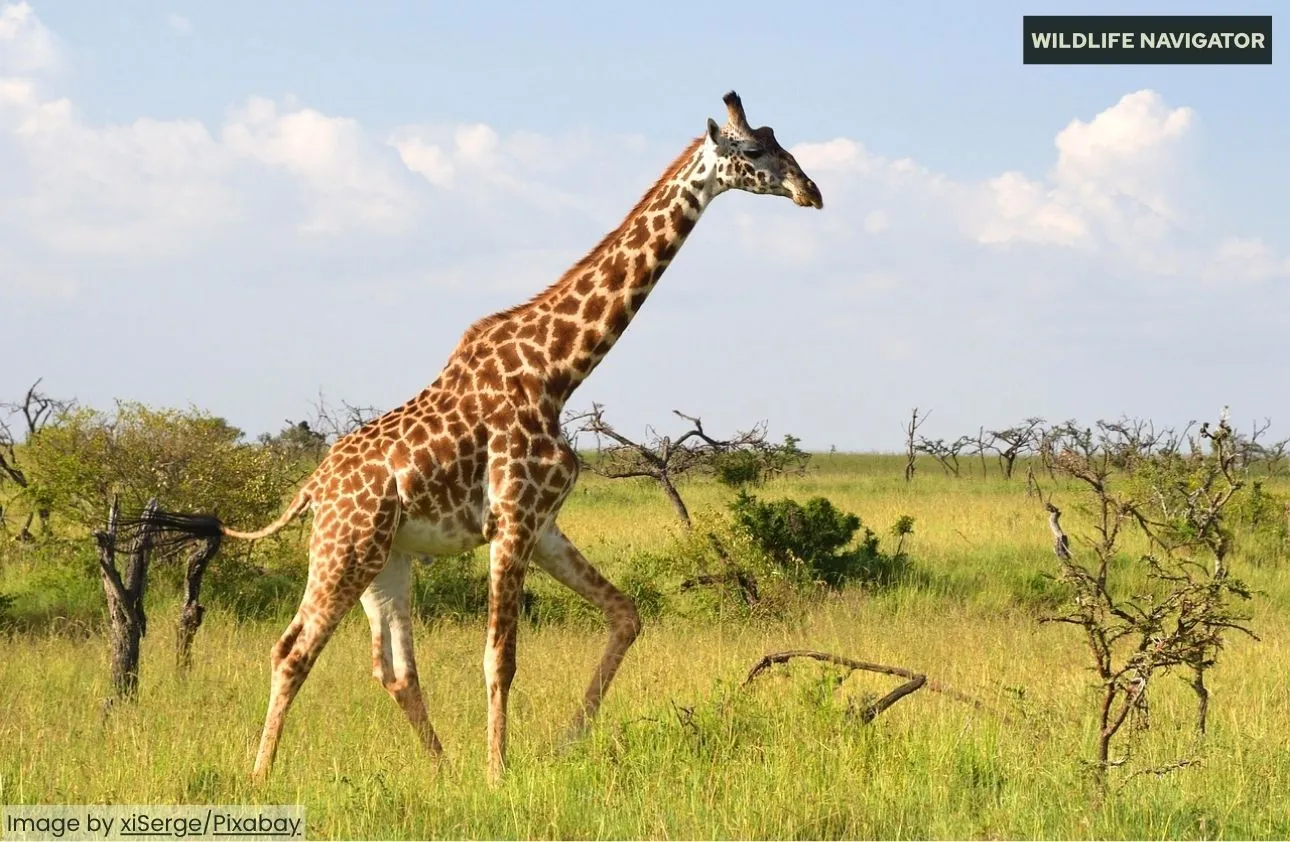
Towering above the African savanna, the giraffe is one of the most recognizable and fascinating animals on Earth. Known for its extraordinary height, long neck, and beautifully patterned coat, the giraffe holds the title of the tallest living land animal in the world. These gentle giants have captured human imagination for centuries, appearing in ancient art, folklore, wildlife documentaries, and conservation campaigns.
Giraffes are native to Africa and play a vital role in maintaining the health of ecosystems. Their unique feeding habits help shape vegetation, disperse seeds, and create opportunities for other wildlife species. Despite their impressive stature and widespread popularity, giraffe populations have declined significantly in recent decades due to habitat loss, human-wildlife conflict, and poaching.
This article explores everything you need to know about giraffes, including their physical characteristics, habitat, behaviour, diet, reproduction, conservation status, and fascinating facts that make them one of nature’s most remarkable creations.
What Is a Giraffe?
The giraffe (Giraffa) is a large hoofed mammal belonging to the family Giraffidae. It is the tallest terrestrial animal and is closely related to the okapi, another unique African mammal found in the rainforests of the Democratic Republic of the Congo.
Modern scientific research recognizes four distinct giraffe species:
- Northern Giraffe (Giraffa camelopardalis)
- Reticulated Giraffe (Giraffa reticulata)
- Masai Giraffe (Giraffa tippelskirchi)
- Southern Giraffe (Giraffa giraffa)
Although all giraffes share similar physical features, each species possesses unique coat patterns and occupies different regions across Africa.
Quick Facts About Giraffes
- Scientific Name: Giraffa
- Class: Mammalia
- Order: Artiodactyla
- Family: Giraffidae
- Average Height: 14–19 feet (4.3–5.8 meters)
- Average Weight: 800–1,900 kilograms
- Lifespan: 20–30 years
- Diet: Herbivore
- Habitat: Savannas, woodlands, and grasslands of Africa
Physical Characteristics of a Giraffe
Height and Weight
Giraffes, specifically “Giraffa camelopardalis”, are famous for their incredible height. Adult males can reach up to 19 feet (5.8 meters) tall, while females typically grow between 14 and 16 feet (4.3–4.9 meters). A fully grown male can weigh more than 1,900 kilograms, making giraffes among the largest land mammals after elephants and rhinoceroses.
Long Neck
A giraffe’s neck is its most iconic feature. Surprisingly, giraffes have only seven neck vertebrae—the same number as humans. However, each vertebra is greatly elongated, allowing the neck to reach lengths of over 6 feet (1.8 meters).
The long neck enables giraffes to access food sources unavailable to most other herbivores, reducing competition for resources.
Coat Patterns
Every giraffe possesses a unique pattern of patches and markings, similar to a human fingerprint. These patterns vary among species and help researchers identify individual animals in the wild.
The coat also assists with thermoregulation by helping regulate body temperature in hot African climates.
Ossicones
Both male and female giraffes have horn-like structures known as ossicones. Unlike true horns, ossicones are covered with skin and fur. Males often develop larger ossicones due to frequent combat with rivals.
Tongue Adaptations
A giraffe’s tongue can grow up to 20 inches (50 centimeters) long and is dark blue-black in color. This coloration may help protect it from sunburn while feeding for long periods under intense sunlight.
Their prehensile tongue allows them to strip leaves from thorny branches with remarkable precision.
Why Do Giraffes Have Long Necks?
The giraffe’s long neck has fascinated scientists for generations.
One traditional explanation suggests that giraffes evolved long necks to access leaves high in trees, particularly acacia trees. During periods of food scarcity, this adaptation would provide a significant survival advantage.
Another theory proposes that long necks evolved partly due to sexual selection. Male giraffes engage in a behaviour known as “necking,” where they swing their necks and heads at rivals during battles. Stronger and longer-necked males may gain greater reproductive success.
Today, researchers believe that both feeding advantages and sexual competition likely contributed to the evolution of the giraffe’s extraordinary neck.
Habitat and Distribution
Where Do Giraffes Live?
Giraffes are found exclusively in Africa. Their range extends across eastern, southern, and parts of central Africa.
Preferred Habitats
Giraffes thrive in:
- Savannas
- Open woodlands
- Grasslands
- Shrublands
They prefer areas with abundant trees and shrubs that provide year-round food.
Countries With Wild Giraffe Populations
Giraffes can be found in several African countries, including:
- Kenya
- Tanzania
- Namibia
- Botswana
- South Africa
- Zambia
- Zimbabwe
- Uganda
- Ethiopia
Protected areas and national parks serve as important refuges for many giraffe populations.
Different Types of Giraffes
| No. | Species | Quick Facts |
| 1. | Northern Giraffe | The Northern Giraffe inhabits regions of central and eastern Africa. It is among the most threatened giraffe species due to habitat fragmentation and political instability in parts of its range. |
| 2. | Reticulated Giraffe | Known for its striking geometric coat pattern, the Reticulated Giraffe is native to northern Kenya, southern Ethiopia, and Somalia. |
| 3. | Masai Giraffe | The Masai Giraffe is the largest giraffe species and is commonly found in Kenya and Tanzania. Its patches have irregular, jagged edges. |
| 4. | Southern Giraffe | Southern Giraffes inhabit southern African countries and generally maintain healthier populations than some northern species. |
Diet and Feeding Habits
What Do Giraffes Eat?
Giraffes are herbivores and primarily feed on leaves, flowers, fruits, and buds.
Their favourite food source is the acacia tree, although they consume vegetation from many plant species.
Feeding Strategy
Using their long necks and flexible tongues, giraffes browse foliage high above ground level. This allows them to access food beyond the reach of most herbivores.
Adult giraffes can consume up to 34 kilograms (75 pounds) of plant material per day.
Water Requirements
Giraffes obtain much of their moisture from the plants they eat and can survive for several days without drinking water.
When they do drink, they must spread their front legs wide apart to lower their heads to the ground—a vulnerable position that exposes them to predators.
Behaviour and Social Life
Herd Structure
Giraffes are social animals that live in loose groups called towers.
Unlike many herd animals, giraffe groups are flexible and constantly changing. Individuals frequently join and leave groups without strong long-term bonds.
Communication
Although often considered silent, giraffes communicate through:
- Low-frequency sounds
- Snorts
- Hisses
- Grunts
- Body language
Some vocalizations occur at frequencies too low for humans to hear easily.
Daily Activities
Most giraffes spend their day feeding, walking, resting, and interacting with other members of their group.
They are active during both day and night but often feed during cooler periods.
Sleeping Habits
Giraffes require surprisingly little sleep. Adults may sleep for only 30 minutes to 2 hours per day, usually in short intervals lasting just a few minutes.
Reproduction and Life Cycle
| Courtship and Mating | Male giraffes assess female reproductive status through chemical cues. Competition among males often involves necking contests, where rivals swing their necks to strike one another. |
| Pregnancy | Female giraffes have a gestation period of approximately 15 months. |
| Birth | A giraffe calf enters the world dramatically, falling nearly 6 feet (1.8 meters) to the ground during birth. Within hours, the newborn is capable of standing and walking. |
| Calf Development | Young giraffes remain close to their mothers for protection and nourishment. Calves are particularly vulnerable to predators such as lions, leopards, hyenas, and wild dogs. |
| Lifespan | In the wild, giraffes typically live between 20 and 25 years. Under human care, some individuals can live beyond 30 years. |
Adaptations for Survival
Exceptional Vision
Giraffes possess excellent eyesight, allowing them to detect predators from great distances across open landscapes.
Powerful Kicks
A giraffe’s kick can be powerful enough to injure or kill a lion. Their long legs serve as formidable defensive weapons.
Specialized Circulatory System
Pumping blood to a head located several meters above the heart requires extraordinary adaptations.
Giraffes possess:
- Large, powerful hearts
- High blood pressure
- Specialized blood vessels
- Elastic artery walls
These features prevent fainting when the animal raises or lowers its head.
Heat Regulation
The giraffe’s patch pattern may assist in temperature regulation by facilitating heat exchange through specialized blood vessel networks beneath the skin.
Predators and Threats
Natural Predators
Adult giraffes have relatively few predators due to their size.
However, lions remain their primary natural predator. Crocodiles may attack giraffes near water sources, while calves face threats from hyenas, leopards, and wild dogs.
Human-Induced Threats
Today, the greatest dangers to giraffes come from human activities, including:
- Habitat destruction
- Agricultural expansion
- Infrastructure development
- Illegal hunting
- Civil unrest in some regions
These pressures have caused population declines across many parts of Africa.
Ecological Importance of Giraffes
Giraffes play a significant role in maintaining healthy ecosystems.
- Seed Dispersal: As giraffes consume fruits and vegetation, they transport seeds across vast distances, helping plants colonize new areas.
- Vegetation Management: By feeding selectively on tree canopies, giraffes influence plant growth patterns and prevent certain species from dominating landscapes.
- Supporting Biodiversity: Their browsing activities create habitats and food opportunities for birds, insects, and smaller mammals.
As ecosystem engineers, giraffes contribute to the overall balance of African savanna ecosystems.
Conservation Status
Although many people assume giraffes are abundant, their numbers have declined considerably during the past few decades.
Different giraffe species face varying levels of conservation concern, with some populations classified as vulnerable, endangered, or critically endangered.
Conservation Challenges
Major challenges include:
- Habitat fragmentation
- Human population growth
- Poaching
- Climate change
- Loss of migration corridors
Conservation Efforts
Organizations and governments across Africa are working to protect giraffes through:
- Protected areas
- Wildlife corridors
- Population monitoring
- Anti-poaching programs
- Community-based conservation initiatives
Public awareness and responsible tourism also contribute to giraffe conservation.
Fascinating Giraffe Facts
- Giraffes are the tallest animals on Earth.
- No two giraffes have identical coat patterns.
- Their tongues can reach nearly 20 inches in length.
- A giraffe’s heart weighs around 11 kilograms.
- They can run at speeds of up to 60 km/h (37 mph).
- Newborn calves can stand within an hour of birth.
- Giraffes need surprisingly little sleep.
- Their neck contains only seven vertebrae, just like humans.
- A group of giraffes is called a tower.
- Their powerful kick can deter even large predators.
Giraffe vs Other Tall Animals
Giraffe vs Elephant
While elephants are much heavier, giraffes are significantly taller. An African bush elephant may weigh over 6,000 kilograms, but it rarely exceeds 13 feet in height.
Giraffe vs Camel
Camels possess adaptations for desert survival, but they are much shorter than giraffes, typically standing around 6 to 7 feet tall at the shoulder.
Giraffe vs Ostrich
The ostrich is the tallest bird in the world, reaching up to 9 feet tall. However, it remains far shorter than an adult giraffe.
Conclusion
The giraffe is one of nature’s most extraordinary creations. From its towering height and uniquely patterned coat to its specialized circulatory system and remarkable feeding adaptations, every aspect of the giraffe reflects millions of years of evolutionary refinement. These gentle giants are not only iconic symbols of African wildlife but also important contributors to healthy ecosystems.
Despite their popularity, giraffes face growing challenges in the wild. Habitat loss, fragmentation, and human activities continue to threaten many populations across Africa. Protecting giraffes requires ongoing conservation efforts, scientific research, and public awareness.
By learning about giraffes and supporting conservation initiatives, we can help ensure that future generations continue to witness the world’s tallest animal roaming the African savannas for years to come.
Frequently Asked Questions
Curating and documenting wildlife and protected areas through detailed guides and the continuously updated WN Index.
- Rosan Prasad

- Rosan Prasad

- Rosan Prasad

- Rosan Prasad