Great Indian Bustard: India’s Critically Endangered Grassland Giant

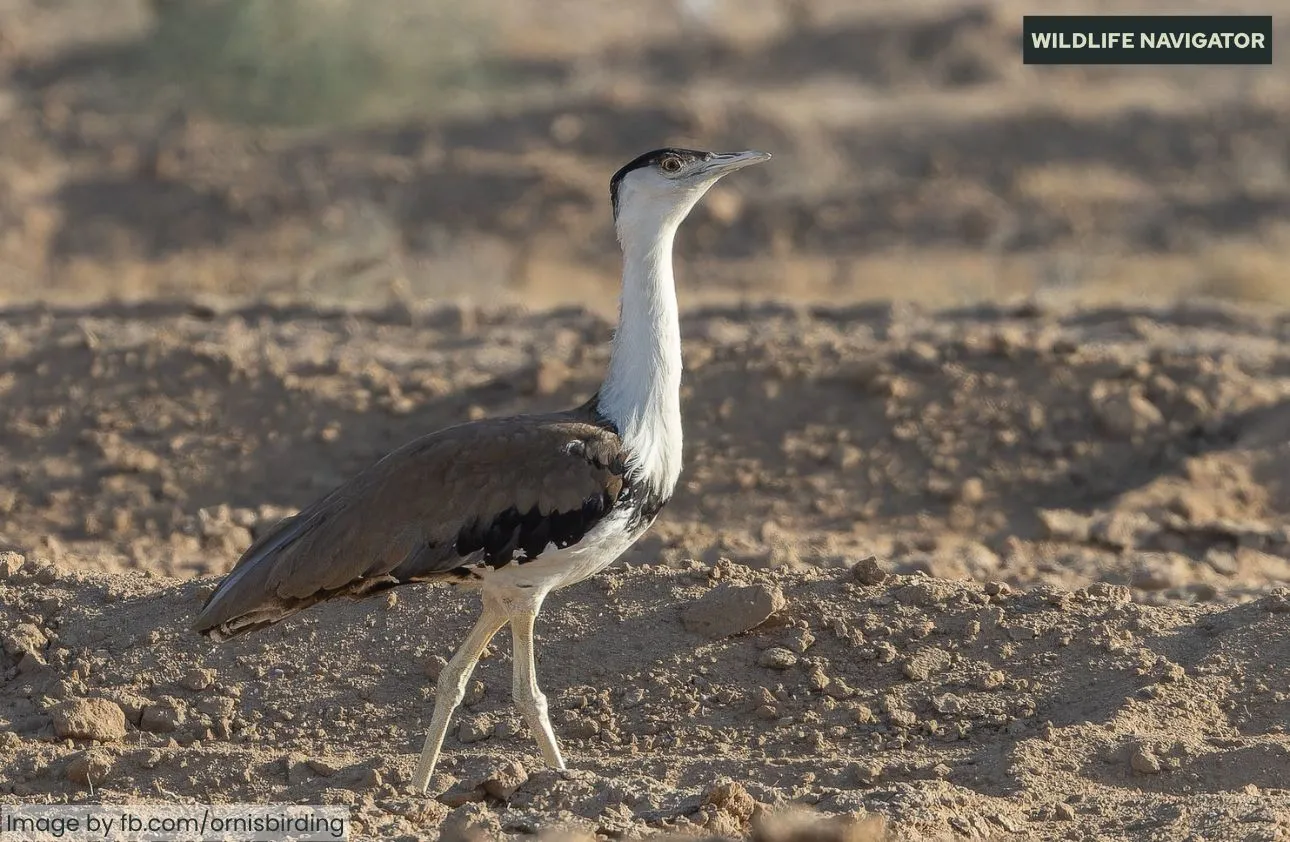
The Great Indian Bustard (Ardeotis nigriceps) is one of India’s most iconic yet endangered birds. Once roaming grasslands across much of the Indian subcontinent, this majestic species has suffered a dramatic population decline and now survives in only a few isolated regions. Known for its impressive size, distinctive appearance, and ecological significance, the Great Indian Bustard is considered a flagship species for India’s grassland ecosystems.
Today, the bird faces numerous threats, including habitat loss, infrastructure development, and deadly collisions with power lines. With fewer than a few hundred individuals remaining in the wild, conservationists regard its survival as one of India’s most urgent wildlife challenges.
This guide explores everything you need to know about the Great Indian Bustard, including its habitat, diet, behaviour, conservation status, and the efforts being made to save it from extinction.
Great Indian Bustard at a Glance
| Feature | Details |
|---|---|
| Scientific Name | Ardeotis nigriceps |
| Family | Otididae |
| Common Name | Great Indian Bustard |
| Conservation Status | Critically Endangered |
| Average Height | 90–120 cm |
| Weight | 8–15 kg |
| Wingspan | Up to 2.4 m |
| Diet | Omnivorous |
| Habitat | Grasslands and semi-arid plains |
| Distribution | Primarily Rajasthan |
| Lifespan | 12–15 years |
Taxonomy and Classification
The Great Indian Bustard belongs to the family Otididae, a group of large terrestrial birds commonly known as bustards. It is one of four bustard species found in India and is among the largest members of its family globally.
Scientific Classification
- Kingdom: Animalia
- Phylum: Chordata
- Class: Aves
- Order: Otidiformes
- Family: Otididae
- Genus: Ardeotis
- Species: Ardeotis nigriceps
The species was once considered closely related to other large bustards found in Africa and Australia. Genetic studies have confirmed its placement within the genus Ardeotis, which includes the Kori Bustard of Africa and the Australian Bustard.
The Great Indian Bustard is endemic to the Indian subcontinent, meaning it naturally occurs nowhere else in the world. This makes India solely responsible for ensuring its survival.
Physical Characteristics
Size and Appearance
The Great Indian Bustard is one of the largest flying birds in India. Adult males can reach heights of over one meter and weigh between 10 and 15 kilograms, while females are generally smaller and lighter.
The bird possesses a distinctive appearance characterised by:
- Long, sturdy legs
- Buff-colored upper body
- White underparts
- Black crown on the head
- Long neck
- Broad wings with contrasting markings
Its upright posture and slow, deliberate movements make it easy to recognize in open grassland habitats.
Male vs Female
Sexual dimorphism is evident in the species.
Males:
- Larger body size
- Heavier weight
- More prominent breeding displays
- Inflatable throat pouch during breeding season
Females:
- Smaller and lighter
- Less conspicuous appearance
- Responsible for incubation and chick care
Adaptations for Grassland Life
The Great Indian Bustard has evolved several adaptations that help it survive in open landscapes:
- Camouflaged plumage blends with dry grasses.
- Long legs allow efficient walking over large distances.
- Excellent eyesight helps detect predators and food.
- Strong wings enable sustained flight despite heavy body weight.
These adaptations make the species perfectly suited to life in India’s grasslands and semi-arid regions.
Distribution and Habitat
Historical Range
Historically, the Great Indian Bustard occupied a vast range across India and parts of present-day Pakistan.
Its former distribution included:
- Rajasthan
- Gujarat
- Maharashtra
- Madhya Pradesh
- Karnataka
- Andhra Pradesh
- Telangana
- Uttar Pradesh
- Haryana
- Punjab
The species was once relatively common in suitable habitats throughout these regions.
Current Range
Today, the bird’s range has contracted dramatically.
Most surviving individuals are concentrated in:
- Rajasthan
- Gujarat
- Maharashtra
- Karnataka
Rajasthan supports the largest and most viable population, making it the species’ primary stronghold.
Preferred Habitat
The Great Indian Bustard prefers open landscapes with minimal tree cover.
Ideal habitats include:
- Natural grasslands
- Semi-arid plains
- Scrublands
- Desert grasslands
- Agricultural fallows
The species avoids dense forests because open visibility is essential for detecting predators and locating food.
Seasonal Movements
Although not a long-distance migratory bird, the Great Indian Bustard may undertake local movements in response to rainfall, food availability, and breeding conditions.
Diet and Feeding Habits
The Great Indian Bustard is an omnivore with a highly varied diet.
Plant-Based Foods
The bird consumes numerous plant materials, including:
- Grass seeds
- Legumes
- Berries
- Fruits
- Groundnuts
- Agricultural grains
Animal-Based Foods
Animal prey forms an important part of its diet.
Common prey includes:
- Grasshoppers
- Locusts
- Beetles
- Ants
- Termites
- Lizards
- Small snakes
- Rodents
Feeding Strategy
The species typically feeds while walking slowly through grasslands. It uses its sharp eyesight to detect insects and other prey hidden among vegetation.
During locust outbreaks, Great Indian Bustards may consume large numbers of insects, helping naturally regulate pest populations.
Seasonal Diet Changes
Food preferences vary throughout the year. During monsoon seasons, insects become abundant and form a larger portion of the diet. During drier periods, seeds and plant materials become increasingly important.
Behaviour and Lifestyle
Daily Routine
The Great Indian Bustard is primarily active during cooler parts of the day.
Its daily activities include:
- Feeding
- Walking
- Resting
- Preening
- Territorial displays
During hot afternoons, birds often seek shade or remain inactive.
Social Structure
The species is generally solitary or found in small groups.
Group sizes vary depending on:
- Food availability
- Breeding season
- Habitat conditions
Large gatherings are uncommon but may occur in productive feeding areas.
Vigilance and Predator Avoidance
Living in open habitats requires constant awareness.
The bird relies on:
- Excellent eyesight
- Early predator detection
- Rapid running
- Powerful flight
Potential predators include foxes, wolves, feral dogs, and large birds of prey.
Flight Ability
Despite its large size, the Great Indian Bustard is a capable flier.
Its flight is characterized by:
- Slow wingbeats
- Strong lift
- Long-distance travel capability
Once airborne, the bird can cover considerable distances efficiently.
Breeding and Reproduction
Breeding Season
Breeding generally coincides with the monsoon season when food resources are abundant.
Rainfall influences:
- Courtship activity
- Nesting success
- Chick survival
Courtship Displays
Male Great Indian Bustards perform elaborate displays to attract females.
These displays include:
- Inflating the throat pouch
- Producing deep booming sounds
- Raising tail feathers
- Walking in a distinctive manner
- Displaying white plumage
These spectacular performances can be observed from considerable distances.
Nesting Behaviour
Unlike many birds, the Great Indian Bustard does not build a complex nest.
The female lays a single egg in:
- A shallow ground scrape
- Open grassland
- Areas with sparse vegetation
This nesting strategy makes eggs vulnerable to predators and disturbance.
Incubation
The female alone incubates the egg for approximately 25–30 days.
During this period she remains highly vigilant and relies on camouflage to avoid detection.
Chick Development
After hatching, the chick remains dependent on its mother for protection and guidance.
Challenges faced by chicks include:
- Predation
- Extreme weather
- Food shortages
- Human disturbance
Because females usually lay only one egg per breeding season, population recovery is naturally slow.
Why Is the Great Indian Bustard Critically Endangered?
The Great Indian Bustard has experienced one of the most severe population declines among Indian birds.
Population Decline
Historical estimates suggest thousands of birds once existed across India. Today, only a fraction of that population remains.
The species is now classified as Critically Endangered by the International Union for Conservation of Nature (IUCN).
Power Line Collisions
Power line collisions are currently considered the greatest threat.
The bird’s:
- Large body size
- Limited frontal vision
- Low flight altitude
make it particularly vulnerable to striking overhead wires.
Many conservationists believe power lines account for a significant proportion of annual mortality.
Habitat Loss
Grasslands are among India’s most threatened ecosystems.
Major causes of habitat loss include:
- Agricultural expansion
- Industrial development
- Urbanization
- Mining
- Infrastructure projects
As grasslands disappear, suitable habitat for the bustard continues to shrink.
Renewable Energy Infrastructure
Wind turbines and solar energy projects often overlap with bustard habitats.
While renewable energy is important, poorly planned developments can increase collision risks and habitat fragmentation.
Human Disturbance
Human activities negatively affect breeding success.
Examples include:
- Vehicle movement
- Livestock grazing
- Tourism pressure
- Construction activities
Predation
Eggs and chicks face predation from:
- Feral dogs
- Foxes
- Crows
- Monitor lizards
Low reproductive rates make these losses particularly significant.
Conservation Efforts
Project Great Indian Bustard
Several government-led initiatives focus on protecting remaining populations.
Objectives include:
- Habitat conservation
- Population monitoring
- Threat reduction
- Community engagement
Captive Breeding Programme
India has established specialized breeding centers to support population recovery.
Goals include:
- Producing healthy chicks
- Maintaining genetic diversity
- Creating future release populations
The program represents one of the most ambitious bird conservation efforts in the country.
Habitat Protection
Protected areas and conservation reserves play a crucial role.
Management actions include:
- Restricting harmful activities
- Monitoring breeding sites
- Restoring degraded habitats
Underground Power Lines
Conservationists advocate burying power lines in critical habitats.
Benefits include:
- Reduced collision risk
- Improved survival rates
- Safer breeding landscapes
Community Participation
Local communities are increasingly involved in conservation efforts through awareness programs and habitat stewardship initiatives.
Desert National Park: The Last Stronghold
Located in western Rajasthan near Jaisalmer and Barmer, Desert National Park is the most important habitat for the Great Indian Bustard.
Why It Matters
The park:
- Supports the largest surviving population
- Contains breeding grounds
- Provides extensive grassland habitat
- Serves as a conservation priority landscape
Habitat Characteristics
The landscape includes:
- Sand dunes
- Rocky outcrops
- Grasslands
- Scrub vegetation
These diverse habitats support numerous desert-adapted species.
Other Wildlife Found Here
Visitors may encounter:
- Chinkara
- Desert Fox
- Indian Wolf
- Desert Cat
- Spiny-tailed Lizard
- Egyptian Vulture
- Laggar Falcon
- Short-toed Snake Eagle
Best Time to Visit
The ideal period for wildlife observation is between October and March when temperatures are pleasant and bird activity is high.
Ecological Importance
Indicator Species
The Great Indian Bustard serves as an indicator of healthy grassland ecosystems.
Its presence suggests:
- Adequate habitat quality
- Balanced ecological processes
- Healthy prey populations
Pest Control
By consuming insects and rodents, the species contributes to natural pest management.
This ecological service benefits both wildlife and agriculture.
Seed Dispersal
The bird may assist in dispersing seeds across grassland habitats, supporting plant diversity.
Biodiversity Conservation
Protecting bustard habitats also safeguards numerous other species, including:
- Lesser Florican
- Indian Courser
- Blackbuck
- Indian Wolf
- Desert Fox
Thus, conserving the Great Indian Bustard benefits entire ecosystems.
Interesting Facts About the Great Indian Bustard
- It is among the heaviest flying birds in the world.
- It is the State Bird of Rajasthan.
- Adult males can weigh over 15 kilograms.
- The species is endemic to the Indian subcontinent.
- It spends most of its life on the ground.
- Females usually lay only one egg each breeding season.
- It can fly long distances despite its large size.
- Its booming courtship calls can be heard from far away.
- It is considered a flagship species for grassland conservation.
- Most surviving birds are found in Rajasthan.
- It once occurred across much of India.
- It is one of the world’s most endangered bird species.
Great Indian Bustard vs Kori Bustard vs Ostrich
| Feature | Great Indian Bustard | Kori Bustard | Ostrich |
|---|---|---|---|
| Can Fly | Yes | Yes | No |
| Height | Up to 1.2 m | Up to 1.5 m | Up to 2.7 m |
| Weight | Up to 15 kg | Up to 19 kg | Up to 150 kg |
| Range | India | Africa | Africa |
| Habitat | Grasslands | Savannas | Deserts & Savannas |
| Conservation Status | Critically Endangered | Least Concern | Least Concern |
Conclusion
The Great Indian Bustard stands as one of India’s most extraordinary yet endangered wildlife species. Once widespread across the country’s grasslands and semi-arid landscapes, it now survives in only a handful of locations. Its decline reflects the growing pressures facing grassland ecosystems, which remain among the least protected habitats in India.
Despite the challenges, there is reason for optimism. Conservation initiatives, captive breeding programs, habitat restoration efforts, and measures to reduce power line collisions are helping create a pathway toward recovery. However, long-term success will require sustained commitment from governments, conservation organizations, scientists, local communities, and the public.
Protecting the Great Indian Bustard is not merely about saving a single bird. It is about preserving an entire ecosystem that supports countless species and provides valuable ecological services. By safeguarding this magnificent grassland giant, India can ensure that future generations continue to witness one of the most remarkable birds ever to inhabit its landscapes.
Frequently Asked Question
Curating and documenting wildlife and protected areas through detailed guides and the continuously updated WN Index.
- Rosan Prasad

- Rosan Prasad

- Rosan Prasad

- Rosan Prasad