North American Beaver: Facts, Habitat, Diet, Behaviour & More

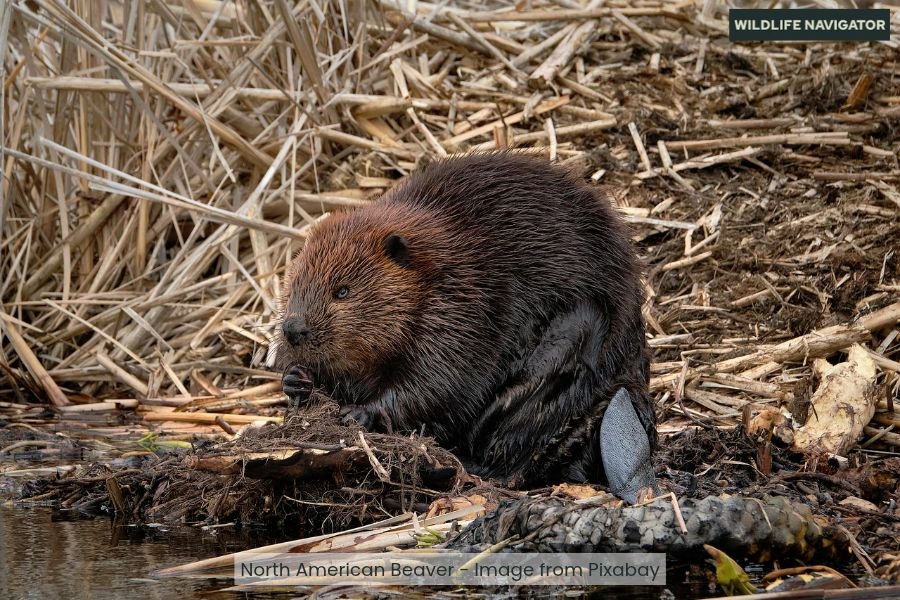
The North American beaver (Castor canadensis) is a large, semi-aquatic rodent native to North America. Recognised by its broad, flattened tail, powerful orange incisors and dense waterproof fur, it is one of the most remarkable mammals inhabiting freshwater ecosystems. It is particularly famous for constructing dams, lodges and canals that transform rivers, streams and surrounding landscapes.
As an herbivore, the North American beaver feeds on tree bark, leaves, twigs, aquatic plants and other vegetation. Its specialised teeth and powerful jaws allow it to cut down trees and process woody plants. It also possesses several adaptations for aquatic life, including webbed hind feet, closable nostrils and ears, and a transparent protective membrane over its eyes.
Beyond its physical characteristics, the species plays an important ecological role. By building dams and creating ponds, beavers help establish wetlands that support numerous other plants and animals. These modified landscapes can influence water storage, sediment movement, vegetation and biodiversity.
Although the North American beaver was historically hunted extensively for its valuable fur, populations recovered across much of its native range following conservation and management efforts. Today, it remains an important component of freshwater ecosystems throughout North America.
North American Beaver: Overview and Scientific Classification
The North American beaver is a member of the family Castoridae and one of only two living beaver species in the world. The other is the Eurasian beaver (Castor fiber), which is native to parts of Europe and Asia.
Also known as the American beaver or Canadian beaver, Castor canadensis is the largest rodent native to North America. It is especially recognised for its ability to modify freshwater habitats through dam construction and other engineering activities.
Scientific Classification
| Classification | Name |
|---|---|
| Kingdom | Animalia |
| Phylum | Chordata |
| Class | Mammalia |
| Order | Rodentia |
| Family | Castoridae |
| Genus | Castor |
| Species | Castor canadensis |
The species was scientifically described by German zoologist Heinrich Kuhl in 1820. Its evolutionary adaptations make it particularly suited to life in and around freshwater environments.
North American Beaver vs Eurasian Beaver
Although the North American and Eurasian beavers look remarkably similar, they are separate species with differences in genetics, anatomy and geographic distribution.
The North American beaver generally has a broader, more rounded tail and a wider muzzle, while the Eurasian beaver tends to have a narrower muzzle and a more triangular tail. One important biological distinction is their chromosome number: the North American beaver has 40 chromosomes, whereas the Eurasian beaver has 48.
Both species are herbivorous, construct dams in suitable environments, maintain lodges and live in family groups. However, their native geographic ranges are different.
Evolutionary Background
Beavers belong to an ancient rodent lineage that evolved specialised adaptations for aquatic and semi-aquatic environments. The family Castoridae once included numerous extinct species, some of which were considerably larger than living beavers.
One notable extinct relative was Castoroides, commonly called the giant beaver. It lived in North America during the Pleistocene and disappeared around the end of the last Ice Age.
Modern North American beavers are much smaller but retain specialised features that allow them to swim, cut vegetation and modify freshwater habitats.
Physical Characteristics and Anatomy of the North American Beaver
The North American beaver has a stocky, heavy body, a broad head, short legs and a distinctive flattened tail. Its physical structure reflects its semi-aquatic lifestyle, allowing it to move efficiently through water while handling branches and other materials on land.
Body Size and Weight
Adult North American beavers generally measure approximately 90–120 cm (3–4 feet) in total length, including the tail. Their weight commonly ranges from 16–30 kg (35–65 pounds), although exceptionally large individuals can weigh considerably more.
The body is compact and muscular, with a relatively short neck and strong hindquarters. Males and females are broadly similar in external appearance, and body size alone is not a reliable way to distinguish the sexes.
Fur and Coat
The beaver has dense, insulating fur consisting of two main layers:
- Underfur: A thick, soft layer that traps air and provides insulation.
- Guard hairs: Longer outer hairs that protect the underfur and help repel water.
Its coat ranges from yellowish-brown and reddish-brown to dark brown and almost black. Colour variations occur naturally among individuals and populations.
Beavers regularly groom their fur and distribute oily secretions produced by specialised glands. This helps maintain the coat’s water-resistant properties and insulation.
Head, Face and Sensory Organs
The head is broad, with small eyes, rounded ears and nostrils positioned near the upper part of the muzzle.
Beavers possess transparent protective membranes over their eyes, commonly called nictitating membranes. These membranes cover the eyes while swimming underwater, allowing the animal to see while protecting the surface of the eyes.
Their ears and nostrils can close during dives, preventing water from entering. Sensitive whiskers around the muzzle also help detect objects and navigate in dark or underwater environments.
Teeth and Powerful Incisors
One of the most recognisable characteristics of the North American beaver is its large orange-coloured front teeth.
These incisors grow continuously throughout life and are kept at a manageable length through regular gnawing. Their orange colour comes from iron-containing compounds in the enamel, which contribute to their strength and resistance to wear.
The front teeth have a self-sharpening arrangement. The harder enamel on the front wears more slowly than the softer dentine behind it, helping maintain a sharp cutting edge.
The lips can close behind the incisors, allowing beavers to gnaw underwater without filling their mouths with water.
Feet and Limbs
The front feet are relatively small and dexterous, with five digits and strong claws. They are used for handling food, digging, grooming and arranging construction materials.
The hind feet are considerably larger and have webbing between the toes. This webbing provides propulsion during swimming, while the claws help with grooming and movement on land.
The Beaver’s Tail
The broad, flattened tail is covered with dark, leathery scales rather than fur.
It performs several functions, including:
- Helping with balance while sitting or working on land.
- Acting as a rudder during swimming.
- Providing a reserve of stored fat.
- Producing a loud warning signal when slapped against the water.
The tail is also an important distinguishing feature of beavers among rodents.
Adaptations for Aquatic Life
Several anatomical features make the North American beaver an efficient swimmer.
Its dense coat provides insulation, webbed hind feet generate propulsion, and its closable nostrils and ears help prevent water entry during dives. Its eyes are protected by transparent membranes.
These adaptations allow it to spend considerable time swimming and foraging underwater, although it must return to the surface to breathe.
Geographic Distribution and Natural Habitat
The North American beaver is native to much of North America. Its range extends across Canada, the United States and parts of northern Mexico, wherever suitable freshwater environments and food resources are available.
It occupies a wide range of climatic regions, from northern boreal forests to temperate woodlands and suitable waterways in relatively dry landscapes.
Native Geographic Range
In Canada, beavers occur across most provinces and territories, extending northward towards the treeline.
In the United States, they are distributed across much of the country, including Alaska. Their occurrence is generally associated with freshwater habitats and suitable vegetation rather than a particular climate zone.
In Mexico, populations occur in suitable northern regions, although their distribution is more limited and fragmented.
Where to Find North American Beavers
North American beavers commonly inhabit:
- Rivers and streams.
- Lakes and ponds.
- Marshes and freshwater wetlands.
- Forested waterways.
- Slow-moving channels.
- Reservoirs and suitable artificial water bodies.
- Mountain valleys with reliable freshwater.
They are particularly associated with areas containing trees, shrubs and aquatic vegetation that provide food and construction materials.
Habitat Requirements
A suitable beaver habitat generally requires three important resources: reliable water, adequate food and appropriate places for shelter.
Water provides protection from terrestrial predators and allows beavers to transport food and construction materials. Woody vegetation supplies both food and building materials, while suitable banks and surrounding landscapes provide locations for lodges and dens.
Beavers often modify habitats that initially lack ideal water conditions by constructing dams to increase water depth and create ponds.
Seasonal Habitat Use
During spring and summer, beavers spend considerable time feeding on fresh vegetation, maintaining their lodges and dams, and caring for their young.
In autumn, they increase their collection of woody food materials and prepare underwater food caches.
During winter, beavers in colder regions remain active beneath the ice, using stored branches and available aquatic vegetation. They do not hibernate.
Introduced Populations Outside North America
North American beavers have also been introduced to several regions outside their native range.
One notable example is Tierra del Fuego in southern South America, where beavers were introduced during the twentieth century. Their populations expanded and caused substantial ecological changes, including the flooding of forests and alteration of native habitats.
Introduced populations also occur in parts of Europe. Their ecological effects can differ considerably from those within their native North American ecosystems.
Diet and Feeding Habits
The North American beaver is a strict herbivore. Its diet consists entirely of plant material, including woody vegetation, leaves, aquatic plants, grasses, roots and other vegetation.
Its feeding habits change throughout the year depending on plant availability and seasonal conditions.
What Do North American Beavers Eat?
Common food items include:
- Tree bark and inner bark.
- Twigs and branches.
- Leaves and buds.
- Grasses and herbs.
- Aquatic plants.
- Roots and rhizomes.
- Shrubs and young trees.
Beavers particularly favour the bark and cambium of various deciduous trees. The cambium is the living tissue located between the bark and the wood, containing nutrients that provide food.
Favourite Trees and Plants
Some commonly consumed trees and plants include:
- Aspen.
- Willow.
- Cottonwood.
- Birch.
- Alder.
- Poplar.
- Maple.
Food preferences vary according to geographic location, season and vegetation availability.
Seasonal Diet
During spring and summer, beavers frequently consume grasses, leaves, aquatic plants and other fresh vegetation. Plants such as water lilies, cattails and bulrushes can form important components of their diet.
During autumn and winter, woody vegetation becomes increasingly important, particularly in colder regions where fresh herbaceous plants are unavailable.
Beavers feed on the bark and cambium of trees and shrubs, often cutting branches into manageable pieces.
How Beavers Eat
Their powerful incisors are used to cut through woody stems and branches. After cutting vegetation, beavers use their front paws to hold and manipulate food.
They commonly remove the outer bark and consume the softer inner tissues. Smaller branches and aquatic vegetation are also eaten.
Food Caching and Winter Storage
One of the most interesting feeding behaviours of North American beavers is their ability to store food underwater.
Before winter, they collect branches and anchor them in the mud near their lodges. These underwater food caches provide access to vegetation when the surface freezes.
The stored branches remain available beneath the ice, allowing beavers to feed without travelling onto exposed land.
Digestive Adaptations
Because woody plants contain substantial amounts of cellulose, beavers possess a specialised digestive system that helps extract nutrients from fibrous vegetation.
Microorganisms in the hindgut, particularly the enlarged caecum, assist in breaking down plant material through fermentation.
This adaptation enables beavers to obtain energy from vegetation that many other mammals cannot efficiently digest.
Behaviour, Social Structure and Daily Activities
North American beavers are generally nocturnal and are most active during the evening and night. However, they can also be observed during daylight, particularly in locations with limited human disturbance.
Their behaviour is strongly connected to water, food availability, family relationships and seasonal conditions.
Swimming and Diving Abilities
Beavers are excellent swimmers. Their streamlined movement, webbed hind feet and powerful tails allow them to travel efficiently through water.
They can remain submerged for several minutes, with dives commonly lasting around 4–5 minutes. Longer dives are possible under certain conditions.
Their nostrils and ears close underwater, while protective membranes cover their eyes.
Social Structure and Family Groups
Beavers generally live in family groups known as colonies.
A typical colony consists of:
- An adult breeding pair.
- Kits born during the current year.
- Yearlings from the previous breeding season.
- Occasionally older offspring that have not yet dispersed.
Family members cooperate in maintaining dams and lodges, collecting food and protecting younger individuals.
Territorial Behaviour
Beavers are territorial animals and generally defend their home areas against neighbouring colonies.
They use scent marking to communicate territorial boundaries. Specialised scent secretions are deposited on mud mounds, particularly around the edges of occupied territories.
These scent signals help identify colony occupation and discourage unfamiliar beavers from entering established areas.
Communication Methods
The most recognisable communication signal is tail-slapping.
When alarmed, a beaver may strike the water with its broad tail, producing a loud splash that warns nearby family members of potential danger.
Beavers also communicate through scent, body movements and vocalisations. These signals help maintain family relationships and coordinate responses to disturbances.
Grooming and Personal Maintenance
Beavers spend considerable time grooming their fur.
They use their front paws and specialised hind-foot claws to remove dirt and maintain their coats. They also distribute oily secretions through their fur, helping preserve its water-resistant properties.
Predators and Defensive Behaviour
Although adult beavers are large rodents, they are hunted by several predators.
Important natural predators include:
- Wolves.
- Coyotes.
- Bears.
- Cougars.
- Lynx.
- Wolverines.
Smaller predators, including otters and mink, may threaten young beavers in certain environments.
Water provides their main escape route. When threatened, beavers can dive beneath the surface and retreat to underwater entrances or sheltered areas. Tail-slapping also helps warn other colony members.
Beaver Dams, Lodges and Ecosystem Engineering
The North American beaver is widely recognised as an ecosystem engineer because it modifies its surroundings and creates habitats used by numerous other organisms.
Its dams, lodges and canals are not simply structures for shelter. They are part of a complex system that helps beavers obtain food, maintain water access and protect themselves.
Why Do Beavers Build Dams?
Beavers construct dams primarily to maintain water levels and create ponds deep enough for safe movement.
Deeper water provides access to underwater lodge entrances, reduces exposure to terrestrial predators and allows beavers to transport food and construction materials.
Not every beaver family builds a dam. Where lakes or rivers already provide sufficient water depth, beavers may occupy bank dens or lodges without constructing extensive dams.
How Do Beavers Build Dams?
Dam construction begins with the collection of locally available materials.
Beavers cut trees and branches using their incisors and transport them to suitable locations. They arrange branches, sticks and logs across waterways, adding smaller vegetation, stones and mud to fill gaps.
Over time, the structure slows water movement and causes water to accumulate upstream.
Beavers regularly inspect and repair their dams, particularly where water begins flowing through gaps.
Beaver Lodges: Their Homes
A beaver lodge is a shelter constructed from branches, logs, mud and vegetation.
Lodges are generally dome-shaped structures located in ponds or near the water’s edge. They contain an elevated internal living chamber with entrances that are usually underwater.
The underwater entrances provide protection from many land-based predators, while the thick walls help insulate the interior.
An opening near the top allows air circulation inside the lodge.
Bank Dens and Burrows
Beavers do not always construct dome-shaped lodges.
In suitable locations, they dig dens into riverbanks and lake shores. These structures contain tunnels leading to sheltered chambers, usually with underwater entrances.
Bank dens are particularly common where stable banks and naturally deep water provide adequate protection.
Beaver Canals and Waterways
Beavers sometimes dig canals connecting ponds, streams and feeding areas.
These waterways make it easier to transport branches and food materials while reducing the distance they must travel over land.
Canals can also provide access to vegetation that would otherwise be difficult to reach.
Winter Food Caches and Lodge Maintenance
Before winter, beavers collect branches and secure them underwater near their lodges.
They continue maintaining their dams and shelters as temperatures fall. When water freezes, the stored vegetation provides an accessible food supply beneath the ice.
How Beaver Engineering Changes Landscapes
Beaver activity can significantly alter freshwater landscapes.
Dam construction may:
- Create ponds and wetlands.
- Increase water retention.
- Slow stream flow.
- Trap sediments.
- Change vegetation communities.
- Expand aquatic and semi-aquatic habitats.
These changes can persist long after individual beavers leave an area, depending on the condition of the dam and surrounding ecosystem.
Reproduction, Mating and Life Cycle
North American beavers reproduce once a year, generally breeding during winter and giving birth in spring.
Their family-based social structure provides protection and assistance to developing young, allowing kits to remain with their parents during their early years.
Mating Behaviour
Beavers generally form long-term monogamous breeding pairs. Breeding typically takes place between January and March, although timing varies geographically.
Females generally reach sexual maturity at approximately two to three years of age. Males also commonly begin breeding around this period.
Gestation and Pregnancy
The gestation period lasts approximately 105–107 days, or around three and a half months.
After mating, females carry developing young through late winter and give birth during spring.
Birth and Litter Size
A female generally produces one litter annually, with approximately two to four kits being common. Litter size can vary according to habitat quality, age and environmental conditions.
Newborn kits are relatively well developed. They are born with fur, open eyes and the ability to move shortly after birth.
Beaver Kits: Early Development
Baby beavers are called kits.
At birth, they weigh approximately 0.5 kg (1 pound), although individual weights vary.
Kits initially remain close to their mother inside the lodge, where they receive milk and protection. They can enter the water at a very young age and become increasingly capable swimmers during their first weeks.
They are generally weaned after approximately six to eight weeks, gradually transitioning to solid vegetation.
Parental Care and Family Responsibilities
Both parents contribute to maintaining the family environment and protecting their young.
Older siblings may also help with caring for kits, maintaining lodges and dams, and collecting food.
This cooperative family structure is particularly useful during the first year of a kit’s life.
Juvenile Development and Independence
Young beavers generally remain with their family for approximately two years.
During this period, they develop swimming, feeding and construction skills. They also participate in family activities and learn how to survive in freshwater environments.
Around two to three years of age, young beavers usually disperse to find mates and establish their own territories.
Lifespan and Mortality
North American beavers can live approximately 10–12 years in the wild, although survival varies considerably according to environmental conditions and human pressures.
Some individuals live longer, particularly in protected human care.
Predation, disease, food shortages, trapping, vehicle collisions and habitat degradation can all contribute to mortality.
Ecological Importance and Relationship with the Environment
The North American beaver is one of the most influential mammals in freshwater ecosystems. Its ability to construct dams and modify waterways makes it an important ecosystem engineer and, in many environments, a keystone species.
Its activities create habitats and environmental conditions that benefit numerous other organisms.
Beaver as an Ecosystem Engineer
An ecosystem engineer is an organism that physically modifies its environment in ways that influence other species.
Beavers achieve this through dam construction, tree cutting, canal digging and wetland creation.
Their activities change water depth, flow patterns, sediment movement and vegetation distribution.
Wetland Creation and Biodiversity
Beaver ponds and wetlands provide habitats for many species, including:
- Waterfowl and other birds.
- Frogs and salamanders.
- Fish.
- Aquatic insects.
- Turtles.
- Small mammals.
- Wetland plants.
The availability of standing water, shallow margins and surrounding vegetation creates different ecological niches.
Some species benefit from the newly created wetlands, while others depend on flowing-water habitats and may be displaced.
Water Retention and Hydrological Changes
Beaver dams slow the movement of water and can increase temporary water storage within a landscape.
Depending on local geology, soil and hydrological conditions, this can influence groundwater recharge, streamflow and the timing of water movement downstream.
Beaver wetlands may also help retain water during dry periods, although their effects differ among watersheds.
Water Quality and Sediment Retention
By slowing water movement, beaver dams can encourage sediment to settle within ponds.
This may reduce the downstream transport of certain sediments and associated nutrients. Beaver wetlands can also influence nutrient cycling and water chemistry.
However, these effects are not universally beneficial. Changes in temperature, oxygen levels and nutrient concentrations may negatively affect certain aquatic organisms.
Role in Carbon Storage and Climate Regulation
Beaver-created wetlands can accumulate organic material and store carbon in wetland vegetation and sediments.
However, flooded areas may also produce methane and other greenhouse gases.
The overall climate impact depends on the characteristics of the wetland, local environmental conditions and the balance between carbon storage and greenhouse gas emissions.
Relationship with Other Wildlife
Beaver-created habitats support diverse wildlife communities.
Birds may use standing water and flooded trees for feeding and nesting. Amphibians benefit from shallow wetlands, while aquatic invertebrates use the vegetation and organic material available in ponds.
Other mammals may also visit beaver wetlands for water, food and shelter.
Through these interactions, the North American beaver contributes to the ecological complexity of freshwater environments.
Threats, Human Conflicts and Conservation
Despite its widespread distribution and successful recovery in many regions, the North American beaver continues to face environmental pressures and conflicts with human activities.
Its history of commercial exploitation demonstrates how heavily human demand can influence wildlife populations.
Historical Exploitation and Population Decline
During the fur trade, beaver pelts were highly valuable because of their use in clothing and felt hat production.
Intensive trapping caused substantial population declines across parts of North America. In some regions, beavers were eliminated or reduced to small, isolated populations.
Conservation measures, regulated harvesting and reintroduction programmes later helped populations recover across much of their historical range.
Present-Day Population and Conservation Status
The North American beaver remains widely distributed throughout its native range and is not generally considered threatened across North America as a whole.
However, its legal protection and management status vary between countries, states, provinces and territories.
Some populations are managed through regulated trapping, while others receive additional protection or restoration support.
Local population conditions can differ substantially depending on habitat availability, water quality, hunting pressure and human development.
Major Threats
Important threats include:
- Habitat loss: Urban development, agriculture and infrastructure can destroy suitable freshwater habitats.
- Wetland degradation: Drainage and modification of wetlands reduce available living areas.
- Water pollution: Contaminants can affect aquatic environments and food resources.
- Road mortality: Beavers sometimes cross roads while dispersing or searching for new territories.
- Unsustainable trapping: Excessive harvesting can reduce local populations.
- Climate change: Changes in precipitation, drought, wildfire and water availability may affect suitable habitats.
- Human disturbance: Development and recreational activities can disrupt established colonies.
Human-Beaver Conflicts
Beaver engineering can sometimes create problems for people.
Dam construction may flood agricultural fields, roads, forests and private properties. Beavers can also cut valuable trees, damage crops and block culverts or drainage channels.
These conflicts are particularly common where human infrastructure intersects with waterways occupied by beavers.
Conservation and Management Strategies
Effective management focuses on balancing human requirements with the ecological importance of beavers.
Common approaches include:
- Protecting wetlands and riparian habitats.
- Restoring degraded waterways.
- Using protective barriers around valuable trees.
- Installing flow-control devices to manage water levels.
- Maintaining suitable wildlife corridors.
- Monitoring populations and habitat conditions.
- Using regulated management where necessary.
Beaver coexistence programmes can help reduce unnecessary removal of animals while protecting roads, agricultural land and other infrastructure.
Importance of Beaver Reintroduction
In suitable areas, reintroducing beavers can help restore degraded freshwater ecosystems.
Their dam-building activities may improve habitat complexity, create wetlands and increase water retention.
However, successful reintroduction requires careful assessment of local conditions, potential human conflicts and long-term management needs.
Interesting Facts About North American Beavers
- Largest North American rodent: The North American beaver is the largest rodent native to the continent.
- Second-largest living rodent: It is the second-largest living rodent species globally, after the capybara.
- Continuously growing teeth: Its orange incisors continue growing throughout its life.
- Natural tree cutters: Beavers can fell trees using their powerful teeth.
- Water-resistant fur: Their dense double-layered coat provides insulation and helps keep the skin dry.
- Webbed hind feet: Their large hind feet help propel them through water.
- Flat tail: Their broad tail assists with swimming, balance and communication.
- Underwater food storage: They store branches underwater to maintain access to food during winter.
- No winter hibernation: Beavers remain active throughout the year, even beneath frozen waterways.
- Family-based living: They generally live in colonies consisting of a breeding pair and their offspring.
- Natural wetland creators: Their dams can transform streams into ponds and wetlands.
- Different types of homes: They may occupy dome-shaped lodges or dens dug into riverbanks.
References
Curating and documenting wildlife and protected areas through detailed guides and the continuously updated WN Index.
- Rosan Prasad

- Rosan Prasad

- Rosan Prasad

- Rosan Prasad