Eurasian Beaver (Castor fiber): Facts, Habitat, Diet, Behaviour & Conservation

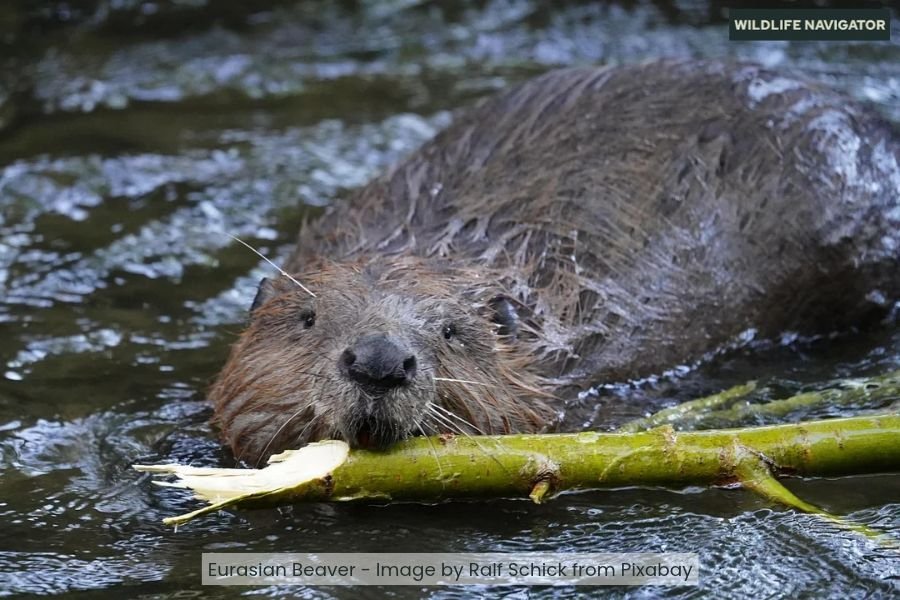
The Eurasian Beaver (Castor fiber) is a large, semi-aquatic rodent native to Europe and parts of Asia. Recognised for its powerful teeth, broad scaly tail and remarkable ability to modify freshwater environments, it is one of the most influential mammals in river and wetland ecosystems. By cutting trees, constructing dams and creating sheltered habitats, this species can transform streams and riverbanks into complex wetland environments.
Once widespread across much of Eurasia, the Eurasian Beaver experienced a severe population decline because of intensive hunting for its fur, meat and castoreum. By the beginning of the 20th century, only a small number of isolated populations remained. Conservation measures, legal protection, reintroductions and natural recolonisation have since helped the species recover across much of its former range.
Today, the Eurasian Beaver is an important part of freshwater ecosystem restoration and wildlife conservation. Although it shares many characteristics with its North American relative, Castor canadensis, it is a distinct species with its own evolutionary history, distribution and biological characteristics.
What Is a Eurasian Beaver?
The Eurasian Beaver is a large herbivorous mammal belonging to the rodent family Castoridae. Its scientific name is Castor fiber, and it is one of the two living members of the genus Castor. The other is the North American Beaver (Castor canadensis).
Sometimes called the European Beaver, it is native to parts of Europe and Asia, where it inhabits rivers, streams, lakes, wetlands and other freshwater environments. Its semi-aquatic lifestyle allows it to move comfortably between land and water while using aquatic habitats for feeding, shelter and protection from predators.
One of its most distinctive characteristics is its ability to alter its surroundings. By cutting trees and constructing dams, it can influence water levels, create ponds and encourage the development of wetland habitats. These activities make the Eurasian Beaver an important ecosystem engineer.
Scientific Classification of the Eurasian Beaver
| Classification | Scientific name |
|---|---|
| Kingdom | Animalia |
| Phylum | Chordata |
| Class | Mammalia |
| Order | Rodentia |
| Family | Castoridae |
| Genus | Castor |
| Species | Castor fiber |
The species was scientifically described by Carl Linnaeus in 1758. Its genus, Castor, contains two living species: the Eurasian Beaver and the North American Beaver.
Evolutionary Background
Beavers belong to an ancient rodent lineage that developed specialised adaptations for living around freshwater environments. Their powerful incisors, webbed hind feet, dense fur and semi-aquatic behaviour reflect a long evolutionary association with rivers and wetlands.
The Eurasian and North American Beaver are closely related, but they are distinct species. They also differ in their chromosome numbers: the Eurasian Beaver has 48 chromosomes (2n = 48), while the North American Beaver has 40 (2n = 40).
Although their physical appearance and behaviour are broadly similar, these genetic differences reflect their separate evolutionary histories.
Physical Characteristics and Appearance of the Eurasian Beaver
The Eurasian Beaver is one of the largest living rodents in the world and the largest native rodent in much of its European range. It has a heavy, compact body, short legs, a broad head and a distinctive flattened tail.
Its physical characteristics are closely adapted to an aquatic lifestyle. Dense fur provides insulation, powerful hind feet assist swimming, and specialised facial structures allow it to remain underwater while feeding and moving through its habitat.
Body Size and Weight
Adult Eurasian Beavers generally have a head-and-body length of approximately 80–100 cm, although larger individuals can occur. Their flattened tails usually measure around 25–40 cm.
Adult body weight commonly ranges from approximately 18–30 kg, but it varies according to age, sex, season, food availability and geographical population. Exceptionally large individuals may exceed this range.
Males and females are generally similar in appearance and size. Their sex is not reliably determined through external body measurements alone.
Fur Colour and Texture
The Eurasian Beaver has thick, dense fur that helps retain body heat in cold freshwater environments. Its coat generally ranges from light brown and reddish brown to dark brown, depending on the individual and population.
The fur consists of two main layers:
- Underfur: A dense insulating layer that helps retain warmth.
- Guard hairs: Longer outer hairs that help protect the underfur from water and external damage.
Beavers regularly groom their coats to maintain their insulating properties. An oily secretion from specialised glands helps condition the fur and contributes to water resistance.
Flat and Scaly Tail
One of the most recognisable features of the Eurasian Beaver is its broad, flattened, paddle-shaped tail.
The tail is covered with dark, tough scales rather than fur. It contains fat reserves and serves several purposes, including:
- Helping maintain balance while sitting or moving.
- Providing support when the animal stands upright.
- Acting as a warning signal through loud tail slaps against the water.
- Assisting with movement and stability while swimming.
The tail is not simply a paddle used for propulsion. Most swimming power comes from the animal’s webbed hind feet.
Teeth and Powerful Incisors
Like other rodents, the Eurasian Beaver has continuously growing incisors. Its front teeth are strong, sharp and adapted for cutting woody vegetation.
The front surfaces of the incisors contain iron-rich enamel, which contributes to their orange or reddish-brown colour. The softer material behind the enamel wears away more quickly, helping maintain a sharp cutting edge.
These teeth allow beavers to gnaw through branches and tree trunks, even those considerably thicker than their own limbs.
Webbed Feet and Aquatic Adaptations
The hind feet are large and webbed, providing powerful propulsion during swimming. The front feet are smaller and more dexterous, helping the animal hold food, manipulate branches and carry construction materials.
The Eurasian Beaver also has specialised adaptations that help it remain underwater:
- Valves that help close the nostrils and ears.
- Transparent protective eyelids, known as nictitating membranes.
- Dense insulating fur.
- Strong hind limbs for swimming.
- The ability to remain submerged for several minutes.
These adaptations allow it to forage and travel efficiently in freshwater environments.
Habitat and Geographic Distribution
The Eurasian Beaver is primarily associated with freshwater habitats across Europe and parts of Asia. It prefers environments that provide permanent or relatively reliable water, sufficient vegetation for feeding and suitable locations for shelter.
Its habitat includes rivers, streams, lakes, ponds, marshes and wooded wetlands. It can also occupy modified landscapes, including agricultural waterways and artificial water bodies, provided suitable food and shelter are available.
Natural Habitat
Beavers generally favour freshwater environments with accessible banks and abundant woody vegetation. Slow-moving rivers, smaller streams, lakeshores and wetlands are particularly suitable.
They frequently select habitats containing willows, poplars, aspens, birches and other trees and shrubs that provide food and construction materials.
Water depth is important because sufficiently deep water provides safer movement and access to underwater entrances. Where natural water levels are unsuitable, beavers may construct dams to create deeper pools.
Geographic Distribution Across Europe
The Eurasian Beaver historically occupied a large portion of Europe. Intensive hunting reduced its distribution to a number of isolated populations, but conservation programmes and natural expansion have restored it across much of its former range.
It now occurs in numerous European countries, including:
- Norway and Sweden.
- Finland and parts of Russia.
- Germany and France.
- Poland and the Czech Republic.
- Austria and Switzerland.
- The Netherlands and Belgium.
- Estonia, Latvia and Lithuania.
- Romania, Hungary and Slovakia.
- Denmark and parts of the Balkans.
The origin and status of individual populations differ. Some are remnants of native populations, while others were established through deliberate reintroduction or translocation.
Distribution Across Asia
The species also occurs across parts of northern and central Asia, including Russia, Kazakhstan, Mongolia and China.
Its Asian distribution is associated with river systems, forested wetlands and suitable freshwater environments. Populations occur across parts of Siberia and other regions where food and water conditions support survival.
The distribution is not continuous throughout Eurasia. Climate, vegetation, river conditions and historical population changes influence where the species occurs.
Historical Range and Population Recovery
By the early 20th century, hunting had reduced the Eurasian Beaver to approximately 1,200 individuals in scattered refuges, according to a major review of its historical distribution.
Protection programmes and reintroductions subsequently helped rebuild populations. Natural dispersal has also allowed beavers to recolonise waterways beyond their original recovery sites.
A 2020 scientific review estimated a minimum population of approximately 1.5 million individuals across the species’ range. This is a historical research estimate, not a current 2026 population census.
Diet and Feeding Habits
The Eurasian Beaver is a strict herbivore that feeds on a wide variety of terrestrial and aquatic plants. Its diet changes according to the season, habitat, local vegetation and availability of food.
Although it spends much of its time in water, it obtains a considerable proportion of its food from plants growing along riverbanks and nearby woodland.
What Do Eurasian Beavers Eat?
Its diet includes:
- Tree bark and young branches.
- Leaves and shoots.
- Willow and poplar stems.
- Aspen and birch vegetation.
- Aquatic plants.
- Grasses and herbs.
- Roots and other soft plant material.
During warmer months, aquatic vegetation and herbaceous plants can form an important part of its diet. In winter, when many soft plants become unavailable, woody vegetation becomes particularly important.
Preferred Tree Species
Willows and poplars are among the important food sources for Eurasian Beavers. They also consume vegetation from other locally available tree species.
They commonly select young shoots, bark and branches because these are relatively accessible and provide suitable plant material.
The species can fell trees of considerable size using its strong incisors. However, it generally makes extensive use of smaller trees and branches when these provide sufficient food.
Seasonal Feeding Behaviour
Food availability changes throughout the year.
Spring and summer: Beavers consume fresh leaves, grasses, shoots and aquatic vegetation. These months provide a wide range of soft plant foods.
Autumn: They increase their use of woody vegetation and may begin collecting branches for winter storage.
Winter: Feeding becomes more dependent on stored branches, bark and other vegetation accessible beneath or near the water.
Winter Food Storage
In colder regions, Eurasian Beavers may construct underwater food caches near their lodges or sheltered areas.
These caches consist mainly of branches and woody stems placed underwater, where they remain accessible when ice and snow make terrestrial feeding more difficult.
Not every population relies on large food caches. The extent of storage depends on local winter conditions, water depth and food availability.
Behaviour and Social Structure
The Eurasian Beaver is generally most active during twilight and nighttime. Its activity patterns help it avoid many terrestrial predators and reduce disturbance from humans.
It is a social mammal that usually lives in family groups organised around a breeding pair and their offspring.
Daily Activity and Nocturnal Behaviour
Beavers typically emerge from their shelters during the evening and remain active through much of the night.
Their activities include feeding, swimming, grooming, maintaining dams and lodges, collecting branches and marking territories.
During daylight, they generally remain sheltered, particularly in areas with frequent human disturbance.
However, activity patterns can vary according to season, geographical location and local environmental conditions.
Swimming and Diving
The Eurasian Beaver is an excellent swimmer. Its webbed hind feet provide propulsion, while its streamlined body helps it move through water.
It can remain underwater for several minutes and generally uses submerged routes to travel between feeding locations and shelters.
When alarmed, it may dive rapidly and disappear beneath the water’s surface.
Family Groups and Social Organisation
A typical beaver family consists of:
- An adult breeding pair.
- Newborn kits.
- Juveniles from previous breeding seasons.
- Sometimes older offspring that have not yet dispersed.
Family members may share the same lodge and territory. Older offspring can assist with maintaining structures and caring for younger members of the family.
Young beavers generally remain with their parents until they become independent and eventually establish their own territories.
Territorial Behaviour and Communication
Beavers defend territories to protect access to food, suitable shelters and construction materials.
They communicate through scent marking, vocalisations, body movements and physical signals.
One particularly recognisable behaviour is tail slapping. When a beaver senses danger, it may strike the water with its broad tail, producing a loud splash that can alert other members of its family.
Scent Marking and Castoreum
Beavers use scent marking to communicate territorial information.
They produce castoreum, a strongly scented secretion from specialised castor sacs located near the base of the tail. This substance is deposited on scent mounds, often made from mud and vegetation.
Castoreum plays a role in territorial communication and is different from the oily secretion produced by the skin glands that helps maintain the fur.
Grooming and Fur Maintenance
Regular grooming is essential for maintaining the coat’s insulating properties.
Beavers use their front feet and claws to clean and arrange their fur. They also distribute oily secretions through the coat, helping maintain its protective condition.
Dam Building, Lodges and Ecosystem Engineering
One of the most remarkable characteristics of the Eurasian Beaver is its ability to modify freshwater habitats through dam construction and other engineering activities.
By cutting trees, transporting branches and manipulating vegetation, it can change the structure and water flow of its surroundings.
Why Do Eurasian Beavers Build Dams?
Beaver dams help raise and maintain water levels, creating deeper pools that provide safer movement and access to shelters.
Deeper water can also protect underwater entrances from freezing or becoming exposed during periods of low water.
The structures help connect different parts of a beaver’s territory and can make it easier to transport food and construction materials.
How Beavers Construct Dams
Beavers use branches, sticks, logs, mud, stones and other locally available materials to construct dams.
They generally begin by placing woody materials across a suitable section of a stream. Additional branches and mud are then added to strengthen the structure and reduce water flow through it.
Dams are not always permanent. Water pressure, floods and natural deterioration can damage them, requiring maintenance or rebuilding.
Beaver Lodges and Shelters
Eurasian Beavers use several types of shelters, depending on local conditions.
Lodges: These are structures made from branches, sticks, mud and other vegetation. They generally contain an internal living chamber and underwater entrances.
Bank burrows: Where riverbanks are sufficiently suitable, beavers may dig burrows directly into the banks. These shelters can be less conspicuous than freestanding lodges.
Bank lodges: Some individuals construct structures against or within riverbanks, combining natural bank features with branches and mud.
Not every Eurasian Beaver constructs a large dam or a prominent lodge. Shelter construction depends on water depth, bank structure, habitat conditions and local behaviour.
Creation of Wetland Ecosystems
Beaver dams can transform flowing streams into ponds and wetland habitats.
These changes may:
- Increase local water storage.
- Create shallow-water habitats.
- Support aquatic plants.
- Provide breeding and feeding areas for amphibians.
- Create habitat for waterbirds and invertebrates.
- Increase habitat diversity across river landscapes.
Beaver engineering therefore influences much more than the animal’s immediate shelter and feeding requirements.
Reproduction, Breeding and Life Cycle
Eurasian Beavers generally form long-term pair bonds and reproduce once a year. Their breeding behaviour and family organisation help maintain stable territories and support the survival of young offspring.
Breeding Season and Mating Behaviour
The breeding season usually occurs during winter, although exact timing varies according to geographical location and climatic conditions.
Beavers are generally monogamous, with established pairs sharing territories and participating in family life.
Mating takes place in or around the water.
Gestation Period and Birth
The gestation period is approximately 105–107 days.
Females generally give birth during spring or early summer. A typical litter contains two to four kits, although litter size varies.
Newborn beavers are relatively well developed compared with many other rodents. They are born with fur, open eyes and the ability to move shortly after birth.
Parental Care
Both parents contribute to maintaining the family territory and protecting their offspring.
Young kits initially remain close to their mother and depend on their parents for food, shelter and protection.
As they develop, they gradually begin eating solid plant material and learning behaviours required for independent survival.
Older siblings may also help with the care and protection of younger kits.
Growth and Independence
Young beavers generally remain with their family for approximately two years, sometimes longer, before dispersing to establish their own territories.
Sexual maturity is usually reached at around two to three years of age, although reproductive participation depends on territory availability and social conditions.
Lifespan
Eurasian Beavers can live for more than 10 years in the wild under favourable conditions. Individual survival varies according to predation, disease, food availability, environmental conditions and human-related threats.
Individuals living under managed captive conditions may survive longer.
Ecological Importance and Relationship With Humans
The Eurasian Beaver plays a significant role in freshwater ecosystem development. Its feeding, dam construction and habitat modification can influence water movement, vegetation and the availability of habitats for other organisms.
Ecosystem Engineering
Beavers are widely recognised as ecosystem engineers because they physically modify their surroundings.
Their dams slow flowing water and can create ponds, wetlands and networks of shallow-water habitats.
These changes influence the movement of water, sediment accumulation, vegetation development and the distribution of other wildlife.
Benefits for Other Wildlife
Beaver-created wetlands can support a diverse range of species.
Depending on the location, these habitats may benefit:
- Frogs, toads and other amphibians.
- Waterbirds and wetland birds.
- Aquatic insects and invertebrates.
- Fish and other freshwater organisms.
- Wetland plants.
- Mammals that depend on riparian habitats.
The benefits are not identical in every ecosystem. Changes in water flow, sediment and vegetation can favour some species while reducing suitable conditions for others.
Water Retention and Hydrological Changes
Beaver dams can slow the movement of water through certain landscapes and increase water storage in ponds and associated wetlands.
They may also influence groundwater levels, sediment transport and the timing of downstream water movement.
In some locations, these effects can contribute to greater landscape resilience during dry periods. However, the hydrological outcomes depend on the size of the catchment, soil characteristics, climate and dam structure.
Relationship With Humans
Historically, humans hunted Eurasian Beavers for their valuable fur, meat and castoreum.
Intensive exploitation contributed significantly to their decline across Europe and Asia.
Today, the species is increasingly recognised for its contribution to wetland restoration and freshwater biodiversity.
However, its return can also create conflicts with human land use.
Human-Wildlife Conflict
Beaver activities sometimes affect agricultural land, forestry, roads and infrastructure.
Common problems include:
- Flooding of agricultural fields.
- Damage to valuable trees and plantations.
- Blocked drainage channels.
- Flooding near roads and other infrastructure.
- Changes to water levels around human settlements.
Effective management can include protective fencing, tree guards, flow-control devices and carefully planned interventions.
The objective is to balance ecological benefits with the needs of local communities.
Predators, Natural Threats and Conservation Status
Although adult Eurasian Beavers are relatively large and spend much of their time in water, they remain vulnerable to natural predators, environmental changes and human-related threats.
Natural Predators
Potential predators vary across the species’ extensive range.
They may include:
- Wolves.
- Brown bears.
- Eurasian lynx.
- Red foxes.
- Large birds of prey, particularly as threats to young kits in suitable circumstances.
Predation risk is generally higher for young beavers than for healthy adults.
Water provides an important escape route, while lodges and burrows offer additional protection.
Historical Population Decline
The Eurasian Beaver once occupied a much larger portion of Europe and Asia than it does today.
Intensive hunting was the primary cause of its historical decline.
Its fur was highly valued, while castoreum was collected for traditional medicinal and commercial uses. Beavers were also hunted for meat.
By the beginning of the 20th century, only small, isolated populations remained across parts of the original range.
Modern Conservation and Population Recovery
Conservation efforts have included:
- Legal protection against uncontrolled hunting.
- Establishment of protected habitats.
- Reintroduction into former parts of its range.
- Population monitoring.
- Habitat restoration.
- Public education and coexistence programmes.
These measures have allowed the Eurasian Beaver to recover across much of Europe.
Natural dispersal has further expanded its distribution, although recovery remains uneven between regions.
IUCN Conservation Status
According to the IUCN Red List global assessment, the Eurasian Beaver is classified as:
Least Concern (LC)
Its global population trend was recorded as increasing in the assessment.
However, the assessment date is 10 September 2016, so the classification should be understood in the context of that assessment rather than presented as a newly completed 2026 evaluation.
The global classification also does not mean that every local population is secure. Regional populations may face different conservation challenges and may receive different levels of legal protection.
Continuing Conservation Challenges
Despite its recovery, the species still faces threats in some parts of its range.
These include habitat degradation, pollution, river engineering, infrastructure development, illegal hunting and conflicts with agriculture and forestry.
Maintaining connected freshwater habitats and encouraging coexistence with people will remain important for its long-term conservation.
Interesting Facts About the Eurasian Beaver
The Eurasian Beaver is one of the most remarkable mammals associated with freshwater ecosystems. Its unusual anatomy, behaviour and engineering abilities make it an important species in wildlife research and conservation.
Here are some interesting facts about the Eurasian Beaver:
- One of two living beaver species: The Eurasian Beaver and North American Beaver are the only living members of the genus Castor.
- A giant among rodents: It is one of the largest living rodents and the largest native rodent in much of Europe.
- Orange front teeth: Its incisors contain iron-rich enamel, which contributes to their distinctive orange colour.
- An excellent swimmer: Its webbed hind feet help it move efficiently through freshwater habitats.
- A semi-aquatic mammal: It spends considerable time in water but also feeds and travels on land.
- An ecosystem engineer: Its dams can transform flowing streams into ponds and wetlands.
- A plant-eating mammal: Its diet consists entirely of plant material.
- A family-oriented animal: Beavers commonly live in family groups consisting of parents and offspring from different breeding seasons.
- Uses scent for communication: Castoreum is used in territorial scent marking.
- Can store food underwater: Some populations collect branches and maintain underwater food caches for winter.
- Nearly disappeared from much of Europe: Historical hunting reduced the species to a small number of isolated populations.
- A conservation recovery success: Reintroductions and natural recolonisation have restored the species across much of its former European range.
- Different chromosome numbers: The Eurasian Beaver has 48 chromosomes, compared with 40 in the North American Beaver.
- Does not always build dams: Some individuals live in riverbank burrows and do not require large dam structures.
- Supports wetland biodiversity: Beaver-created habitats can provide valuable resources for numerous other freshwater and terrestrial species.
The Eurasian Beaver demonstrates how a single mammal can influence an entire freshwater landscape. Its recovery is not only an important conservation achievement but also an example of how restoring wildlife populations can contribute to healthier and more diverse ecosystems.
Reference and Sources
Curating and documenting wildlife and protected areas through detailed guides and the continuously updated WN Index.
- Rosan Prasad

- Rosan Prasad

- Rosan Prasad

- Rosan Prasad