Beaver: Species, Habitat, Diet, Behaviour & Interesting Facts

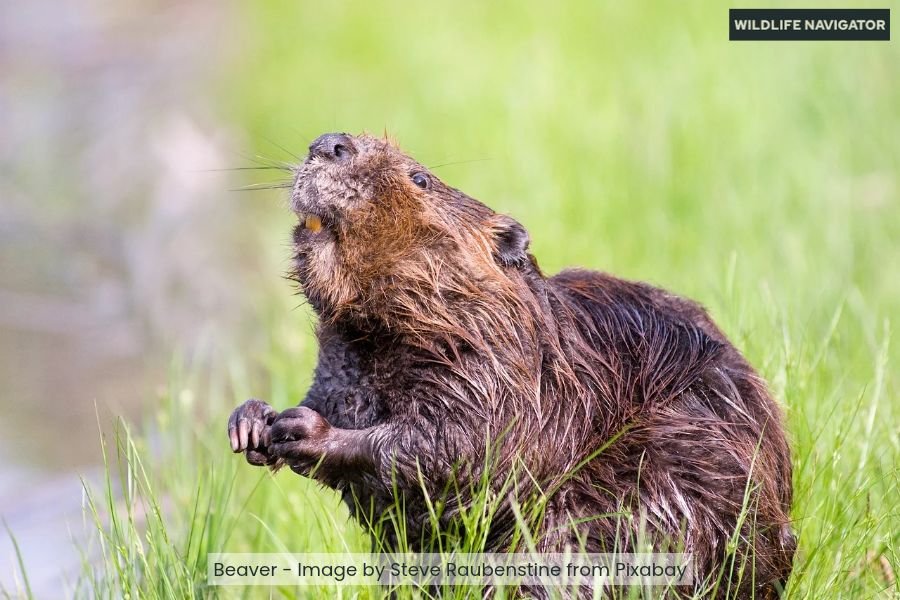
The beaver is a large, semi-aquatic rodent known for its remarkable ability to modify freshwater environments. Recognised by its broad, flat tail, waterproof fur and powerful orange incisors, this mammal is among the most effective ecosystem engineers in the animal kingdom. By cutting down trees, building dams and creating ponds, beavers transform rivers and streams into complex wetland habitats that support numerous other species.
Beavers belong to the genus Castor and are represented by two living species: the North American Beaver (Castor canadensis) and the Eurasian Beaver (Castor fiber). Although similar in appearance and behaviour, these species have different geographical distributions and some biological distinctions.
Primarily herbivorous, beavers feed on aquatic vegetation, leaves, twigs, bark and the soft tissues beneath tree bark. They live in family groups, construct lodges or bank dens for shelter, and remain active throughout the year, even during winter.
Beyond their distinctive appearance and engineering abilities, beavers play an important role in freshwater ecosystems. Their activities influence water movement, vegetation, biodiversity and wetland development, making them fascinating subjects of wildlife research and conservation.
What Is a Beaver? Classification and Species
A beaver is a large, semi-aquatic mammal belonging to the rodent order Rodentia and the family Castoridae. It is particularly recognised for its tree-cutting abilities, dam construction and adaptation to freshwater environments.
There are two living species of beavers, both belonging to the genus Castor.
- North American Beaver (Castor canadensis): Native to North America, including Canada, the United States and parts of northern Mexico. It has also been introduced to some regions outside its natural range.
- Eurasian Beaver (Castor fiber): Native to parts of Europe and Asia. Following historical population declines, it has recovered across much of its former range through conservation measures and reintroduction programmes.
Both species share similar physical characteristics, feeding habits and ecological roles. However, they are genetically distinct species and cannot be treated as interchangeable in scientific descriptions.
Scientific Classification of Beavers
| Classification | Details |
|---|---|
| Kingdom | Animalia |
| Phylum | Chordata |
| Class | Mammalia |
| Order | Rodentia |
| Family | Castoridae |
| Genus | Castor |
| Living species | 2 |
Beavers are among the largest living rodents in the world, ranking behind the capybara in overall size. Their semi-aquatic lifestyle allows them to move between land and water while feeding, travelling and constructing shelters.
Their ability to modify their surroundings has earned them the description of ecosystem engineers. Unlike many animals that simply adapt to their habitats, beavers actively change local water systems to create conditions that support their survival.
Physical Characteristics and Appearance of a Beaver
Beavers have compact, muscular bodies, relatively short legs and broad heads. Their bodies are specially adapted for swimming, diving, cutting vegetation and surviving in freshwater environments.
An adult North American Beaver commonly measures approximately 90–120 cm (35–47 inches) in total length, including its tail, and weighs around 16–30 kg (35–66 pounds). Individual measurements vary according to species, age, sex and environmental conditions.
- Body and Fur: Beavers have thick, dense fur that ranges from yellowish-brown and reddish-brown to dark brown and almost black. Their outer guard hairs help repel water and protect the dense insulating underfur, which helps retain body heat in cold environments.
- Head and Facial Features: Their heads are broad, with small eyes, rounded ears and nostrils positioned high on the face. These features help them remain aware of their surroundings while swimming.
- Incisors: One of their most distinctive characteristics is their large, continuously growing front teeth. The incisors have hard, iron-rich orange enamel on the front surfaces, helping protect them from wear while cutting woody vegetation. Their opposing teeth wear at different rates, maintaining sharp, chisel-like cutting edges.
- Tail: The broad, flattened and scaly tail is another defining feature. It helps with swimming, balance, fat storage and communication. Beavers also strike their tails against the water to warn other members of their family about potential danger.
- Feet and Limbs: Their hind feet are large and webbed, providing propulsion while swimming. Their smaller front paws have separate, flexible digits and claws that help them handle food, dig and carry construction materials.
Beavers also possess several aquatic adaptations. Their ears and nostrils can close underwater, while transparent protective membranes cover their eyes during swimming. Their lips can close behind their incisors, allowing them to carry out underwater gnawing without filling their mouths with water.
Beaver Habitat and Geographical Distribution
Beavers inhabit freshwater environments, including rivers, streams, lakes, ponds, marshes and wetlands. They generally prefer areas with reliable water supplies, suitable vegetation and nearby trees or shrubs.
Water is essential to their survival because it provides access to food, allows efficient movement and offers protection from terrestrial predators.
North American Beaver Distribution
The North American Beaver is naturally distributed across much of Canada, the United States and parts of northern Mexico. It occupies a wide range of freshwater habitats, from forested streams and mountain valleys to lowland rivers and wetlands.
Populations have also been introduced to locations outside their native range, including parts of South America and Europe.
Eurasian Beaver Distribution
The Eurasian Beaver occurs across parts of Europe and Asia, including regions of Scandinavia, central and eastern Europe, Russia, Mongolia and China. Its distribution has expanded through natural recolonisation and deliberate reintroduction programmes.
Historically, extensive hunting for fur, meat and castoreum reduced Eurasian Beaver populations dramatically. Conservation initiatives have helped restore populations across substantial portions of its former range.
Preferred Habitat Conditions
Suitable beaver habitats generally provide:
- Permanent or seasonal freshwater sources.
- Trees and shrubs for food and construction materials.
- Aquatic vegetation for feeding.
- Suitable locations for burrows and lodges.
- Water deep enough to provide safe underwater access.
Beavers can inhabit both naturally deep water bodies and smaller streams where dams help create suitable conditions. The availability of food, water depth and surrounding vegetation strongly influence where they establish territories.
What Do Beavers Eat? Diet and Feeding Habits
Beavers are strict herbivores. Their diet consists of woody vegetation, aquatic plants, leaves, roots, grasses, buds and other plant materials.
Although they are famous for cutting down trees, they do not consume the entire tree. They generally feed on selected portions, particularly bark, twigs, leaves and cambium, the living tissue found beneath the bark.
Common Food Sources
Their diet varies according to geographical location, vegetation availability and season.
Common food sources include:
- Aspen and poplar bark and shoots.
- Willow branches and leaves.
- Birch and alder.
- Cottonwood and other suitable tree species.
- Aquatic plants such as water lilies and cattails.
- Grasses, roots, leaves and herbaceous vegetation.
- Shrubs, buds and young shoots.
During warmer months, beavers frequently consume grasses, leaves, aquatic plants and fresh shoots. In autumn and winter, they increasingly depend on woody vegetation, including bark and cambium.
How Beavers Feed
Beavers use their powerful incisors to cut through branches and tree trunks. Their front paws help them hold and manipulate food while eating.
They often transport branches into the water, where they can feed in relative safety. Their digestive systems are adapted to a plant-based diet, allowing them to process fibrous vegetation.
Winter Food Storage
In colder regions, beavers prepare for winter by collecting and storing branches underwater near their lodges. These underwater food caches provide access to woody vegetation when the surface freezes and terrestrial food becomes difficult to reach.
Beavers do not hibernate. Instead, they continue feeding and moving beneath the ice when environmental conditions allow.
Their diet is therefore closely connected to seasonal vegetation, freshwater availability and the surrounding woodland ecosystem.
Beaver Behaviour, Daily Activities and Lifestyle
Beavers are generally nocturnal and crepuscular, meaning they are most active during the night and around dawn and dusk. However, their activity patterns can vary according to location, season, disturbance and environmental conditions.
They spend considerable time swimming, feeding, grooming, collecting construction materials and maintaining their shelters.
- Swimming and Diving: Beavers are excellent swimmers. Their webbed hind feet provide propulsion, while their streamlined bodies and broad tails help them move through water. They can remain underwater for several minutes, although diving duration varies with activity and conditions.
- Tree Cutting and Collection: Using their powerful incisors, beavers cut trees and branches for food and construction. They often select trees and shrubs close to water because transporting heavy materials over land requires more energy and exposes them to predators.
- Grooming: Beavers regularly groom their fur to maintain its insulating and water-resistant properties. They use their front paws and claws to distribute oily secretions from specialised glands through their coat.
- Communication: Beavers communicate through vocalisations, scent marking and physical signals. A sudden tail slap against the water produces a loud sound that can alert nearby family members to danger.
- Territorial Behaviour: Family groups occupy territories around suitable water bodies. Beavers use scent markings to communicate territorial boundaries and discourage unfamiliar individuals from entering established areas. They produce castoreum, a strong-smelling secretion from specialised castor sacs near the base of the tail. This substance is used in scent marking and territorial communication.
- Seasonal Activities: During warmer months, beavers spend considerable time feeding, building and repairing dams, and collecting food. In winter, they reduce their above-water activity in cold regions but continue feeding from stored branches and available aquatic vegetation.
Beaver Social Structure, Family Life and Reproduction
Beavers are social mammals that generally live in family groups rather than independently. A typical family unit consists of an adult breeding pair, their newborn offspring and young from previous breeding seasons.
They are generally monogamous, and breeding pairs often maintain long-term partnerships.
- Mating and Breeding Season: Beavers usually breed once a year. Mating generally takes place during winter, although the exact timing varies geographically. Females give birth in spring or early summer after a gestation period of approximately three to four months.
- Birth and Baby Beavers: Baby beavers are called kits. A typical litter contains two to four kits, although litter size can vary. Newborn kits are fully furred, have their eyes open and are capable of moving shortly after birth.
- Parental Care: Both parents contribute to protecting and raising their offspring. Kits initially depend on their mother’s milk before gradually transitioning to solid plant-based foods. Older siblings may also help care for younger kits and assist with maintaining the family lodge.
- Growing Up: Young beavers learn important survival skills by observing and following older family members. They gradually become more independent and usually leave their family territory at around two years of age to establish their own territories and find mates.
- Lifespan: Beavers commonly live around 10–12 years in the wild, although lifespan varies with predation, disease, habitat quality and other environmental conditions. Individuals can live considerably longer under human care.
Their family-based social structure helps young beavers develop the skills necessary for survival while maintaining stable breeding populations.
Beaver Dams, Lodges and Engineering Abilities
Beavers are particularly famous for constructing dams, which alter water flow and create ponds suitable for feeding, shelter and protection.
Dam construction is not simply a building activity. It is an important survival strategy that allows beavers to maintain safe water levels and expand access to feeding areas.
Why Do Beavers Build Dams?
Beavers construct dams primarily to increase and maintain water depth. Deeper water allows them to travel more safely between feeding areas, keep lodge entrances submerged and transport branches without exposing themselves to terrestrial predators.
How Do Beavers Build Dams?
They use locally available materials, including:
- Tree branches and sticks.
- Mud and soil.
- Stones and rocks.
- Reeds and other vegetation.
- Small trunks and woody debris.
Construction generally begins with branches and other materials placed across a stream or channel. Beavers add vegetation, mud and stones to fill gaps and strengthen the structure.
They continually inspect and repair dams when water levels change or parts of the structure become damaged.
Not every beaver builds a dam. Where lakes, rivers or other water bodies already provide sufficient depth, beavers may live without constructing one.
- Beaver Lodges: A beaver lodge is a shelter commonly constructed from branches, sticks, vegetation and mud. Many lodges have one or more underwater entrances that provide protection against terrestrial predators. Inside, a raised living chamber provides a relatively dry and insulated space for resting, sleeping and raising kits.
- Bank Dens and Burrows: Beavers may also construct burrows directly into riverbanks or lake shores. These bank dens can provide suitable shelter without requiring a large above-water lodge.
- Dams Versus Lodges: A dam controls water levels and creates or maintains a pond, while a lodge provides shelter and a place for family members to rest and raise their young. These structures serve different purposes, although both contribute to the beaver’s survival.
Ecological Importance and Role in the Ecosystem
Beavers play an important ecological role because their activities can transform freshwater environments and influence the surrounding landscape.
They are widely recognised as ecosystem engineers because their dam-building and vegetation-cutting activities create habitats used by numerous other organisms.
- Wetland Creation: Beaver dams slow water movement and create ponds, wetlands and marsh-like habitats. These environments support aquatic plants, invertebrates, amphibians, fish, birds and mammals.
- Biodiversity: Beaver-created wetlands can provide breeding grounds, feeding opportunities and shelter for numerous species. The resulting variety of habitats often increases local ecological complexity.
- Water Retention: Beaver dams can slow the movement of water through landscapes and increase temporary water storage. Depending on local conditions, this can help maintain water availability during dry periods.
- Sediment and Nutrient Movement: Beaver ponds can trap sediment and influence the movement of nutrients and organic matter through freshwater systems. Their effects on water quality vary according to local geology, vegetation, water chemistry and pollution levels.
- Vegetation and Habitat Changes: By cutting trees and flooding surrounding areas, beavers create a changing landscape of open water, wetlands, deadwood and regenerating vegetation. These changes can benefit some species while reducing habitat suitability for others.
- Climate and Wildfire Resilience: In some landscapes, beaver-created wetlands retain moisture and maintain greener vegetation during dry periods. Such habitats may provide important refuges for wildlife and can contribute to local wildfire resilience.
However, beaver engineering can also create challenges. Dams may flood agricultural land, roads, woodland and infrastructure. They can also alter fish movement and local water conditions. Their ecological influence is therefore significant but not universally beneficial in every location.
Natural Predators, Threats and Conservation Status
Although adult beavers are relatively large and spend much of their time in water, they remain vulnerable to predators, environmental changes and human activities.
Natural Predators
Potential predators include:
- Wolves.
- Bears.
- Coyotes.
- Lynx.
- Wolverines.
- Large carnivorous mammals in suitable habitats.
Young kits are particularly vulnerable to predation. Water provides beavers with an important escape route, while underwater lodge entrances help protect family members.
Major Threats
Historically, commercial hunting and trapping for fur, meat and castoreum caused severe declines in beaver populations. Habitat destruction and human disturbance have also affected their survival.
Other important threats include:
- Wetland drainage and habitat fragmentation.
- Water pollution.
- Road and infrastructure development.
- Human-wildlife conflicts.
- Unsustainable hunting and trapping.
- Changes in water availability and environmental conditions.
Conservation Status
Both living beaver species are currently classified as Least Concern on the global IUCN Red List.
The North American Beaver has recovered across much of its historical range following extensive historical declines and subsequent conservation and management efforts.
The Eurasian Beaver also experienced severe historical population declines. Reintroduction programmes, hunting regulations and habitat protection have contributed to its recovery across large parts of Europe and Asia.
However, global conservation status does not mean that every regional population is secure. Some local populations remain vulnerable, and conservation requirements differ between geographical regions.
Protecting wetlands, maintaining suitable freshwater habitats and managing human-beaver conflicts are important for the long-term conservation of both species.
Interesting Facts About Beavers
Beavers possess several remarkable physical adaptations and behaviours that make them unique among mammals. Their ability to construct dams and modify freshwater ecosystems is only one part of their fascinating biology.
Here are some interesting facts about beavers:
- Two Living Species: There are only two living beaver species: the North American Beaver and the Eurasian Beaver.
- Large Rodents: Beavers are among the largest living rodents in the world, with the capybara being heavier.
- Continuously Growing Teeth: Their front incisors grow throughout their lives and are worn down through regular gnawing.
- Orange Incisors: Their characteristic orange teeth contain iron-rich enamel that strengthens the cutting surfaces.
- Waterproof Fur: Their dense fur provides insulation and helps protect their bodies in cold freshwater environments.
- Webbed Hind Feet: Their large, webbed rear feet help propel them through water.
- Flat Scaly Tail: Their broad tails assist with swimming, balance, fat storage and communication.
- Warning Signals: Beavers slap their tails against the water to warn nearby family members of potential danger.
- Excellent Swimmers: Their bodies are adapted for swimming and underwater movement.
- Underwater Food Storage: Beavers in cold climates store branches underwater to maintain access to food during winter.
- No Winter Hibernation: Beavers remain active throughout winter and continue feeding beneath the ice when conditions permit.
- Herbivorous Diet: They eat plants, bark, leaves, roots, twigs and aquatic vegetation rather than fish.
- Family Groups: Beaver families generally consist of a breeding pair and offspring from different breeding seasons.
- Baby Beavers: Their young are called kits and are born fully furred with their eyes open.
- Ecosystem Engineers: Their dams can create extensive wetland habitats that support many other species.
- Not All Build Dams: Beavers may live in naturally deep lakes and rivers without constructing dams.
- Specialised Scent Glands: They produce castoreum, which plays a role in territorial scent marking.
- Protected Underwater Entrances: Many beaver lodges have entrances below the water surface, helping protect their occupants from predators.
- Tree-Cutting Specialists: Their powerful incisors allow them to cut down trees and collect woody materials for food and construction.
- Landscape Transformation: Their activities can change water flow, vegetation patterns and the structure of entire freshwater habitats.
Beavers demonstrate how a single mammal species can influence an entire ecosystem. Their feeding, shelter-building and dam construction activities connect terrestrial vegetation with freshwater environments, making them among the most influential mammals in many northern landscapes.
References and Sources
- Smithsonian’s National Zoo – Beaver Species Profile
- California Department of Fish and Wildlife – Beaver Biology and Ecology
- U.S. Department of Agriculture – Beaver Wildlife Damage Management Technical Series
- International Union for Conservation of Nature (IUCN) – Red List Assessments for Castor canadensis and Castor fiber
- U.S. Environmental Protection Agency – How Do Beaver Dams Affect Water Quality?
Curating and documenting wildlife and protected areas through detailed guides and the continuously updated WN Index.
- Rosan Prasad
- Rosan Prasad

- Rosan Prasad

- Rosan Prasad