American Alligator: Facts, Habitat, Diet, Behaviour, and Conservation

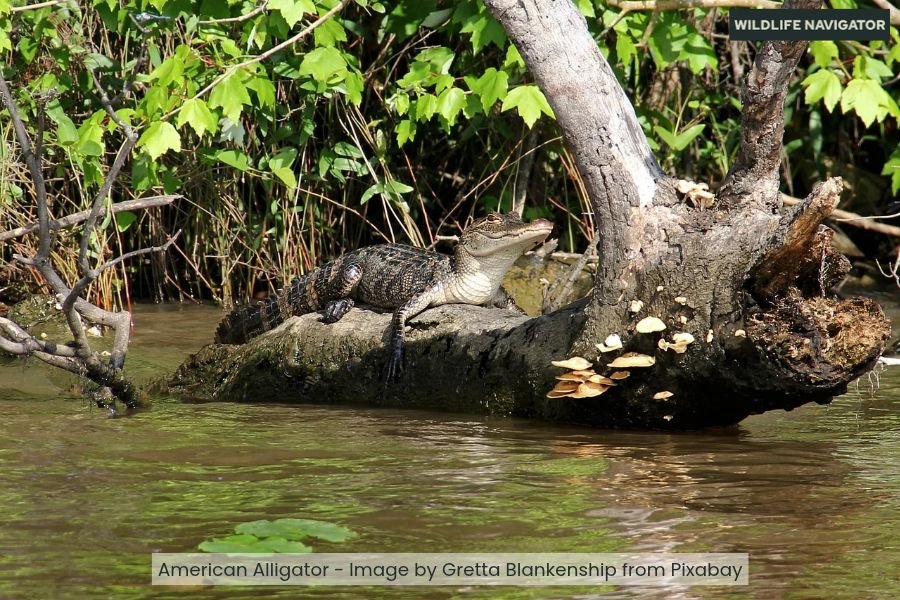
The American alligator (Alligator mississippiensis) is one of the largest reptiles native to North America and a prominent predator of freshwater ecosystems. Found across the southeastern United States, this semi-aquatic crocodilian inhabits wetlands, swamps, marshes, lakes and slow-moving rivers. Its broad, rounded snout, powerful jaws, dark, heavily armoured body and muscular tail make it one of the most recognisable reptiles in the region.
As a member of the family Alligatoridae, the American alligator is one of only two living species in the genus Alligator. Its closest living relative is the Chinese alligator (Alligator sinensis), a much smaller species native to eastern China. Although American alligators spend much of their time in water, they also move across land and regularly use riverbanks and wetland margins.
Beyond their distinctive appearance, American alligators play an important role in maintaining the ecological balance of their habitats. As predators, they influence the populations of fish, reptiles, birds and other animals. Their activity can also shape wetland environments, particularly through the creation and maintenance of water-filled depressions known as alligator holes. These features can provide important refuges for other wildlife, especially during periods of drought.
The species has also become a notable conservation success story. Intensive hunting and habitat loss caused severe population declines during the twentieth century, prompting legal protection and conservation measures. Following decades of recovery, American alligator populations have increased substantially across much of their native range, although wetland degradation and human–alligator conflict remain ongoing management concerns.
This article explores the American alligator’s physical characteristics, geographical distribution, habitat, diet, behaviour, reproduction, adaptations and ecological role, along with its conservation status and relationship with humans.
Quick Facts and Scientific Classification
The American alligator belongs to the order Crocodylia, a group of reptiles that includes alligators, crocodiles, caimans and gharials. Although these animals share several physical characteristics, they belong to different taxonomic families and can be distinguished by their snout shape, tooth arrangement, habitat preferences and geographical distribution.
The following tables summarise the American alligator’s key characteristics and scientific classification.
American Alligator Quick Facts
| Characteristic | Details |
|---|---|
| Common name | American Alligator |
| Scientific name | Alligator mississippiensis |
| Typical adult male length | Approximately 3.4 m on average |
| Typical adult female length | Approximately 2.6 m on average |
| Maximum length | Large males can exceed 4 m |
| Diet | Carnivorous |
| Reproduction | Oviparous (egg-laying) |
| Habitat | Freshwater wetlands, marshes, rivers and lakes |
| Geographical range | Southeastern United States |
| IUCN status | Least Concern |
| CITES listing | Appendix II |
| Activity | Active during both day and night |
Measurements are approximate. Adult size varies with sex, age, geographical location, food availability and environmental conditions. Exceptional records should not be confused with typical adult measurements.
Scientific Classification
| Taxonomic rank | Classification |
|---|---|
| Kingdom | Animalia |
| Phylum | Chordata |
| Class | Reptilia |
| Order | Crocodylia |
| Family | Alligatoridae |
| Genus | Alligator |
| Species | Alligator mississippiensis |
Taxonomic Relationships
The American alligator belongs to the family Alligatoridae, which includes alligators and caimans. Other family members include the Chinese alligator and several caiman species found primarily in Central and South America.
The order Crocodylia contains three living families:
- Alligatoridae: Alligators and caimans.
- Crocodylidae: True crocodiles.
- Gavialidae: Gharials and their close relatives.
These families represent distinct evolutionary lineages within the crocodilian order.
Physical Characteristics and Appearance
The American alligator has a powerful, heavily built body adapted for aquatic movement, ambush hunting and protection. Its physical structure combines a broad head, muscular jaws, protective scales, relatively short limbs and a strong tail. These features allow it to move efficiently through water while remaining capable of travelling across land.
Body Size and Build
American alligators have a long, muscular body supported by four relatively short but strong limbs. Their body is broad through the shoulders and gradually tapers towards the tail. Adult males are generally larger and heavier than females, with particularly large individuals developing massive heads and powerful necks.
The tail is laterally compressed, meaning it is flattened from side to side. This muscular structure provides the main source of propulsion during swimming, allowing the alligator to move efficiently through water. On land, its strong limbs support walking and help it move across muddy banks and wetland vegetation.
American alligators continue growing throughout much of their lives, although their growth rate generally slows as they become older. Their eventual size depends on factors such as sex, age, food availability and environmental conditions.
Size, Weight and Sexual Dimorphism
American alligators exhibit considerable variation in size. Adult males are generally larger and heavier than females.
Males commonly reach approximately 3–3.7 metres in length, although particularly large individuals can exceed these measurements. Females are usually smaller, commonly measuring around 2–2.7 metres when fully grown.
Body weight varies according to length, age, sex, feeding conditions and overall health. Large males can weigh several hundred kilograms, while adult females generally weigh considerably less.
The differences between males and females are examples of sexual dimorphism. Males tend to have broader heads and more robust bodies, while females are generally smaller.
Growth is usually faster during the early years of life when food availability and environmental conditions are favourable. Growth rates gradually decline as individuals approach maturity.
Skin Colour and Appearance
Adult American alligators usually have dark grey, charcoal, olive or nearly black upper bodies. Their darker colouration helps them blend into shadowy wetlands, muddy water and vegetation-covered surroundings.
The underside is generally lighter, often displaying cream, yellowish or pale grey tones.
Juveniles commonly have distinctive yellow crossbands against a dark body. These markings become less noticeable as the animals mature.
Their skin is covered with scales and raised bony plates, contributing to their characteristic rugged appearance.
Teeth and Jaw Structure
The American alligator has powerful jaws equipped with numerous sharp, conical teeth.
Its teeth are designed primarily for gripping, holding and tearing prey rather than chewing food in the manner of mammals.
Adult alligators have numerous teeth, which are continuously replaced throughout life. As older teeth become damaged or fall out, new teeth develop to replace them.
A distinctive characteristic is the arrangement of the fourth tooth in the lower jaw. In American alligators, this tooth generally fits into a socket in the upper jaw and is concealed when the mouth is closed.
Their powerful jaw muscles allow them to restrain prey and crush hard materials, including the shells of certain turtles.
Eyes, Nostrils and Ears
The eyes, nostrils and ears of an American alligator are positioned high on its head. This arrangement allows much of the animal’s body to remain submerged while its sensory organs stay above the water surface.
Its eyes have protective eyelids and a transparent third eyelid called the nictitating membrane. This membrane helps protect the eyes during underwater movement.
The nostrils are positioned near the front of the snout and can close underwater. Small external ear openings are located behind the eyes and can also close when the animal is submerged.
Appearance at Different Life Stages
American alligators change considerably in appearance as they grow.
- Hatchlings: Small, dark-coloured animals with bright yellow crossbands and relatively large heads.
- Juveniles: Gradually develop stronger bodies, longer tails and less prominent yellow markings.
- Subadults: Increase substantially in length and weight while developing more pronounced adult characteristics.
- Adults: Display darker colouration, heavily developed musculature and powerful jaws.
These physical changes accompany improvements in hunting ability, movement and reproductive maturity.
Habitat and Geographical Distribution
The American alligator (Alligator mississippiensis) is native to the southeastern United States, where it inhabits a wide variety of freshwater and wetland environments. It is particularly associated with swamps, marshes, lakes, ponds and slow-moving rivers. Its distribution is closely linked to the availability of suitable aquatic habitats, warm climatic conditions and sufficient food resources.
Although freshwater environments are its preferred habitat, the species can also occupy brackish coastal wetlands and occasionally enter saltwater areas for short periods.
Where Do American Alligators Live?
American alligators occur across the southeastern United States, extending from eastern Texas and southeastern Oklahoma in the west to North Carolina in the east. Their native range includes ten states:
- Alabama
- Arkansas
- Florida
- Georgia
- Louisiana
- Mississippi
- North Carolina
- Oklahoma
- South Carolina
- Texas
Florida and Louisiana support particularly extensive alligator populations, although the species is distributed across suitable habitats throughout its native range.
The northern and western limits of its distribution are influenced partly by climatic conditions, particularly winter temperatures. American alligators are ectothermic reptiles and depend on external sources of heat to regulate their body temperature. Their distribution is therefore associated with regions where seasonal conditions allow them to remain active and survive colder periods.
Natural Habitat
American alligators occupy a variety of aquatic and semi-aquatic habitats, particularly wetlands with abundant vegetation, accessible water and suitable prey.
Their preferred environments include:
- Freshwater swamps: These habitats provide shallow water, dense vegetation and numerous opportunities for feeding, shelter and nesting.
- Marshes: Wetland marshes support fish, amphibians, birds and other animals that form part of the alligator’s diet.
- Lakes and ponds: These water bodies provide suitable areas for resting, hunting and moving between different parts of a wetland system.
- Slow-moving rivers and streams: River channels and their surrounding wetlands offer aquatic habitats, sheltered banks and access to prey.
- Floodplains and seasonal wetlands: Periodically flooded landscapes provide additional feeding and breeding opportunities.
- Canals and reservoirs: Human-created water bodies can also support alligator populations when suitable environmental conditions are present.
Vegetation is particularly important for young alligators, which use dense aquatic plants and sheltered areas to avoid predators. Larger individuals may occupy deeper water and more open areas, although habitat preferences vary with local conditions, season and individual size.
Wetlands also provide important nesting sites. Female alligators generally construct vegetation-based mound nests near water, where they can guard their eggs and later protect their hatchlings.
Brackish Water Environments
Although American alligators are primarily freshwater reptiles, they can tolerate moderately brackish conditions. They are occasionally found in coastal marshes, estuaries, tidal wetlands and other environments where freshwater mixes with seawater.
However, their ability to tolerate salinity is limited compared with that of many crocodile species. American alligators lack functional salt-excreting glands, which restricts their ability to eliminate excess salt from the body. Consequently, they generally avoid prolonged exposure to highly saline environments.
They may enter saltwater areas temporarily while moving between habitats or searching for food, but freshwater remains essential to their long-term survival.
Habitat Adaptations
The American alligator possesses several physical and behavioural adaptations that allow it to survive in wetland environments.
Its eyes, nostrils and ears are positioned high on the head, enabling it to remain mostly submerged while keeping these sensory openings above the water. Its powerful tail provides propulsion during swimming, while its strong limbs help it move across muddy banks and shallow wetlands.
Its ability to regulate body temperature through basking and movement between warmer and cooler locations is also important for survival in environments with seasonal temperature changes.
American alligators can use natural depressions, bank burrows and water-filled areas for shelter during unfavourable conditions. Some individuals also create or enlarge depressions known as alligator holes, which can retain water during dry periods and provide refuge for other wetland animals.
Together, these adaptations allow American alligators to occupy a range of aquatic environments across the southeastern United States.
Protected Areas Where American Alligators Can Be Seen in the Wild
Several national parks and protected areas across the southeastern United States provide opportunities to observe American alligators in their natural habitats. These protected landscapes conserve freshwater wetlands, swamps, marshes, floodplains and coastal ecosystems that support established alligator populations.
Some notable protected areas where American alligators occur include:
- Everglades National Park, Florida: One of the best-known places to observe American alligators. The Anhinga Trail, Shark Valley and Nine Mile Pond are popular wildlife-viewing locations.
- Big Cypress National Preserve, Florida: Alligators are found throughout the preserve and can often be observed around the Oasis Visitor Center, HP Williams Roadside Park and Loop Road.
- Gulf Islands National Seashore, Mississippi and Florida: The Davis Bayou Area in Mississippi provides suitable wetland habitat and is a particularly good location for observing alligators.
- Congaree National Park, South Carolina: American alligators are recorded among the park’s wildlife, occupying suitable wetland and floodplain habitats.
- Canaveral National Seashore, Florida: Its coastal landscape includes wetlands and aquatic habitats used by American alligators.
- Big Thicket National Preserve, Texas: This preserve protects a diverse range of habitats in which American alligators occur.
Wildlife sightings are never guaranteed and depend on weather, season, water levels and animal activity. Visitors should observe alligators from designated trails, boardwalks and safe viewing areas, maintain a considerable distance and never feed or approach them.
Diet and Feeding Behaviour
The American alligator is a carnivorous predator with an opportunistic feeding strategy. Its diet changes according to age, body size, habitat, prey availability and seasonal conditions.
It feeds on a broad range of aquatic and terrestrial animals, making it an important predator in freshwater ecosystems.
What Do American Alligators Eat?
American alligators consume different types of prey throughout their lives.
Their diet includes:
- Fish
- Frogs and other amphibians
- Turtles
- Snakes
- Water birds
- Small mammals
- Crustaceans
- Aquatic invertebrates
- Carrion
Larger adults can capture bigger prey, including raccoons, muskrats, nutria and other mammals that approach the water.
Their feeding choices depend on the availability, size and accessibility of potential prey. They may also consume animals that are already dead when opportunities arise.
Diet of Juvenile Alligators
Young alligators generally feed on relatively small animals.
Their diet commonly includes insects, spiders, small crustaceans, snails, tadpoles and small fish.
As they grow, their feeding opportunities expand to include larger fish, amphibians, reptiles and small mammals.
Juvenile alligators often remain in shallow water and vegetation-rich environments where smaller prey is readily available.
Diet of Adult Alligators
Adult American alligators can consume a much wider variety of prey.
Their larger bodies and powerful jaws allow them to capture fish, turtles, water birds, snakes and mammals.
Large individuals may also prey on other reptiles and smaller alligators.
Although alligators are capable predators, their feeding activity depends on environmental temperature, prey availability and energy requirements.
Hunting Techniques
American alligators are ambush predators. Rather than continuously chasing prey, they often rely on concealment, patience and sudden movements.
They may remain partially submerged, with only their eyes and nostrils visible above the water. This allows them to observe potential prey while keeping most of their bodies concealed.
When an appropriate opportunity arises, an alligator can launch a rapid attack using its powerful tail and jaws.
Common hunting techniques include:
- Waiting near water edges for prey to approach.
- Capturing fish through sudden movements of the head.
- Ambushing animals that enter the water.
- Grabbing prey with their jaws and dragging it underwater.
- Using their body strength to overpower larger prey.
Their dark colouration and ability to remain almost motionless make them effective ambush hunters.
Feeding Behaviour
American alligators usually swallow small prey whole.
Larger prey may require more extensive handling. An alligator can use its jaws and body strength to tear or reposition food before swallowing.
One of their best-known feeding behaviours is the death roll. During this movement, an alligator rotates its body rapidly while holding prey in its jaws. The rotation can help tear apart large food items or remove manageable pieces.
Alligators may also temporarily store larger food items underwater before consuming them.
Seasonal Feeding Patterns
Feeding activity is influenced by temperature. During warmer months, alligators are generally more active and may feed more frequently. Their metabolism and energy requirements are influenced by environmental conditions.
As temperatures decrease, their metabolism slows and feeding activity often declines. During cold weather, they may remain inactive for extended periods and consume little or no food.
Behaviour and Lifestyle
American alligators display a range of behavioural patterns associated with feeding, territoriality, communication, thermoregulation and reproduction.
Although they are commonly considered solitary animals, they interact with other alligators through vocalisations, displays and physical contact.
Daily Activity Patterns
American alligators can be active during both daylight and darkness.
Their activity depends on temperature, season, feeding opportunities and reproductive behaviour.
During the day, they are frequently observed basking along riverbanks, marsh edges and other exposed surfaces. Basking allows them to absorb heat from sunlight and regulate their body temperature.
At night, they may become more active in search of prey. Their movement and feeding patterns can vary considerably according to local environmental conditions.
Swimming and Movement
American alligators are highly capable swimmers.
Their muscular tails provide the main source of propulsion, moving from side to side to push the animal through water. Their limbs assist with steering, stabilisation and slower movement.
They can swim with most of their bodies submerged, exposing only their eyes and nostrils.
On land, they can walk using a sprawling gait and may also perform a faster movement known as a gallop under suitable conditions.
Despite their heavy appearance, alligators can move surprisingly quickly over short distances. However, their movement on land is generally less efficient than their movement in water.
Basking and Thermoregulation
As ectothermic reptiles, American alligators depend on external heat sources to regulate their body temperature.
Basking in sunlight helps raise their body temperature and supports physiological activities such as digestion and movement.
When temperatures become excessive, they may move into water, seek shade or enter cooler resting areas.
This behavioural thermoregulation is important for survival in environments with considerable seasonal temperature variation.
Social Behaviour and Territoriality
American alligators are generally solitary, although they may tolerate one another in suitable habitats.
Interactions are particularly noticeable during the breeding season, when males may compete for access to females.
Larger individuals often dominate preferred feeding and resting areas. Smaller animals may avoid areas occupied by larger alligators.
Juveniles may gather in groups, particularly when suitable nursery habitats are available. Young alligators can remain close to their mother during the early stages of life.
Social behaviour is influenced by body size, sex, reproductive condition and habitat availability.
Communication and Vocalisations
American alligators communicate through a combination of vocalisations, body movements and physical displays.
One of their most distinctive sounds is the bellow, a deep vocalisation commonly produced by adult males during the breeding season.
Bellowing may communicate an individual’s presence and reproductive condition to other alligators.
Alligators also produce hissing sounds, which can function as warning or defensive signals.
Hatchlings produce high-pitched calls that help attract the attention of their mothers. These calls are particularly important around the time of hatching.
Seasonal Behaviour and Brumation
Seasonal temperature changes strongly influence alligator behaviour.
During spring and summer, warmer temperatures generally increase movement, feeding and reproductive activity.
In autumn, activity may gradually decline as temperatures fall. During winter, alligators in colder regions can experience extended periods of reduced activity.
This reduction in activity is often described as brumation, a period of reduced metabolic activity associated with cold conditions in reptiles.
American alligators may remain in sheltered water or use burrows and other protected locations to avoid extreme conditions. They can still respond to favourable environmental changes, so brumation does not necessarily involve continuous inactivity.
Reproduction and Life Cycle
American alligators reproduce sexually and lay eggs. Their reproductive cycle is closely associated with seasonal temperature changes, courtship behaviour, nesting conditions and the availability of suitable wetland habitats.
Females play an important role in nest construction, egg protection and early parental care.
Breeding Season
The breeding season generally begins in spring.
As temperatures rise, adult alligators become more active and reproductive behaviour becomes increasingly noticeable.
Males may produce loud bellows, perform visual displays and interact with other males while seeking receptive females.
The timing of breeding activity varies with geographical location and local environmental conditions. In Florida, courtship generally begins in early spring, with mating commonly occurring during May and June.
Courtship and Mating Behaviour
American alligator courtship involves vocalisations, body movements and physical contact.
Males may bellow, create vibrations in the water and approach females during courtship. Both sexes can communicate through movements of the head, body and tail.
After courtship, mating usually takes place in water.
The reproductive behaviour of individual alligators can vary according to their size, condition and the availability of potential mates.
Nest Construction
After mating, the female selects a suitable location to construct a nest.
American alligator nests are generally built from vegetation, mud, leaves and other available organic materials.
The female gathers material into a mound, creating a protected environment for the eggs. Nests are commonly constructed in areas near water, although their exact location depends on vegetation, flooding risk and local habitat conditions.
The female may remain near the nest throughout incubation and defend it against potential predators or disturbances.
Egg Laying and Clutch Size
The female lays her eggs inside the nest and covers them with additional vegetation.
A typical clutch contains approximately 30–50 eggs, although clutch size can vary according to the size and condition of the female and environmental circumstances.
The eggs are oval-shaped and have relatively hard, protective shells.
The female generally remains near the nest during incubation, helping defend it against predators. Flooding, predation and other environmental conditions can affect the survival of eggs.
Egg Incubation and Temperature-Dependent Sex Determination
American alligators exhibit temperature-dependent sex determination (TSD).
This means the temperature experienced by developing embryos during a critical period of incubation influences whether hatchlings develop as males or females.
In American alligators, temperatures around 30°C generally favour female development, while temperatures around 33°C favour male development. At sufficiently high temperatures, female development can occur again. Transitional temperatures may produce varying proportions of males and females.
The exact outcome depends on the temperatures experienced during embryonic development, particularly during temperature-sensitive stages. It is not determined simply by the average temperature throughout the entire incubation period.
This reproductive characteristic makes nest temperature an important factor influencing the sex ratio of young alligators.
Hatching Process
Egg incubation generally lasts around 60–70 days, although environmental conditions can influence the duration.
As hatching approaches, young alligators produce vocalisations from inside their eggs. These calls can alert the mother that the hatchlings are ready to emerge.
The female may help uncover the nest and assist hatchlings by carefully handling the eggs. Hatchlings use a temporary egg tooth to break through their shells.
Once emerged, young alligators are small, vulnerable and dependent on suitable nursery habitats.
Maternal Protection and Parental Care
Female American alligators are known for their maternal behaviour.
They may remain near the nest during incubation and protect hatchlings after they emerge.
The mother can help newly hatched young reach water and may transport them in her mouth. She also responds to their distress calls and can defend them against potential predators.
Hatchlings often remain close to the female for several months or longer, although the duration of maternal association varies.
This parental care improves the chances of survival during the vulnerable early stages of life.
Growth and Development
Young alligators grow gradually, with growth rates influenced by temperature, food availability, habitat conditions and genetics.
During their early years, they feed primarily on small aquatic animals and gradually expand their diet as their size increases.
Their yellow body markings become less prominent with age, while their bodies develop darker colouration and stronger musculature.
Young alligators may remain in the area where they hatched for an extended period before moving into other habitats. They may eventually leave their nursery areas in search of food, space or suitable territories.
Sexual Maturity
American alligators generally reach sexual maturity when they attain a particular body size rather than at a fixed age.
Females may reach maturity at approximately 1.8 metres (6 feet), while males generally mature at around 2.1 metres (7 feet). The timing varies between individuals and populations.
In Florida, females may take approximately 10–15 years to reach maturity, while males may take around 8–12 years. Growth rates depend on environmental conditions and food availability.
Lifespan
American alligators are long-lived reptiles.
They can survive for several decades in the wild, with some individuals reaching approximately 50 years or more. Individuals in captivity may live considerably longer under favourable conditions.
Exact lifespan estimates vary, and the ages of wild individuals are often difficult to determine.
Their long lives and relatively delayed sexual maturity make successful reproduction important for maintaining healthy populations.
Adaptations and Ecological Importance
The American alligator possesses numerous physical, physiological and behavioural adaptations that enable it to survive in aquatic and semi-aquatic environments.
Its specialised body structure, sensory abilities, hunting strategies and habitat-modifying behaviour make it an important component of freshwater ecosystems.
Aquatic Adaptations
The American alligator’s body is well suited to swimming.
Its muscular tail provides powerful propulsion, while its streamlined shape helps reduce resistance in water. The limbs assist with steering and stabilisation.
Its nostrils, eyes and ears are positioned high on the head, allowing the animal to remain mostly submerged while maintaining access to important sensory information.
The nostrils and ear openings can close underwater, helping prevent water from entering these structures.
Vision and Sensory Adaptations
American alligators possess eyes adapted to both terrestrial and aquatic environments.
Their vertically oriented pupils help regulate incoming light, while a reflective layer behind the retina, known as the tapetum lucidum, improves vision in low-light conditions.
The nictitating membrane protects the eyes underwater.
Alligators also possess specialised sensory structures known as integumentary sensory organs. These small receptors occur around the jaws and other parts of the body and are sensitive to changes in water pressure and movement.
They help alligators detect disturbances in the water, including movements associated with potential prey.
Their sense of smell and hearing also contribute to environmental awareness.
Camouflage and Hunting Adaptations
The dark colouration of adult American alligators provides camouflage in muddy water, shaded wetlands and vegetation-rich habitats.
Their ability to remain motionless for extended periods also helps them avoid detection.
By keeping their eyes and nostrils above the water, they can monitor their surroundings without exposing most of their bodies.
This combination of camouflage, patience and sudden movement makes them effective ambush predators.
Role in the Food Web
American alligators are important predators in freshwater food webs.
They feed on numerous species, including fish, amphibians, reptiles, birds and mammals. Their feeding activities can influence prey populations and affect interactions between different organisms.
Young alligators are also prey for larger predators, including adult alligators, large birds and certain mammals.
Their eggs and hatchlings are vulnerable to raccoons, snakes, birds and other predators.
Consequently, American alligators participate in food-web relationships throughout different stages of their lives.
Alligator Holes and Ecosystem Engineering
One of the most important ecological contributions of the American alligator is its ability to modify wetland habitats.
Alligators excavate depressions in wetland soil, commonly called alligator holes.
These depressions can retain water during periods when surrounding wetlands become dry. They may provide important refuge for aquatic organisms, including fish, amphibians, turtles and invertebrates.
Alligator holes can also attract birds and mammals that depend on water during dry periods.
By creating and maintaining these depressions, alligators influence the distribution of water and the availability of habitat within wetlands.
This behaviour is an example of ecosystem engineering, in which an animal physically modifies its environment in ways that affect other organisms. Alligator holes therefore represent an important ecological contribution beyond the species’ role as a predator.
Conservation Status and Relationship with Humans
The American alligator has experienced significant changes in population size and conservation status over the past century.
Once heavily exploited for commercial purposes, it became the focus of conservation and wildlife-management programmes that helped restore many populations.
Its recovery is widely recognised as an important example of successful wildlife conservation in the United States.
Conservation Status
The American alligator is classified as Least Concern (LC) on the IUCN Red List.
This classification indicates that the species does not currently meet the criteria for a threatened category at the global level.
It is also included in Appendix II of the Convention on International Trade in Endangered Species of Wild Fauna and Flora (CITES). This allows regulated international trade under specified conditions.
In the United States, the American alligator retains federal protection under the Endangered Species Act as a species threatened due to similarity of appearance to other protected crocodilians. This legal classification helps prevent illegal trade and confusion involving protected species. It does not mean that the American alligator’s overall population is currently considered globally threatened.
Historical Population Decline and Recovery
During the nineteenth and twentieth centuries, American alligators were hunted extensively for their hides and meat.
Their valuable skins were used in the production of leather goods, including shoes, handbags and other accessories.
Commercial hunting, habitat destruction and wetland drainage contributed to serious population declines. By the middle of the twentieth century, concerns about declining populations led to stronger conservation measures.
In 1967, the species received federal endangered protection in the United States.
Following improved protection and management, populations began recovering. The American alligator was subsequently reclassified in much of its range, reflecting the success of conservation initiatives.
Its recovery also allowed regulated international commercial trade under CITES Appendix II, while federal protection based on similarity of appearance was retained.
Major Threats
Although American alligator populations have recovered significantly, several environmental and human-related pressures remain relevant.
Habitat loss and degradation: Wetland drainage, urban development, agricultural expansion and infrastructure projects can reduce suitable habitat.
Water pollution: Industrial waste, agricultural runoff and other pollutants can affect wetland ecosystems and the organisms on which alligators depend.
Human disturbance: Increasing development near wetlands can disturb natural behaviour, restrict movement and increase encounters with people.
Illegal hunting: Although regulated harvesting is permitted in some areas, illegal killing and unlawful trade remain potential conservation concerns.
Road mortality: Alligators moving between wetlands can be struck by vehicles, particularly in areas where roads intersect natural habitats.
Climate change: Changes in temperature, rainfall, sea levels and storm patterns may influence nesting success, habitat availability and the distribution of suitable wetlands.
Conservation Efforts
American alligator conservation has involved several complementary approaches:
- Federal and state wildlife protection laws.
- Regulated hunting and population management.
- Protection and restoration of wetlands.
- Monitoring of population trends.
- Management of human-alligator interactions.
- Research into reproduction, nesting and habitat requirements.
- Regulation of commercial trade in alligator products.
Regulated harvesting and sustainable-use programmes have also played a role in some regions by providing economic incentives for maintaining suitable wetland habitats.
The recovery of the American alligator demonstrates how legal protection, scientific monitoring and responsible wildlife management can contribute to the restoration of a species.
Human-Alligator Encounters and Conflict
As human settlements expand into wetland environments, encounters between people and American alligators have become an important wildlife-management issue.
Alligators may be observed near residential canals, lakes, golf courses, parks and other areas containing suitable water habitats.
Most alligators naturally avoid direct interaction with humans when given sufficient space. However, large individuals can be dangerous, particularly when approached, provoked, fed or encountered near nesting areas.
Human-alligator conflicts can occur when:
- Alligators appear in residential waterways.
- Pets approach alligators near water.
- People swim in areas inhabited by alligators.
- Alligators enter developed areas during seasonal movements.
- People attempt to feed or approach wild animals.
Wildlife authorities may respond by assessing an animal’s behaviour, location and potential risk. Relocation or removal decisions are generally made according to local wildlife-management policies.
Safety Around American Alligators
People living, working or travelling in American alligator habitats should follow basic wildlife-safety precautions.
- Maintain a safe distance from alligators.
- Never feed wild alligators.
- Avoid swimming in waters where alligators are known to occur, particularly at night and during dawn or dusk.
- Keep pets away from the water’s edge.
- Never approach nests, hatchlings or adult females protecting their young.
- Do not attempt to capture, handle or provoke an alligator.
- Follow warning signs and instructions issued by local wildlife authorities.
- Report dangerous or unusually positioned alligators to the appropriate wildlife agency.
Feeding wild alligators is particularly problematic because it can cause them to associate people with food. This increases the likelihood of unwanted encounters and potentially dangerous interactions.
Respecting the animal’s natural behaviour and habitat is essential for reducing unnecessary conflicts.
Interesting Facts About American Alligators
The American alligator has several distinctive biological, behavioural and ecological characteristics that make it one of the most fascinating reptiles in North America.
1. They are among the largest reptiles in North America.
American alligators are among the largest living reptiles found in the United States. Large adult males can reach lengths of several metres and weigh hundreds of kilograms.
2. Their powerful tails provide most of their swimming propulsion.
Their muscular tails move from side to side, pushing the body through water and allowing them to accelerate and change direction.
3. Their teeth are continuously replaced.
American alligators replace their teeth throughout life. New teeth develop to replace those that become damaged or fall out.
4. They can remain almost completely submerged.
Their eyes and nostrils are positioned high on their heads, allowing them to observe their surroundings and breathe while keeping most of their bodies underwater.
5. Incubation temperature influences the sex of their hatchlings.
The temperature experienced during a critical period of egg incubation influences whether developing embryos become male or female.
6. Mothers protect their hatchlings.
Female alligators guard their nests and may help newly hatched young reach water. They can also respond to hatchling calls.
7. They create their own wetland habitats.
Alligators excavate water-retaining depressions called alligator holes, which can provide important refuges for other wetland animals.
8. They produce deep vocalisations.
Adult males produce loud bellows, particularly during the breeding season. These sounds help communicate with other alligators.
9. They can reduce their activity during cold weather.
During colder periods, American alligators may enter a state of reduced activity known as brumation.
10. They are an important conservation success story.
Following severe historical population declines, legal protection and wildlife management helped restore American alligator populations across much of their range.
The following scientific, governmental and educational resources provide information used in preparing this species profile.
- U.S. Fish & Wildlife Service — American Alligator. Historical conservation and recovery information.
- Florida Fish and Wildlife Conservation Commission — American Alligator Species Profile. Biology, reproduction, nesting and management.
- Florida Fish and Wildlife Conservation Commission — Alligator Facts. Nesting, hatchling survival and life-history information.
- University of Florida IFAS Extension — Living with Alligators: A Florida Reality. Reproduction, temperature-dependent sex determination and human-alligator safety.
- Smithsonian National Zoo and Conservation Biology Institute — American Alligator. Physical characteristics, social behaviour and reproduction.
- U.S. Geological Survey — American Alligator Species Profile. Taxonomy, identification, geographical distribution and ecology.
- U.S. Fish & Wildlife Service — American Alligators in CITES Export Programs. Conservation recovery and international trade regulations.
- Ferguson, M. W. J. and Joanen, T. (1982) — Temperature of egg incubation determines sex in Alligator mississippiensis. Nature, 296, 850–853. Research on temperature-dependent sex determination.
Curating and documenting wildlife and protected areas through detailed guides and the continuously updated WN Index.
- Rosan Prasad
- Rosan Prasad

- Rosan Prasad
- Rosan Prasad