American Bison: Facts, Habitat, Diet & Conservation

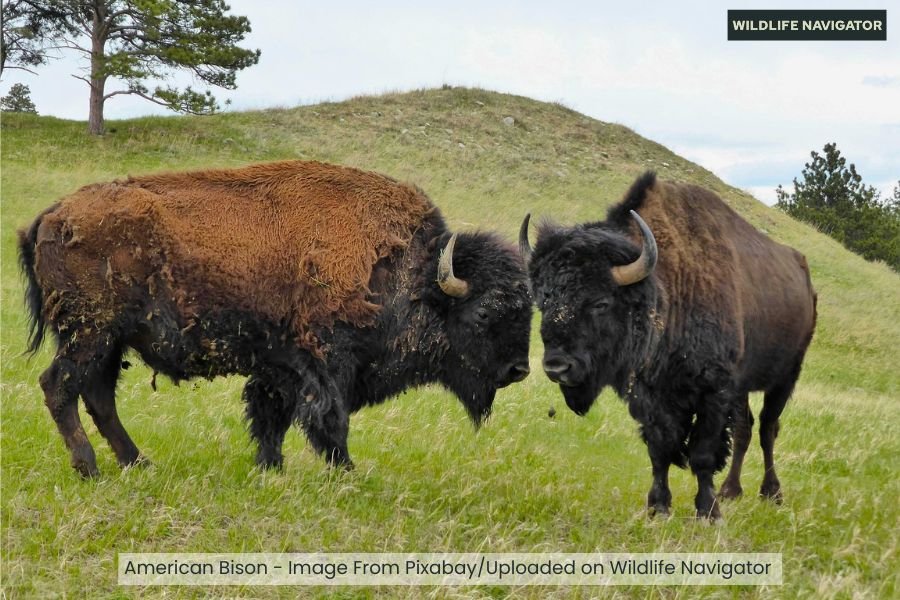
The American bison (Bison bison) is a large mammal native to North America, recognised by its massive shoulder hump, broad head, curved horns, and thick brown coat. It inhabits grasslands, prairies, and other open landscapes, where it feeds mainly on grasses and other vegetation.
Once numbering in the tens of millions, American bison populations declined dramatically during the 19th century due to widespread hunting and habitat changes. Conservation efforts have since helped the species recover, although wild herds continue to face challenges involving habitat connectivity, genetic diversity, and long-term management.
Today, the American bison remains an important part of North America’s grassland ecosystems and a species of considerable cultural and conservation significance.
American Bison: Species Profile
The American bison (Bison bison) belongs to the family Bovidae, which also includes cattle, goats, sheep, and antelopes. It is one of the largest land mammals in North America and is recognised by its muscular forequarters, prominent shoulder hump, short curved horns, and shaggy head and neck.
| Classification | Details |
|---|---|
| Common Name | American Bison |
| Scientific Name | Bison bison |
| Kingdom | Animalia |
| Phylum | Chordata |
| Class | Mammalia |
| Order | Artiodactyla |
| Family | Bovidae |
| Genus | Bison |
| Species | Bison bison |
| Diet | Herbivorous |
| Habitat | Grasslands, prairies, and open woodlands |
| Native Range | North America |
The American bison has two commonly recognised subspecies: the plains bison (Bison bison bison) and the wood bison (Bison bison athabascae). They differ in certain physical characteristics and habitat preferences, with plains bison associated primarily with open grasslands and wood bison with the boreal regions of northwestern Canada.
Physical Characteristics of the American Bison
The American bison has a distinctive body structure, with a large head, a pronounced shoulder hump, and powerful forelegs. Its hindquarters are comparatively smaller, giving the animal a sloping profile. A thick coat covers the head, neck, shoulders, and forelegs, while the hair on the hindquarters is generally shorter.
Adult males, known as bulls, are typically larger and heavier than females, known as cows. Both sexes have short, curved horns that grow outward from the sides of the head. Their dark brown coats become especially thick during winter, helping them withstand cold temperatures across much of their native range.
Key physical characteristics of the American bison:
- Body size: Adults have a massive, muscular build, with males generally larger than females.
- Weight: Adult bulls commonly weigh around 700–2,000 pounds (318–907 kg), while cows are generally lighter.
- Shoulder height: Approximately 5–6.5 feet (1.5–2 metres), depending on sex and individual size.
- Body length: Roughly 7–12.5 feet (2.1–3.8 metres), including the head and body.
- Coat: Dark brown, with longer, shaggy hair across the head, shoulders, and forelegs.
- Horns: Short, curved horns present in both males and females.
- Shoulder hump: A prominent muscular hump supported by elongated vertebrae, adapted to the animal’s powerful forequarters.
- Tail: Relatively short, ending in a tuft of dark hair.
American bison calves have a reddish-orange coat at birth, which gradually darkens as they mature. Their heavy winter coats are shed in warmer months, leaving a shorter, lighter-looking summer coat. These seasonal changes help the species adapt to the varied temperatures of North American grasslands and northern habitats.
American Bison Habitat and Distribution
The American bison is native to North America, where it historically occupied vast grasslands, prairies, and open plains stretching from northern Mexico through the central United States and into Canada. Its distribution was closely associated with extensive grazing habitats that provided abundant grasses and space for large herds to move.
Today, American bison occur in a more fragmented distribution, primarily within managed herds, protected areas, and conservation landscapes. Wild and conservation-managed populations are found in parts of the United States and Canada, while smaller populations and restoration efforts also occur in Mexico.
Preferred Habitat
American bison are well adapted to open landscapes, particularly grasslands and prairies. Their habitat preferences vary between the two commonly recognised subspecies.
- Grasslands and prairies: Plains bison (Bison bison bison) primarily inhabit open grasslands, where grasses provide their main food source.
- Boreal forests and meadows: Wood bison (Bison bison athabascae) occur in northern Canada, using meadows, river valleys, and open areas within boreal forest landscapes.
- Shrublands and open woodlands: Bison may also use these habitats when suitable forage is available.
- Seasonal grazing areas: Access to different vegetation and water sources allows herds to respond to seasonal changes in food availability.
Where Do American Bison Live Today?
In the United States, notable bison populations occur in Yellowstone National Park and several other national parks, wildlife refuges, tribal lands, and conservation areas. Yellowstone is particularly significant because it supports a well-known free-ranging population with a long history of continuity.
In Canada, wood bison are found in parts of the Northwest Territories, northern Alberta, and other areas of western and northern Canada. Plains bison also occur in conservation herds across parts of the country.
In Mexico, conservation initiatives have helped re-establish bison in parts of their historical range, including northern grassland ecosystems.
Although bison have recovered from their severe historical decline, their current distribution remains much smaller and more fragmented than their former range. Many populations are managed within designated areas, and access to connected grazing landscapes remains important for their long-term conservation.
What Do American Bison Eat?
American bison are herbivores that feed primarily on grasses and other low-growing vegetation. Their diet reflects their adaptation to open grasslands, where they graze for much of the day. Although grasses form the main part of their diet, they also consume sedges, herbs, and other plants depending on habitat and seasonal availability.
Main Foods in the American Bison’s Diet
- Grasses: The primary food source for most American bison, including native prairie grasses and other grass species.
- Sedges: Grass-like plants that grow in moist meadows and other suitable habitats.
- Herbaceous plants: Broad-leaved plants and herbs provide additional nutrients when available.
- Seasonal vegetation: Bison adjust their feeding patterns according to changes in plant growth, snow cover, and forage availability.
How Do American Bison Feed?
American bison graze by using their broad muzzles and strong tongues to gather vegetation. Unlike animals that browse mainly on leaves and branches, bison primarily feed close to the ground. Their digestive system is adapted to process fibrous plant material, allowing them to obtain nutrients from grasses that many other mammals cannot efficiently digest.
As ruminants, bison have a specialised stomach with multiple compartments. They swallow plant material, later regurgitate it as cud, and chew it again to help break down tough vegetation. Microorganisms in their digestive system assist in fermenting plant fibres.
Seasonal Changes in Diet
Food availability varies throughout the year. During spring and summer, newly growing vegetation often provides nutritious forage. In autumn and winter, bison may rely more heavily on mature grasses and other vegetation, sometimes using their heads to push snow aside and reach plants beneath it.
By grazing across grasslands, American bison also influence plant growth, vegetation structure, and nutrient cycling. Their ecological effects depend on herd density, grazing intensity, local plant communities, and environmental conditions.
American Bison Behaviour
American bison display a range of social and behavioural adaptations that help them survive in North America’s grasslands and other open habitats. They are generally social animals that gather in herds, graze for extended periods, and use physical displays and vocalisations to communicate. Their behaviour changes with the seasons, food availability, and reproductive activity.
Herd Structure and Social Organisation
American bison often form groups, although herd size and composition vary among populations. Adult females typically live with their young in mixed groups, while adult males may spend more time in separate groups or alone outside the breeding season. During the mating season, bulls join female groups and compete for access to receptive females.
Herding provides opportunities for social interaction and may offer some protection against predators. However, the organisation of bison groups is flexible rather than fixed, and individuals may join or leave groups as conditions change.
Daily Activity and Grazing
Bison spend much of their day feeding, resting, and ruminating. They commonly alternate between grazing and resting periods, with their daily activity influenced by weather, temperature, forage quality, and disturbance. During colder conditions, their thick coats and robust bodies help them remain active in exposed landscapes.
Communication and Social Displays
American bison communicate through vocalisations, body posture, scent, and physical interactions. Bulls may bellow, paw the ground, lower their heads, or display their size during confrontations. Females also use vocal and behavioural signals, particularly when interacting with calves.
Wallows and Dust Bathing
Bison frequently roll in shallow depressions in the ground known as wallows. These behaviours can help remove loose hair and may assist with managing parasites. Wallows also create small changes in the soil surface that can influence local vegetation and provide distinctive features within grassland ecosystems.
Seasonal Movements
Historically, American bison moved across extensive landscapes in response to seasonal changes in forage and environmental conditions. Today, movement patterns vary considerably. Some herds roam across large protected areas, while others are restricted by fences, roads, land use, or management boundaries.
Defensive Behaviour
Despite their size and generally calm appearance, American bison can react aggressively when threatened, approached too closely, or disturbed. Bulls may become particularly unpredictable during the breeding season, while females can be highly protective of their calves. Their speed, strength, and powerful horns make them potentially dangerous to people.
Maintaining a safe distance and following wildlife-viewing regulations are essential when observing bison in national parks and other protected areas.
American Bison Reproduction and Life Cycle
American bison reproduce sexually, with most mating activity occurring during the summer breeding season. Reproduction is closely associated with herd behaviour, as mature bulls compete for access to receptive females. Calves are generally born in spring, when improving weather and growing vegetation can provide favourable conditions for early development.
Breeding Season and Mating Behaviour
The breeding season, commonly called the rut, generally occurs from July through September. During this period, mature bulls join groups of females and display increased territorial and competitive behaviour. Bulls may bellow, paw the ground, posture, and engage in physical contests to establish dominance and gain mating opportunities.
Not every bull reproduces each season. Access to females depends on factors such as age, physical condition, and competition from other males.
Gestation and Birth
The gestation period of an American bison is approximately nine months. Females typically give birth to a single calf, although twin births can occur rarely. Calving usually takes place from April through June, with timing varying according to location and environmental conditions.
Newborn calves have a reddish-orange coat that distinguishes them from the darker adults. They are able to stand and begin moving shortly after birth, helping them remain close to their mothers and the herd.
Calf Development and Maternal Care
During the first months of life, calves depend on their mothers for milk, protection, and guidance. They gradually begin grazing while continuing to nurse. Their coats darken as they grow, and they become increasingly capable of keeping pace with the herd.
Females are protective of their young and may confront perceived threats. Calves gradually become more independent, although their development and the timing of weaning can vary among populations and management conditions.
Sexual Maturity and Lifespan
American bison generally reach sexual maturity within their first few years, although physical maturity and successful reproduction may occur later. Females can begin reproducing at a relatively young age, while males often face greater competition before gaining regular access to mates.
In the wild, American bison commonly live around 15–20 years, although lifespan varies with environmental conditions, disease, predation, and management. Individuals under managed care may live longer when provided with appropriate nutrition and veterinary attention.
American Bison Predators and Threats
Adult American bison are among the largest land mammals in North America, and their size, strength, and herd behaviour help protect them from many predators. However, calves and weakened individuals remain vulnerable to predation. Beyond natural predators, human activities have had a far greater historical impact on bison populations, contributing to their dramatic decline during the 19th century.
Natural Predators of the American Bison
Wolves are among the most significant natural predators of American bison. They typically target calves, older animals, or individuals weakened by injury or poor health rather than healthy adults. Predation patterns vary according to wolf pack size, bison herd behaviour, and local environmental conditions.
Other large predators, including grizzly bears, may occasionally prey on bison, particularly young calves. However, predation varies considerably across the species’ range and is not a major threat to all populations.
Historical Hunting and Population Decline
During the 19th century, commercial hunting, widespread killing, and expanding settlement caused American bison populations to collapse. Millions of animals were killed for hides, meat, and other commercial purposes, while some hunting was encouraged as a means of disrupting Indigenous livelihoods and reducing the resources available to Indigenous communities.
By the late 1800s, only a small fraction of the species’ former population remained. The decline transformed grassland ecosystems and had profound cultural, economic, and social consequences for many Indigenous peoples whose lives and traditions were closely connected to bison.
Habitat Loss and Fragmentation
The conversion of native grasslands to agriculture, expanding infrastructure, fencing, and other forms of land development have reduced or fragmented suitable habitat. These changes can restrict seasonal movements and limit access to grazing areas.
Many modern bison herds occupy protected or managed landscapes, where boundaries may prevent them from moving freely across their historical range. Maintaining connected habitats is therefore an important consideration for long-term conservation.
Disease and Genetic Concerns
Some bison populations face disease-related management challenges. For example, brucellosis occurs in certain bison populations in the Greater Yellowstone region and can affect reproduction in infected animals. Management measures vary according to local disease risks and wildlife policies.
Genetic diversity is another concern, particularly for smaller or isolated herds. Some conservation populations have experienced crossbreeding with domestic cattle, while others require careful management to preserve distinctive genetic characteristics. These issues differ among herds and should be evaluated using population-specific evidence.
Human–Bison Conflict
As bison populations recover in some areas, interactions with livestock, agriculture, transport routes, and nearby communities can create management challenges. Bison may damage fences or crops, compete with livestock for forage, or create safety risks when they encounter people and vehicles.
Effective conservation requires balancing population recovery with public safety, land-use concerns, disease management, and the ecological needs of bison. Protected habitat, responsible wildlife management, and collaboration with Indigenous communities can all contribute to the species’ long-term future.
Ecological Importance of the American Bison
The American bison plays an important role in North America’s grassland ecosystems. Through grazing, movement, wallowing, and nutrient cycling, bison influence vegetation patterns and create habitat features used by other organisms. Their ecological effects vary according to herd density, season, soil conditions, and the characteristics of the surrounding landscape.
Grazing and Grassland Vegetation
American bison feed primarily on grasses and other low-growing plants, influencing the structure and composition of grassland vegetation. Selective grazing can affect which plants thrive in particular areas, while the movement of herds distributes grazing pressure across the landscape.
At suitable population densities, grazing can help maintain a diverse grassland structure. However, its effects depend on local conditions, and excessive grazing pressure can damage vegetation when populations and forage availability are poorly balanced.
Soil Disturbance and Wallowing
Bison create wallows by rolling and rubbing against the ground, producing shallow depressions in the soil. These features can collect water, alter local soil conditions, and create small patches of disturbed ground where different plant species may establish.
Wallows also contribute to the physical diversity of grassland habitats, although their ecological effects vary depending on the frequency of use and the surrounding environment.
Nutrient Cycling
Through dung and urine, American bison return nutrients to the soil. Their feeding and movement can redistribute nutrients across grazing areas, influencing plant growth and soil processes. Dung can also provide food and habitat for insects and other decomposers.
These processes connect bison feeding behaviour with the wider functioning of grassland ecosystems.
Interactions With Other Wildlife
Bison influence other grassland animals through their effects on vegetation, soil, and habitat structure. Grazing creates a changing mosaic of plant heights, while wallows and disturbed ground provide additional microhabitats. In some landscapes, these changes can benefit insects, birds, and other wildlife.
Bison carcasses also provide food for scavengers, including birds and mammals. Their ecological role therefore extends beyond grazing and includes interactions with numerous species across the food web.
Cultural and Conservation Significance
The American bison holds deep cultural, historical, and spiritual significance for many Indigenous peoples of North America. For numerous communities, bison are connected to traditional food systems, cultural practices, livelihoods, and relationships with the land.
The species’ recovery has consequently become more than a wildlife conservation objective. Indigenous-led bison restoration initiatives also support cultural revitalisation, ecological stewardship, and renewed connections between communities and ancestral landscapes.
American Bison Conservation Status
The American bison has recovered from a severe population collapse that brought the species close to extinction in the late 19th century. Conservation measures, protected herds, and restoration programmes have helped increase its numbers. However, the species’ recovery remains uneven, and many populations continue to depend on active management and protected habitats.
Historical Decline and Recovery
Before large-scale commercial hunting and settlement transformed North America’s grasslands, American bison numbered in the tens of millions. During the 19th century, widespread hunting, habitat changes, and deliberate efforts to undermine Indigenous communities’ access to bison caused populations to decline dramatically.
By the late 1800s, only a small number of animals survived in isolated herds and privately maintained groups. Protection initiatives and breeding programmes helped prevent the species’ complete disappearance and established the foundation for subsequent recovery.
Current Conservation Status
The conservation status of the American bison depends on the assessment system and population being considered. The species has recovered substantially in total numbers, but this does not mean that all populations are wild, genetically distinct, or ecologically restored.
Many bison live in commercial herds or under managed conditions, while others occupy national parks, wildlife refuges, Indigenous lands, and conservation areas. These populations differ in their level of protection, freedom of movement, and conservation objectives.
For an accurate current status, consult the latest assessment from the International Union for Conservation of Nature (IUCN) and relevant national wildlife authorities. The conservation status of the species as a whole should not be confused with the status of individual subspecies or local herds.
Major Conservation Challenges
- Habitat fragmentation: Roads, fences, agriculture, and development restrict movement between grazing areas.
- Genetic diversity: Some herds are small or isolated, while cattle ancestry in certain populations complicates genetic conservation.
- Disease management: Brucellosis and other health concerns require population-specific monitoring and management.
- Limited free-ranging populations: Many herds occupy fenced or otherwise managed landscapes rather than extensive connected ecosystems.
- Human–wildlife conflict: Interactions with livestock operations, agricultural land, and nearby communities can complicate bison restoration.
Conservation and Restoration Initiatives
Conservation efforts include protecting existing herds, restoring bison to suitable grasslands, managing genetic diversity, and expanding opportunities for animals to move across connected habitats. National parks and wildlife refuges play important roles, while Indigenous nations and conservation organisations are increasingly involved in bison restoration.
Indigenous-led programmes are particularly significant because they can combine ecological restoration with cultural renewal and community priorities. Successful long-term conservation requires more than increasing animal numbers; it also involves maintaining healthy herds, protecting habitat, and supporting sustainable relationships between bison and the landscapes they inhabit.
Although the American bison is no longer on the brink of complete extinction, continued conservation work remains essential to preserve its ecological role and secure its future across North America.
American Bison vs. Buffalo
The American bison is commonly called a buffalo in North America, but it is not a true buffalo in zoological classification. The name reflects long-standing historical usage rather than a close taxonomic relationship. True buffalo, including the African buffalo and water buffalo, belong to different genera within the family Bovidae.
Bison and buffalo share several characteristics, such as large bodies, horns, and a herbivorous diet. However, they differ in physical structure, geographic distribution, and evolutionary relationships.
Key Differences Between Bison and Buffalo
| Characteristic | American Bison | African Buffalo | Water Buffalo |
|---|---|---|---|
| Scientific name | Bison bison | Syncerus caffer | Bubalus bubalis |
| Native range | North America | Sub-Saharan Africa | South and Southeast Asia |
| Shoulder hump | Prominent | Less prominent | Generally absent |
| Coat | Thick, shaggy fur, especially over the forequarters | Relatively short hair | Sparse hair in many domestic breeds |
| Horns | Short, curved horns | Large, curved horns, often forming a heavy base in adults | Broadly variable; many have long, outward-curving horns |
| Typical habitat | Grasslands, prairies, and northern woodland landscapes | Savannas, grasslands, and wetlands | Wetlands, grasslands, and agricultural landscapes |
| Domestication | Primarily wild or managed wildlife herds | Wild species | Widely domesticated for agriculture |
American Bison vs. European Bison
The American bison is also distinct from the European bison (Bison bonasus), commonly known as the wisent. Both belong to the genus Bison, but they are separate species.
American bison are native to North America, whereas European bison historically inhabited parts of Europe and now survive through conservation and reintroduction programmes. European bison generally have a less pronounced shoulder hump and a different body profile, although appearance varies with age, sex, and individual condition.
Why Are American Bison Called Buffalo?
European explorers and settlers commonly used the word buffalo when referring to the large, shaggy mammals they encountered in North America. The name became deeply established in regional language and culture and remains widely used today.
In scientific writing, American bison is the more precise common name because it distinguishes the species from true buffalo. Both terms are understood in North America, but they are not taxonomically interchangeable.
Interesting Facts About the American Bison
The American bison is known for its imposing size, distinctive appearance, and important place in North America’s natural and cultural history. Beyond its familiar silhouette, the species has several remarkable characteristics that reflect its adaptations to grassland environments.
- One of North America’s largest land mammals: Adult American bison can weigh more than 2,000 pounds (907 kg), with large bulls considerably heavier than females.
- Both sexes have horns: Male and female bison grow horns, although their size and shape can vary between individuals.
- Newborn calves have reddish coats: Young calves are often called red dogs because of their distinctive reddish-orange fur, which gradually darkens as they mature.
- Bison can run surprisingly fast: Despite their massive bodies, American bison can reach speeds of approximately 35 miles per hour (56 km/h) over short distances.
- Their shoulder hump is a distinctive adaptation: The prominent hump is supported by elongated vertebrae and powerful muscles that help support the head and forequarters.
- They can survive harsh winters: Their thick seasonal coats provide insulation, allowing them to remain in cold, snowy environments.
- Bison create wallows: These shallow ground depressions form when bison roll in the soil and can become distinctive features of grassland habitats.
- Their historical range was enormous: American bison once occupied extensive areas of North America, but commercial hunting and other human pressures caused a dramatic population collapse during the 19th century.
- Yellowstone preserves an important wild population: Yellowstone National Park is notable for its free-ranging bison herd, which has a long history of continuity in the region.
- Bison restoration has cultural importance: Many Indigenous nations are involved in restoring bison to their lands, supporting cultural traditions, ecological stewardship, and renewed relationships with the species.
Where Can American Bison Be Seen?
American bison can be observed in several national parks, wildlife refuges, conservation areas, and Indigenous-managed landscapes across North America. Although the species once roamed extensive grasslands across the continent, many present-day herds live within protected or managed areas. The opportunity to see bison in the wild depends on the location, season, and local population management.
Yellowstone National Park, United States
Yellowstone National Park is one of the best-known places to observe American bison. Its free-ranging herd inhabits the park’s grasslands, valleys, and geothermal landscapes. Bison may be seen throughout the year, although their locations change with seasonal movements and environmental conditions.
Grand Teton National Park, United States
Grand Teton National Park in Wyoming supports bison as part of its diverse wildlife community. They can be encountered in open grasslands and other suitable habitats, particularly in areas where grazing opportunities are available.
Badlands National Park, United States
Badlands National Park in South Dakota is another notable location for bison viewing. Its mixed-grass prairie provides suitable habitat for grazing, and bison form part of the park’s broader grassland restoration and wildlife conservation landscape.
Elk Island National Park, Canada
Located in Alberta, Elk Island National Park is recognised for its conservation work involving both plains bison and wood bison. The park provides opportunities to learn about bison ecology, population management, and restoration efforts in Canada.
Wood Buffalo National Park, Canada
Wood Buffalo National Park, spanning parts of Alberta and the Northwest Territories, is particularly important for wood bison conservation. Its extensive boreal landscapes, wetlands, and meadows support one of the most significant conservation areas for this subspecies.
Responsible Bison Viewing
American bison are powerful wild animals and can be dangerous even when they appear calm. Visitors should remain at the distances required by park regulations, never approach calves or separate animals from their herds, and avoid feeding or provoking them. Binoculars and camera zoom are safer ways to observe their behaviour.
Bison sightings are never guaranteed, and viewing conditions vary throughout the year. Visitors should consult official park guidance before travelling to learn about current access conditions, wildlife locations, and safety requirements.
Frequently Asked Questions About the American Bison
Curating and documenting wildlife and protected areas through detailed guides and the continuously updated WN Index.
- Rosan Prasad
- Rosan Prasad
- Rosan Prasad

- Rosan Prasad