Grand Canyon National Park: Wildlife, Geography, Hiking Trails & Visitor Guide

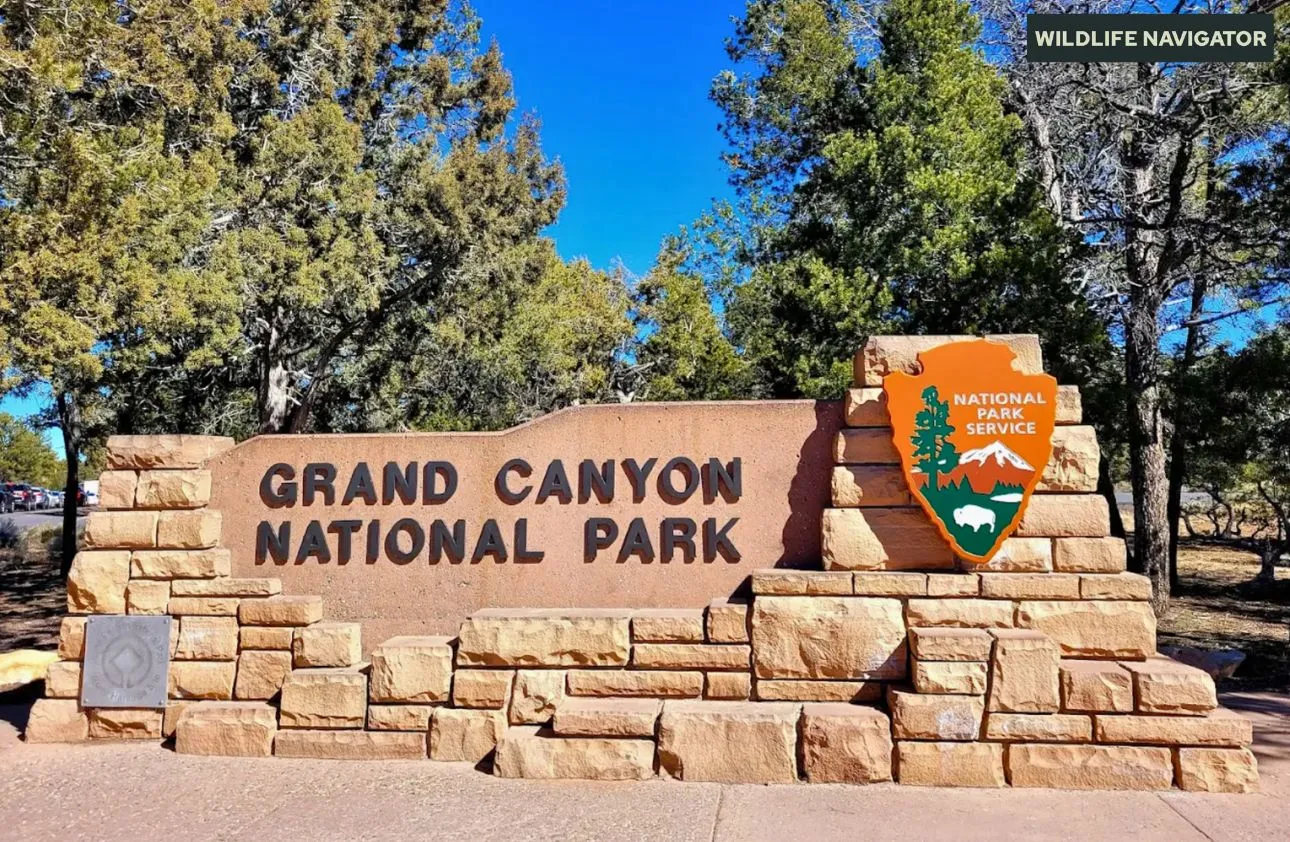
Grand Canyon National Park is located in northern Arizona. It is one of the most iconic natural landscapes in the world. Carved over millions of years by the powerful Colorado River, the Grand Canyon reveals an immense geological masterpiece of layered rock formations, towering cliffs, and vast desert scenery. Stretching for about 277 miles (446 km), reaching depths of more than a mile, and spanning up to 18 miles wide, the canyon showcases nearly two billion years of Earth’s geological history.
Established as a national park in 1919 and managed by the National Park Service, the park protects a vast and diverse ecosystem that includes desert landscapes, pine forests, and river habitats. These environments support a remarkable variety of wildlife, from mule deer and bighorn sheep to rare birds such as the California condor.
Each year, millions of visitors from around the world travel to the Grand Canyon to witness its breathtaking views, explore its hiking trails, and experience the dramatic beauty of one of the planet’s greatest natural wonders. Beyond its scenic grandeur, the park also holds deep cultural significance for Indigenous communities who have lived in the region for thousands of years.
Interesting Facts About Grand Canyon
- Massive size: Grand Canyon National Park stretches about 277 miles (446 km) long, up to 18 miles (29 km) wide, and more than 1 mile (1.6 km) deep.
- Ancient geology: The canyon’s rock layers reveal nearly two billion years of Earth’s geological history, making it one of the most important geological sites in the United States.
- Carved by a river: The powerful Colorado River played a major role in shaping the canyon over millions of years.
- A UNESCO World Heritage Site: The park was recognised by UNESCO for its outstanding natural beauty and scientific significance.
- One of the Seven Natural Wonders: The Grand Canyon is widely considered one of the Seven Natural Wonders of the World.
- Home to rare wildlife: The park is an important habitat for endangered species such as the California Condor.
- Millions of visitors: Over five million people visit Grand Canyon National Park each year to experience its breathtaking landscapes.
History of Grand Canyon National Park
The region now known as Grand Canyon National Park has been home to Indigenous peoples for thousands of years. Archaeological evidence shows that ancestral cultures such as the Ancestral Puebloans, Havasupai Tribe, Hualapai Tribe, and Hopi Tribe lived in and around the canyon, relying on its natural resources and maintaining deep cultural and spiritual connections to the land. Many of these tribes still consider the canyon a sacred landscape.
The first Europeans to reach the canyon were members of a Spanish expedition led by García López de Cárdenas in 1540 during the exploration organised by Francisco Vázquez de Coronado. However, the area remained largely unexplored by outsiders for centuries due to its rugged terrain.
In the late 19th century, scientific expeditions—most notably those led by John Wesley Powell—brought international attention to the canyon’s geology and natural beauty. Recognising its importance, Theodore Roosevelt strongly supported protecting the area.
The canyon was first designated as Grand Canyon National Monument in 1908, and later officially established as Grand Canyon National Park in 1919. Today, it is also recognised as a UNESCO World Heritage Site for its outstanding natural value.
Geography and Landscape
The dramatic landscape of Grand Canyon National Park was shaped primarily by the powerful flow of the Colorado River, which has carved its way through layers of rock over millions of years. This immense canyon stretches about 277 miles (446 km) across northern Arizona, reaching depths of over 1 mile (1.6 km) and widths of up to 18 miles (29 km). The canyon’s exposed rock layers reveal nearly two billion years of geological history, making it one of the most significant geological sites on Earth.
The park is divided into several major regions, each offering unique perspectives of the canyon. The South Rim is the most accessible and frequently visited area, known for its famous viewpoints and visitor facilities. In contrast, the North Rim sits at a higher elevation and offers a quieter, more remote experience surrounded by forests.
Between these rims lies the Inner Canyon, where steep cliffs, side canyons, and desert landscapes create a rugged and challenging environment. The dramatic formations, colourful rock layers, and vast scale of the canyon make it one of the most spectacular natural landscapes in the United States.
Climate and Best Time to Visit
- Diverse climate zones: Due to major elevation differences, Grand Canyon National Park experiences varying weather conditions from desert heat to cooler mountain climates.
- Summer (June–August): Temperatures on the South Rim are warm, while the Inner Canyon can become extremely hot, often exceeding 40°C (104°F).
- Winter (December–February): The South Rim may receive snowfall, creating dramatic canyon views, while the North Rim is usually closed due to heavy snow.
- Spring (March–May): Pleasant temperatures and blooming desert plants make this a good season for hiking and sightseeing.
- Autumn (September–November): Cooler weather and fewer visitors offer excellent conditions for exploring trails and scenic viewpoints.
- Best time to visit: Spring and autumn are generally considered the most comfortable seasons for outdoor activities and photography.
Wildlife of Grand Canyon National Park
The diverse ecosystems of Grand Canyon National Park support a rich variety of wildlife. From desert habitats in the Inner Canyon to conifer forests along the rims, the park provides shelter for hundreds of animal species. These habitats allow mammals, birds, reptiles, and amphibians to thrive across different elevations and climates.
Mammals
Several large and small mammals inhabit the park’s forests, grasslands, and rocky slopes.
- Mule Deer (Odocoileus hemionus) – One of the most commonly seen animals, often grazing near forest edges and meadows.
- Elk (Cervus canadensis) – Large herbivores frequently spotted in the forests of the South Rim during early morning or evening.
- Desert Bighorn Sheep (Ovis canadensis nelsoni) – Well adapted to steep canyon cliffs and rocky terrain.
- Coyote (Canis latrans) – A highly adaptable predator found throughout the canyon region.
- Mountain Lion (Puma concolor) – A secretive predator rarely seen but present in remote areas.
Birds
The canyon is also an important habitat for many bird species.
- California Condor (Gymnogyps californianus) – One of the rarest birds in the world, successfully reintroduced to the canyon region.
- Peregrine Falcon (Falco peregrinus) – Known for its incredible diving speed and cliffside nesting sites.
- Bald Eagle (Haliaeetus leucocephalus) – Occasionally seen near the Colorado River during winter months.
- Common Raven (Corvus corax) – A highly intelligent bird frequently observed along canyon rims.
Reptiles and Amphibians
The warmer desert environment of the Inner Canyon supports several reptiles and amphibians.
- Grand Canyon Pink Rattlesnake (Crotalus oreganus abyssus) – A uniquely colored rattlesnake native to the canyon region.
- Desert Spiny Lizard (Sceloporus magister) – Commonly seen basking on rocks in sunny areas.
- Red-spotted Toad (Anaxyrus punctatus) – Found near springs and seasonal streams.
This remarkable biodiversity highlights the ecological importance of Grand Canyon National Park, making it not only a geological wonder but also a vital refuge for wildlife in the American Southwest.
Flora and Vegetation
The plant life of Grand Canyon National Park varies greatly due to differences in elevation, climate, and soil conditions. From desert plants in the Inner Canyon to dense forests along the rims, the park supports a wide range of vegetation communities. These ecosystems provide important habitats for wildlife and help maintain the canyon’s ecological balance.
Major Vegetation Zones
Pinyon–Juniper Woodlands
- Found across large areas of the canyon rims and plateaus
- Dominated by Pinyon Pine (Pinus edulis) and Utah Juniper (Juniperus osteosperma)
- Provides food and shelter for birds, rodents, and other wildlife
Ponderosa Pine Forests
- Common on the cooler, higher elevations of the North Rim and parts of the South Rim
- Dominated by tall Ponderosa Pine (Pinus ponderosa) trees
- Supports species such as squirrels, deer, and various forest birds
Desert Shrub Vegetation
- Found in the warmer Inner Canyon areas
- Includes plants such as sagebrush, agave, and yucca
- Adapted to dry conditions and intense sunlight
Riparian Vegetation
- Occurs along the banks of the Colorado River and seasonal streams
- Includes cottonwood, willow, and other water-loving plants
- Provides essential habitat for birds, insects, and amphibians
Major Viewpoints and Scenic Areas
- Mather Point – One of the most popular viewpoints on the South Rim, offering a wide panoramic view of the canyon and surrounding rock formations.
- Yavapai Point – Known for its excellent views of the canyon’s layered geology and the distant Colorado River. Nearby geology museums help visitors understand how the canyon formed.
- Hopi Point – A famous sunset viewing location where visitors can see long stretches of the canyon and dramatic lighting across the cliffs.
- Desert View Watchtower – A historic stone tower designed by Mary Colter, offering scenic views of the eastern canyon and the Colorado River far below.
- Bright Angel Point – Located on the North Rim, this viewpoint provides spectacular perspectives of the deep canyon and rugged cliffs.
Famous Hiking Trails
- Bright Angel Trail – One of the most popular trails in Grand Canyon National Park. Starting from the South Rim, it descends deep into the canyon with resthouses and water stations along the route.
- South Kaibab Trail – Known for its spectacular panoramic views and ridgeline route. Although shorter than some trails, it is steep and exposed, making it a challenging but rewarding hike.
- North Kaibab Trail – The only maintained trail from the North Rim to the canyon floor, eventually reaching the Colorado River.
- Rim Trail – A relatively easy trail along the South Rim, offering scenic canyon views and access to several major viewpoints.
Conservation and Environmental Importance
- Protected ecosystem: Grand Canyon National Park protects a vast landscape of desert, forest, and river ecosystems across northern Arizona.
- Biodiversity conservation: The park provides habitat for hundreds of species of mammals, birds, reptiles, amphibians, and plants adapted to the canyon’s varied environments.
- Endangered species protection: Conservation programs support the recovery of rare species such as the California Condor, one of the largest flying birds in North America.
- River ecosystem preservation: The Colorado River plays a crucial role in sustaining wildlife habitats and shaping the canyon’s landscape.
- Sustainable tourism: The National Park Service manages visitor activities, trails, and facilities to reduce environmental impact and protect natural resources.
- Scientific research: The canyon’s exposed rock layers provide valuable information about Earth’s geological history and long-term environmental changes.
Visitor Information
- Location: Grand Canyon National Park is located in northern Arizona, within the southwestern United States.
- Main entrances: The park is primarily accessed through the South Rim, which is open year-round, while the North Rim operates seasonally due to winter snowfall.
- Visitor centers: Facilities such as the Grand Canyon Visitor Center provide maps, exhibits, and information about park trails, geology, and wildlife.
- Entrance fees: Visitors must pay an entrance fee, which helps support conservation, park maintenance, and visitor services.
- Transportation: Shuttle buses operate along the South Rim, allowing visitors to reach major viewpoints and trailheads without driving.
- Accommodation: Lodges, campgrounds, and nearby towns offer various accommodation options for visitors exploring the park.
Travel Tips for Visitors
- Carry plenty of water – The dry desert climate of Grand Canyon National Park can quickly lead to dehydration, especially during hikes.
- Start hikes early – Temperatures rise quickly during the day, particularly inside the canyon, so early morning hikes are safer and more comfortable.
- Stay on marked trails – The canyon terrain can be steep and dangerous, making it important to follow designated paths and safety guidelines.
- Be prepared for weather changes – Conditions can vary greatly between the South Rim and the Inner Canyon.
- Respect wildlife – Observe animals from a safe distance and avoid feeding them to protect both visitors and wildlife.
- Plan ahead for permits – Backcountry hiking and overnight camping often require permits issued by the National Park Service.
- Use park shuttle services – Shuttle buses help reduce traffic and provide easy access to popular viewpoints and trailheads
Conclusion
Grand Canyon National Park stands as one of the most remarkable natural landscapes in the United States, renowned for its immense size, dramatic cliffs, and colourful geological formations. Carved over millions of years by the powerful Colorado River, the canyon reveals an extraordinary record of Earth’s geological history while supporting diverse ecosystems across desert, forest, and river environments.
Beyond its breathtaking scenery, the park also holds deep cultural significance for Indigenous communities who have lived in the region for thousands of years. Today, it remains a vital protected area managed by the National Park Service, helping conserve wildlife, landscapes, and natural resources for future generations.
Whether visitors come for scenic viewpoints, challenging hikes, wildlife observation, or simply to admire one of the world’s greatest natural wonders, the Grand Canyon offers an unforgettable experience that highlights the importance of conservation and responsible travel.