Kashmir Stag (Hangul Deer) – Habitat, Behaviour & Conservation in India

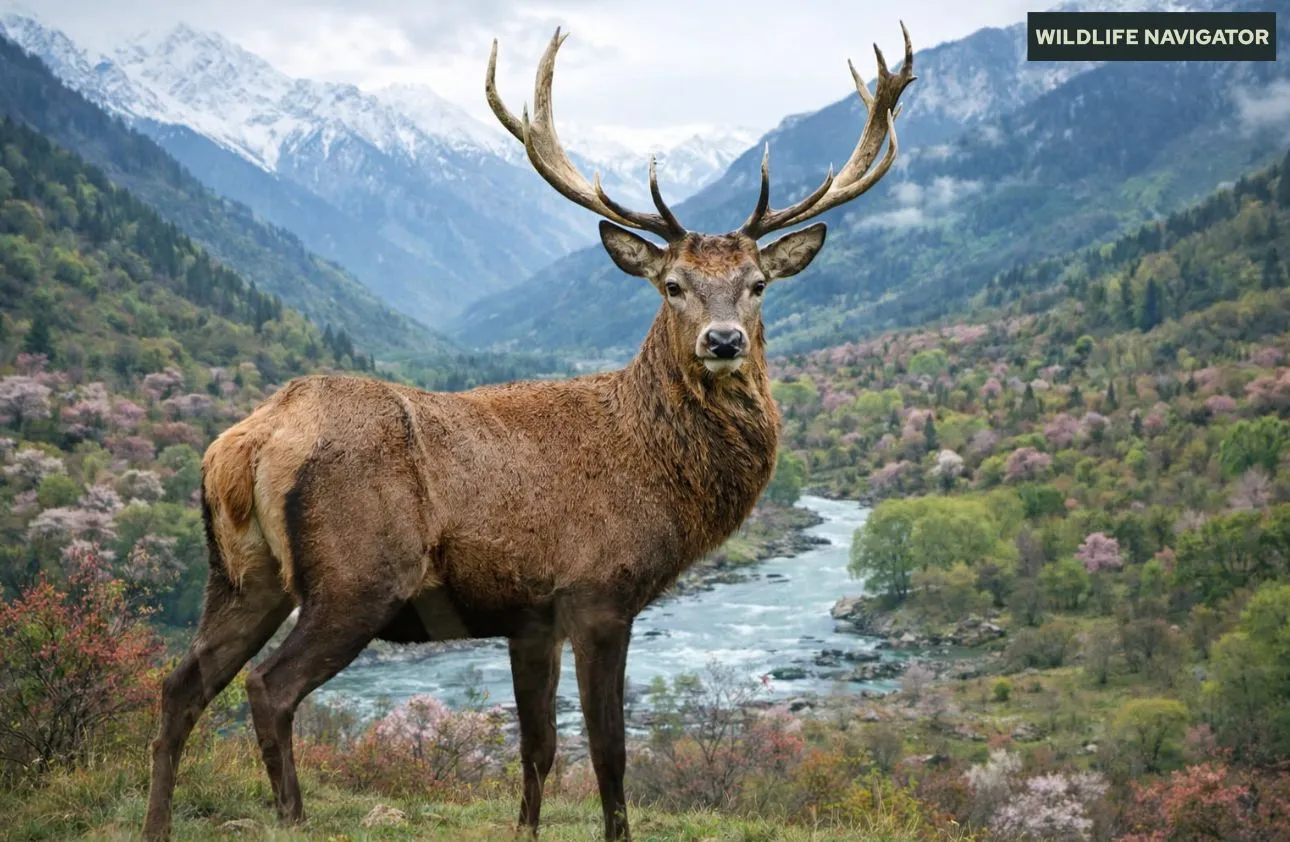
The Kashmir Stag, scientifically known as Cervus hanglu hanglu, is an iconic and critically endangered species native to the Kashmir Valley of India. Commonly referred to as the Kashmir Stag, Hangul holds a unique place in India’s wildlife heritage as the only surviving red deer species found in the country. Its presence reflects the ecological health of the Himalayan temperate forests it inhabits.
Once widespread across the mountains of Kashmir, the Hangul’s range has drastically shrunk over the decades due to habitat loss, human encroachment, and environmental pressures. Today, the species survives mainly within and around Dachigam National Park, making its conservation a matter of national importance.
Beyond ecology, the Hangul is deeply woven into the cultural identity of Kashmir, often symbolising the region’s rich natural legacy. Its striking antlers, seasonal coat changes, and majestic appearance have made it a flagship species for conservation efforts in Jammu & Kashmir. Protecting the Hangul is not just about saving a deer species—it is about preserving an entire ecosystem and a living symbol of the Himalayas.
This article explores the Hangul deer’s biology, habitat, threats, and ongoing conservation efforts, highlighting why urgent and sustained action is essential for its survival.
Scientific Classification & Taxonomy
The Kashmir Stag belongs to the family of true deer (Cervidae) and is scientifically classified as Cervus hanglu hanglu. It is a distinct subspecies of the red deer group, adapted specifically to the temperate forests and mountainous terrain of the northwestern Himalayas. For a long time, Hangul was considered a subspecies of the European red deer (Cervus elaphus), but modern genetic and morphological studies have confirmed its closer relationship with Central Asian red deer species.
Scientific Classification:
- Kingdom: Animalia
- Phylum: Chordata
- Class: Mammalia
- Order: Artiodactyla
- Family: Cervidae
- Genus: Cervus
- Species: Cervus hanglu
- Subspecies: Cervus hanglu hanglu
What sets the Hangul apart from other red deer is its smaller body size, lighter antler structure, and adaptations to high-altitude Himalayan forests. The antlers typically have fewer tines compared to European red deer, and their shape is uniquely suited for movement through dense woodland.
Taxonomically, the Hangul represents the southernmost distribution of red deer in Asia, making it biologically significant. Its genetic uniqueness underscores the importance of conserving the species, as the loss of Hangul would mean the extinction of an entire evolutionary lineage within the Indian subcontinent.
Physical Characteristics
The Hangul Deer (Kashmir Stag) is a medium-to-large deer species distinguished by its graceful build and adaptations to the cold, mountainous landscapes of Kashmir. Males (stags) are noticeably larger and more robust than females (hinds), especially during the breeding season.
Adult Hangul stags typically stand 1.2–1.3 meters at the shoulder and can weigh between 160–200 kg, while females are smaller and lighter. The body is well-proportioned with long, strong legs that aid in navigating steep slopes, rocky terrain, and dense forest undergrowth.
One of the most striking features of the Hangul is its antlers. Only males grow antlers, which are large but comparatively less complex than those of European red deer. A mature stag usually has 10–16 points (tines), with antlers being shed and regrown annually. Antler growth begins in spring and reaches full size by late summer, coinciding with the upcoming rut.
The coat of the Hangul changes seasonally:
- Summer coat: Reddish-brown and lighter, helping with heat regulation
- Winter coat: Darker, thicker, and greyer to provide insulation against harsh Himalayan winters
A pale rump patch and short tail further help in identification. These physical traits collectively reflect the Hangul’s adaptation to temperate deciduous and coniferous forests, making it one of the most visually distinctive deer species in the Indian Himalayas.
Natural Habitat & Distribution
The Hangul Deer is endemic to the Kashmir Valley, making it one of India’s most geographically restricted large mammals. Historically, its range extended across the temperate forests of the Kashmir Himalayas, including areas of present-day Jammu & Kashmir and parts of northern Pakistan. However, due to habitat loss and human pressure, the Hangul’s distribution has been drastically reduced.
Today, over 90% of the remaining Hangul population is concentrated in and around Dachigam National Park, near Srinagar. This park provides a mosaic of habitats essential for the species’ survival, including:
- Temperate deciduous forests
- Mixed coniferous forests
- Alpine meadows
- Riverine valleys and grasslands
Hangul deer are typically found at elevations ranging from 1,500 to 3,300 meters, depending on the season. They exhibit altitudinal migration, moving to higher elevations during summer in search of fresh grazing grounds and descending to lower, sheltered forests during winter to escape heavy snowfall.
Outside Dachigam, only small, fragmented populations exist in nearby forest patches, which are increasingly isolated. This fragmentation restricts genetic exchange and increases vulnerability to environmental changes. The Hangul’s limited and shrinking habitat is one of the primary reasons behind its critically endangered status, highlighting the urgent need for habitat protection and corridor restoration.
Behavior & Lifestyle
The Hangul Deer displays behaviour well adapted to the seasonal rhythms and rugged terrain of the Himalayan forests. It is generally crepuscular, meaning it is most active during the early morning and late evening hours, a pattern that helps it avoid human disturbance and predators.
For most of the year, Hangul deer show a segregated social structure. Females and young form small groups, while adult males tend to remain solitary or in loose bachelor groups. This changes dramatically during the rutting season (autumn), when stags become highly active and competitive, engaging in vocal calls, antler displays, and occasional fights to establish dominance and secure mates.
Hangul are known for their seasonal movement patterns. They migrate between lower and higher altitudes in response to food availability and weather conditions. During winter, they descend into forested valleys with less snowfall, while in summer they move to alpine meadows rich in fresh vegetation.
Despite their size, Hangul deer are shy and alert, relying on keen senses of hearing and smell to detect threats. When disturbed, they prefer to flee silently into dense cover rather than confront danger. This cautious lifestyle has helped the species survive in a landscape increasingly shared with humans, but it also makes population monitoring and conservation efforts more challenging.
Diet & Feeding Habits
The Hangul Deer is a strict herbivore, feeding on a wide variety of plant matter available across its seasonal habitats. Its diet changes throughout the year in response to vegetation growth cycles, snowfall, and altitude shifts, allowing the species to survive in the challenging Himalayan environment.
During spring and summer, Hangul primarily graze on:
- Fresh grasses and sedges
- Herbaceous plants
- Wild flowers and alpine vegetation
As winter approaches and ground vegetation becomes scarce, the diet shifts more toward browsing, including:
- Leaves and twigs of deciduous trees
- Shrubs and climbers
- Bark and fallen foliage during heavy snowfall
Commonly consumed plant species include willow, poplar, oak, and various mountain shrubs found in Dachigam and surrounding forests. By feeding on both grasses and woody plants, the Hangul plays an important role in maintaining forest structure and plant diversity.
Hangul typically feed during the early morning and late evening, spending the rest of the day resting or ruminating in sheltered forest cover. Their feeding behaviour helps disperse seeds and influences vegetation patterns, making them a key component of the Himalayan forest ecosystem. However, competition with livestock grazing has reduced food availability in several parts of their range, further threatening their survival.
Breeding & Life Cycle
The breeding cycle of the Hangul Deer is closely linked to seasonal changes in the Kashmir Himalayas. The rutting season typically occurs between late September and October, when adult males become highly active and territorial. During this period, stags use loud calls, scent marking, and antler displays to attract females and deter rival males.
Dominant stags form temporary harems, mating with multiple females. Intense competition during the rut can lead to antler clashes, though serious injuries are relatively rare. After mating, males gradually lose interest and return to a solitary lifestyle.
The gestation period lasts around 230–240 days, and females usually give birth to a single fawn between May and June, when food availability is at its peak. Newborn fawns are well-camouflaged with light spotting, helping them remain hidden from predators in tall grass and undergrowth.
For the first few weeks, the mother keeps the fawn concealed, visiting it only to nurse. As it grows stronger, the fawn begins to follow the mother and gradually integrates into female groups. Fawns are weaned after a few months and reach sexual maturity at around 2–3 years of age.
The Hangul’s low reproductive rate, combined with high fawn mortality in disturbed habitats, is a major concern for conservationists. Protecting breeding grounds and minimising disturbance during the calving season are critical for improving population recovery.
Conservation Status
The Hangul Deer (Kashmir Stag) is currently listed as Critically Endangered on the IUCN Red List, making it one of the most threatened large mammals in India. Once numbering in the several thousands, the population has declined drastically over the last century, primarily due to habitat degradation and human interference.
Recent estimates suggest that fewer than a few hundred individuals survive in the wild, with the majority confined to Dachigam National Park. This extremely small and isolated population makes the species highly vulnerable to disease outbreaks, genetic bottlenecks, and environmental changes.
In India, the Hangul is protected under the Wildlife (Protection) Act, 1972, receiving the highest level of legal protection. Despite this, recovery has been slow due to limited habitat availability and ongoing anthropogenic pressures.
The Hangul’s conservation status is a serious concern because it represents:
- The only red deer species in India
- A genetically distinct Himalayan lineage
- A flagship species for temperate forest conservation in Jammu & Kashmir
Without sustained conservation intervention, scientific monitoring, and habitat restoration, the Hangul faces a real risk of extinction in the wild. Its status underscores the urgency for coordinated efforts involving government agencies, conservation organisations, and local communities.
Major Threats to Hangul Deer
The survival of the Hangul Deer is threatened by a combination of human-induced and environmental factors that have progressively reduced its population and habitat. These threats are especially severe because the species is confined to a small, fragmented range, leaving little room for recovery.
Key threats include:
1. Habitat Loss & Fragmentation
Urban expansion, road construction, and agricultural encroachment around protected areas have reduced and broken up Hangul habitats. Fragmentation limits movement, disrupts migration routes, and restricts genetic exchange.
2. Livestock Grazing & Competition
Heavy grazing by domestic livestock within and around Dachigam National Park competes directly with Hangul for food, particularly during winter when resources are scarce.
3. Human Disturbance
Tourism pressure, forest resource extraction, and military presence in sensitive areas disturb breeding, feeding, and calving sites, increasing stress and fawn mortality.
4. Poaching & Illegal Hunting
Although less common today due to legal protection, poaching remains a threat, especially in fringe areas outside core protected zones.
5. Predation Pressure
Natural predators such as leopards and Himalayan black bears can impact fawn survival, particularly when habitat cover is reduced.
6. Climate Change
Changing snowfall patterns, erratic seasons, and shifting vegetation zones affect food availability and disrupt traditional migratory behavior.
Together, these threats have pushed the Hangul to the brink of extinction. Addressing them requires not just protection within national parks, but landscape-level conservation planning that balances wildlife needs with human livelihoods.
Conservation Efforts & Government Initiatives
Recognising the critical state of the Hangul Deer, multiple conservation programs have been launched to prevent its extinction and stabilise the remaining population. These efforts involve government agencies, research institutions, and local communities, with a primary focus on habitat protection and population monitoring.
One of the most significant initiatives is the Hangul Conservation Breeding Programme, led by the Jammu & Kashmir Forest Department in collaboration with the Wildlife Institute of India (WII). The program focuses on scientific monitoring, habitat improvement, and long-term population recovery planning rather than large-scale captive breeding.
Dachigam National Park remains the stronghold of Hangul conservation. Management actions here include:
- Regulation of livestock grazing
- Restoration of degraded forest patches
- Control of human disturbance during breeding and calving seasons
- Anti-poaching patrols and surveillance
Advanced tools such as camera trapping, radio collaring, and genetic studies are being used to track population trends, movement patterns, and genetic diversity. These scientific inputs help guide conservation strategies and assess their effectiveness.
Equally important is community involvement. Awareness programs for local villagers, eco-development initiatives, and promotion of responsible tourism aim to reduce human-wildlife conflict and build local support for Hangul conservation.
While these efforts have slowed the decline, long-term survival of the Hangul depends on habitat connectivity, strict protection of core areas, and sustained political and public support. The species’ recovery is a slow process, but continued commitment offers hope for the Kashmir Stag’s future.
How Tourists & Locals Can Help
The long-term survival of the Hangul Deer depends not only on government action but also on the responsible behaviour of tourists, local communities, and nature enthusiasts. Small, collective efforts can significantly reduce pressure on this critically endangered species.
Tourists can help by:
- Visiting protected areas like Dachigam National Park with licensed guides only
- Following park rules and maintaining silence near wildlife zones
- Avoiding off-road driving, littering, and plastic use
- Never attempting to feed, chase, or photograph wildlife at close range
Local communities play a vital role by:
- Reducing livestock grazing inside core Hangul habitats
- Supporting eco-friendly livelihoods linked to conservation
- Reporting illegal activities such as poaching or habitat destruction
Wildlife enthusiasts and readers can contribute by:
- Supporting conservation NGOs and research initiatives
- Sharing awareness about Hangul conservation through blogs and social media
- Promoting responsible ecotourism and ethical wildlife storytelling
Public awareness and local stewardship are crucial for minimizing disturbance during sensitive periods such as the rutting and calving seasons. When communities and visitors actively participate in conservation, the Hangul gains a better chance of recovery and long-term survival.
Interesting Facts About Hangul Deer
The Hangul Deer, or Kashmir Stag, is a fascinating species with several unique traits that set it apart from other deer found in India and Asia. These lesser-known facts highlight why the Hangul is so special—and why its conservation matters.
- Hangul is the only red deer species found in India.
- It is locally known as “Hangul” in Kashmiri, meaning stag.
- Hangul antlers can have 10 to 16 points, fewer than European red deer but thicker and well-adapted to forested terrain.
- The species shows seasonal altitudinal migration, moving higher in summer and lower in winter.
- Dachigam National Park supports more than 90% of the global Hangul population.
- Hangul once numbered in the thousands but declined to a few hundred individuals in just a few decades.
- The deer plays an important role in seed dispersal and vegetation control in Himalayan forests.
- Hangul is considered a symbol of Kashmir’s wildlife heritage and features in regional conservation narratives.
These facts not only make the Hangul biologically unique but also underline the urgency of protecting one of India’s most endangered mammals.
Conclusion
The Hangul Deer (Kashmir Stag) stands as a powerful symbol of India’s fragile Himalayan ecosystems and the urgent need for focused wildlife conservation. As the country’s only red deer species, its survival is inseparably linked to the health of Kashmir’s temperate forests and alpine meadows.
Decades of habitat loss, human disturbance, and environmental change have pushed the Hangul to the brink of extinction. Yet, ongoing conservation efforts, scientific research, and growing public awareness offer a cautious sense of hope. Protecting the Hangul means protecting an entire ecosystem that supports countless other species.
The future of the Kashmir Stag depends on sustained conservation action, responsible tourism, and community participation. By understanding its importance and supporting ethical wildlife conservation, we can help ensure that this majestic deer continues to roam the forests of Kashmir for generations to come.