Dachigam National Park – Jammu and Kashmir, Wildlife, Hangul Deer & More

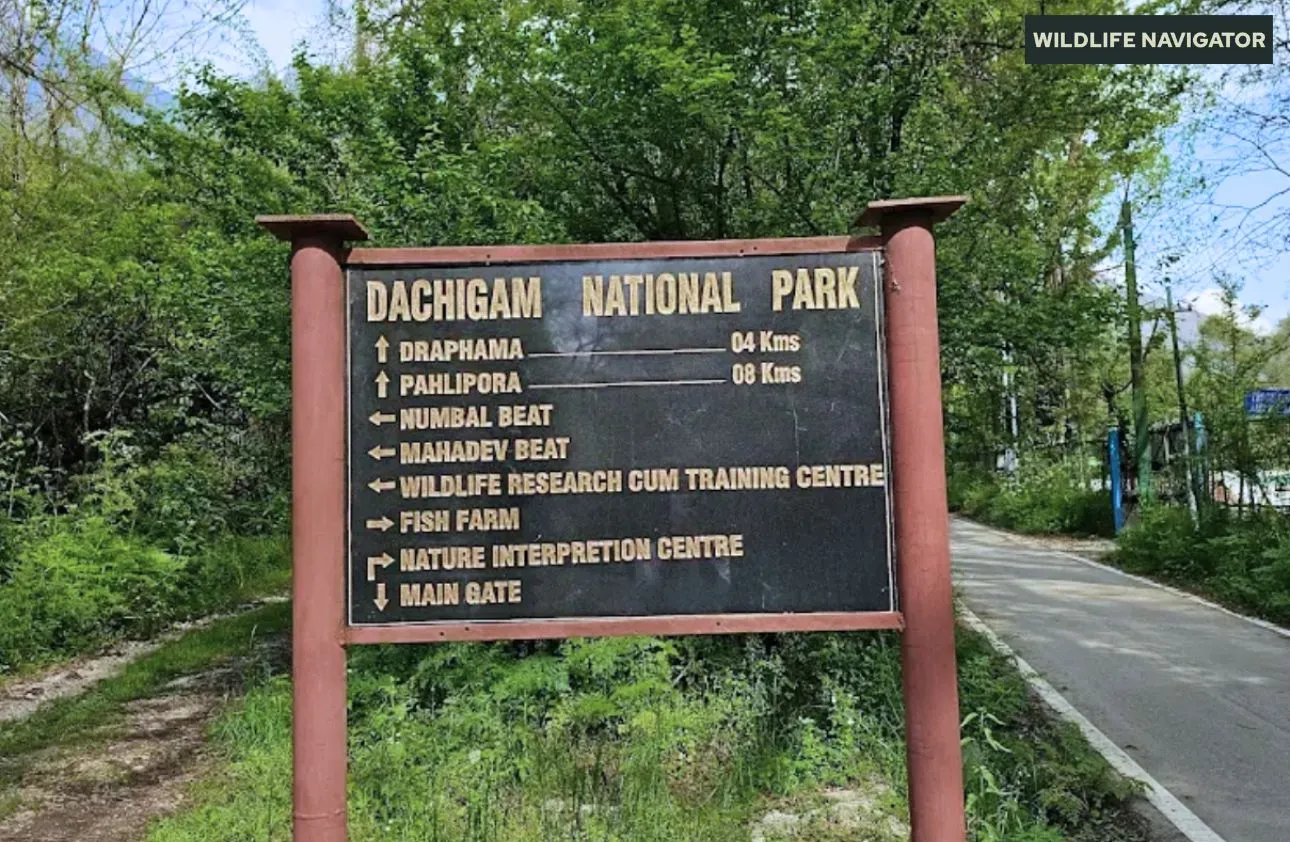
Dachigam National Park stands as one of India’s most breathtaking wilderness regions — a rare blend of Himalayan grandeur and vibrant biodiversity. Located about 22 kilometres from Srinagar in Jammu and Kashmir, this park stretches across a sweeping landscape of rolling meadows, wooded slopes, rocky cliffs, and snow-fed streams that flow down from the Zabarwan Range. Every corner of Dachigam echoes with the rhythm of the mountains and the whispers of wild nature.
The park’s name, Dachigam, translates to “Ten Villages,” a reminder of the ten settlements that once existed within its boundaries before it was declared a protected area. Today, it symbolises both the natural and cultural heritage of the Kashmir Valley — a place where conservation, history, and scenic beauty meet. Among the many national parks in India, Dachigam holds a special place for its pristine landscapes and the rare wildlife it protects.
What makes Dachigam truly special is its role as the last remaining stronghold of the endangered Hangul Deer, also known as the Kashmir Stag — an elegant species found nowhere else in the world. Alongside the Hangul, the park shelters a fascinating array of Himalayan wildlife, from the elusive leopard to the colourful Himalayan Monal, all thriving amid pristine forests and alpine pastures.
Beyond its ecological importance, Dachigam offers an intimate glimpse into the wild heart of Kashmir. Its serene trails, crystal-clear streams, and panoramic views attract nature lovers, trekkers, and photographers seeking authentic encounters with the high-altitude wilderness. For anyone who wants to experience the raw, untamed beauty of the Himalayas, Dachigam National Park is a destination that stirs both awe and respect — a living testament to Kashmir’s wild spirit.
Geography and Landscape: From Lower to Upper Dachigam
Spanning an area of around 141 square kilometres, Dachigam National Park is one of the most ecologically diverse landscapes in northern India. The park lies in the Zabarwan Range of the western Himalayas, covering altitudes that range dramatically from 1,700 meters to over 4,300 meters above sea level. This steep gradient creates an incredible variety of habitats — from lush temperate forests in the lower reaches to windswept alpine meadows at higher elevations.
Dachigam is divided into two distinct zones — Lower Dachigam and Upper Dachigam — each offering a unique glimpse into the park’s ecosystem.
Lower Dachigam (1,700–2,200 m)
This section is easily accessible from Srinagar and serves as the main visitor area. It features gentle slopes, grassy meadows, and mixed deciduous forests of oak, walnut, and poplar. The Dagwan River, a pristine mountain stream flowing through the valley, adds to the region’s serene charm. Its sparkling waters not only enhance the scenery but also serve as a vital water source for Srinagar city.
Upper Dachigam (above 3,000 m)
The upper reaches are rugged, remote, and far less visited — reserved primarily for scientific research and conservation efforts. Here, the landscape transitions into coniferous forests, sub-alpine scrub, and open alpine pastures, often blanketed with snow for several months a year. These high-altitude regions are crucial habitats for Hangul Deer during summer and support a variety of other mountain wildlife.
The park’s varied terrain — a mix of cliffs, valleys, and glacial slopes — makes it not just a biodiversity hotspot but also a natural amphitheatre for photographers and ecologists. The shifting light over the Himalayas, the sound of flowing water, and the scent of pine and wildflowers together create an atmosphere that feels both tranquil and untamed.
History and Conservation Legacy
The story of Dachigam National Park is deeply intertwined with the history of Kashmir’s natural and cultural heritage. Long before it became a sanctuary for wildlife, the region served as a protected watershed under the rule of the Maharaja of Jammu and Kashmir in the early 20th century. Its primary purpose was to ensure a clean and steady water supply to Srinagar city — a function still served by the Dagwan River that flows through its heart.
The park’s name, Dachigam — meaning “Ten Villages” — recalls the communities that once inhabited this valley. These villages were relocated over a century ago to preserve the forest ecosystem and maintain the water catchment area. Over time, this human-free zone evolved into a sanctuary of undisturbed wilderness.
In 1910, the Maharaja declared Dachigam a protected area, laying the foundation for its modern conservation journey. Later, recognising its unique ecological value and the presence of the endangered Hangul Deer, it was upgraded to National Park status in 1981. Since then, it has been managed by the Department of Wildlife Protection, Jammu & Kashmir, and has played a central role in wildlife conservation efforts in the region.
Dachigam’s most notable conservation success — and ongoing challenge — revolves around the Hangul Deer (Cervus hanglu hanglu), the only surviving subspecies of red deer found in India. Once roaming freely across the Kashmir Valley, their population declined sharply due to habitat loss and poaching. Dachigam became their final refuge, where active monitoring, anti-poaching patrols, and habitat restoration are carried out to protect this majestic species.
Today, Dachigam stands as a symbol of Kashmir’s conservation legacy — a place where traditional respect for nature meets modern scientific management. Its continued preservation not only safeguards rare wildlife but also maintains the delicate ecological balance that sustains life in the valley below.
Flora of Dachigam: Kashmir’s Botanical Treasure
Dachigam National Park is a living showcase of Kashmir’s botanical richness. Its dramatic variation in altitude and climate supports an extraordinary range of vegetation, from temperate broadleaf forests to high-altitude alpine meadows. Every season paints a new colour across its slopes — spring brings vibrant blossoms, summer fills the valleys with lush green canopies, and autumn turns the foliage into a golden spectacle.
Forest Types and Vegetation Zones
The park’s flora can broadly be categorised into three vegetation zones:
- Lower Dachigam (1,700–2,200 m): Dominated by deciduous trees and dense undergrowth, these areas are rich in shrubs and fruit-bearing plants.
- Middle Altitudes (2,200–3,000 m): Mixed temperate forests with both conifers and broadleaf species.
- Upper Dachigam (above 3,000 m): Sub-alpine and alpine meadows with hardy grasses, mosses, and flowering herbs that thrive in the short summer season.
Major Tree Species
The forests of Dachigam are lush and diverse, featuring:
- Maple (Acer caesium)
- Walnut (Juglans regia)
- Birch (Betula utilis)
- Poplar (Populus ciliata)
- Oak (Quercus semicarpifolia)
- Willow (Salix spp.)
- Deodar and Blue Pine (Cedrus deodara, Pinus wallichiana) at higher elevations
Shrubs and Ground Flora
Under the tall canopy grows a carpet of shrubs, herbs, and wildflowers that add both colour and ecological value:
- Rhododendron, Wild Rose, Indigofera, and Berberis bushes
- Blue Poppy, Anemone, Primula, and Geranium species in the meadows
- Thick patches of ferns, nettles, and bamboo grass along moist slopes
Medicinal and Aromatic Plants
Dachigam is also known for its traditional medicinal flora, many of which are used by locals and researchers for their healing properties:
- Saussurea costus (Kuth) – valued for aromatic roots
- Podophyllum hexandrum – used in traditional medicine
- Aconitum, Artemisia, and Valeriana jatamansi – important alpine herbs
Together, these plant communities form the ecological backbone of the park, providing shelter and food for countless birds, mammals, and insects. The harmony between these species and their surroundings highlights Dachigam’s role not just as a wildlife reserve, but as a botanical sanctuary of the Himalayas.
Fauna: Wildlife Encounters in Dachigam
While Dachigam’s landscapes are breathtaking, its true magic lies in the wildlife that roams its forests and meadows. The park shelters a rich variety of Himalayan fauna — from large mammals and rare birds to secretive mountain species that are seldom seen elsewhere in India. Every visit to Dachigam holds the promise of a surprise encounter with the wild.
Mammals: The Pride of the Park
The most celebrated resident of Dachigam is the Hangul Deer (Cervus hanglu hanglu), also known as the Kashmir Stag. With its striking antlers and graceful movement, the Hangul is the park’s emblem and one of India’s most endangered large mammals. Once widespread across the Kashmir Valley, it now survives mainly within Dachigam, where intensive conservation programs aim to protect its shrinking population.
Alongside the Hangul, visitors may also spot:
- Himalayan Black Bear – often seen foraging in fruiting trees during summer.
- Asiatic Brown Bear – found in higher, rugged parts of Upper Dachigam.
- Leopard – the park’s apex predator, usually elusive but occasionally sighted along forest trails.
- Musk Deer, Himalayan Serow, and Markhor – adapted to steep rocky terrain.
- Langur, Rhesus Macaque, and Yellow-throated Marten – adding liveliness to the forest canopy.
- Smaller mammals like Red Fox, Himalayan Weasel, and Jungle Cat play vital ecological roles in maintaining balance.
Birdlife: A Paradise for Birdwatchers
Dachigam’s rich mix of forests and meadows attracts an impressive diversity of birds — over 140 recorded species, making it a dream destination for ornithologists and photographers.
Some of the commonly observed and notable species include:
- Himalayan Monal – Kashmir’s most vibrant and iconic bird.
- Koklass Pheasant and Crimson Tragopan – beautifully patterned mountain pheasants.
- Golden Eagle, Bearded Vulture (Lammergeier), and Peregrine Falcon – soaring high above the cliffs.
- Paradise Flycatcher, Tits, Warblers, and Woodpeckers – active across the forest edges.
- Migratory species such as Mallards and Teals occasionally visit during certain seasons.
Birdwatching is particularly rewarding in Lower Dachigam, where the riverbanks, orchards, and open clearings create ideal habitats for both resident and migratory species.
Reptiles, Amphibians & Fish
Due to its cool mountain climate, Dachigam has limited reptile diversity, but it still supports several small species that thrive in warmer patches:
- Common Agama and Himalayan Pit Viper in rocky zones.
- Frogs and toads in moist meadows and near streams.
- The Dagwan River supports native trout and snow fish, adding aquatic richness to the ecosystem.
Insects & Pollinators
The meadows come alive with butterflies and bees during the summer months. Pollinators such as honeybees, swallowtails, and blue morph butterflies play a key role in sustaining Dachigam’s flowering diversity.
Best Time to Visit Dachigam National Park
Dachigam National Park experiences distinct seasons, each bringing its own colour, character, and wildlife activity. The best time to visit depends on what you want to experience — lush greenery and birdlife in summer, vibrant colours in autumn, or the quiet charm of snow-clad valleys in winter.
Spring (April to June): Season of Renewal
Spring marks the awakening of Dachigam’s forests. Melting snow gives way to fresh grass, wildflowers bloom along the streams, and the park bursts with life.
- Ideal for: Birdwatching, photography, nature walks
- Wildlife sightings: Hangul Deer, Himalayan Black Bear emerging from hibernation
- Temperature: 10°C – 25°C
Summer (July to August): Green Valleys & Active Wildlife
Summer brings mild temperatures and dense vegetation. The alpine meadows of Upper Dachigam are accessible, and the forest trails are full of activity.
- Ideal for: Exploring both lower and upper regions
- Wildlife sightings: Musk Deer, Himalayan Serow, Langur troops
- Temperature: 15°C – 30°C
Autumn (September to October): The Golden Season
Autumn is arguably the most beautiful time in Dachigam. The foliage turns golden and crimson, creating breathtaking vistas. This is also the Hangul rutting season, when stags can be heard calling across the valleys.
- Ideal for: Photography, Hangul observation, scenic treks
- Temperature: 8°C – 20°C
Winter (November to February): Silent Snow Wilderness
During winter, heavy snowfall transforms the park into a white wonderland. Access to Upper Dachigam becomes restricted, but the lower areas remain open for limited visits.
- Ideal for: Winter photography, serene landscapes
- Wildlife sightings: Hangul and Black Bear occasionally descend to lower zones
- Temperature: –5°C to 10°C
Best Overall Months:
April to October are considered the most comfortable and rewarding months for general visitors. The park remains closed during periods of extreme snowfall and breeding seasons for wildlife, so checking with the local forest office before planning your visit is recommended.
Safari & Entry Information
Visiting Dachigam National Park is a journey into one of India’s most pristine Himalayan ecosystems. Unlike many commercialised parks, Dachigam offers a quieter, more intimate experience — one that focuses on observation, not disturbance. Access is carefully regulated to ensure that tourism remains eco-friendly and conservation-focused.
Entry Point & Zones
The main entrance to the park lies near Harwan, about 22 km from Srinagar city. From here, visitors can explore Lower Dachigam, which is open to tourists and nature enthusiasts. Upper Dachigam, the park’s core zone, is a high-altitude wilderness area reserved mainly for research, forest staff, and limited special permissions.
Modes of Exploration
There are no large-scale safari vehicles or commercial tours here — the experience is more personal and guided by the rhythm of nature.
- Guided Nature Walks: The best way to explore. Trails run through forest glades, grasslands, and the banks of the Dagwan River.
- Jeep Safaris: Available with prior permission for limited routes within Lower Dachigam.
- Birdwatching Trails: Especially rewarding during spring and early summer, led by experienced naturalists.
- Wildlife Photography Tours: Can be arranged with local guides or through wildlife tour operators in Srinagar.
Timings & Entry Rules
- Opening Hours: 8:00 AM to 6:00 PM (may vary seasonally)
- Closed Periods: During heavy snowfall and restricted breeding months (check with authorities before planning).
- Entry Permits: Required and issued by the Department of Wildlife Protection, J&K or the Dachigam Wildlife Office near Harwan.
- Guides: Mandatory for most treks and safaris.
Entry Fee (Approximate)
- Indian Visitors: ₹50 per person
- Foreign Visitors: ₹300 per person
- Still Camera: ₹100
- Professional/Video Camera: ₹500–₹1000 (subject to permit approval)
(Note: Fees may vary slightly — it’s best to confirm at the gate or with local tourism offices.)
Visitor Guidelines
- Maintain silence; avoid playing music or loud noises.
- Do not litter or feed animals.
- Stay on marked trails — off-trail walking disturbs habitats.
- Photography should respect wildlife distance limits.
- Smoking or campfires inside the park are strictly prohibited.
Visiting Dachigam is less about chasing sightings and more about immersing yourself in undisturbed wilderness. Every step through its forest paths offers a deeper appreciation for Kashmir’s fragile yet resilient ecosystems.
How to Reach Dachigam National Park
Reaching Dachigam National Park is straightforward, thanks to its close proximity to Srinagar — the heart of Jammu and Kashmir. The park lies about 22 kilometres east of Srinagar city, making it one of the most easily accessible high-altitude national parks in India.
By Air
- Nearest Airport: Sheikh ul-Alam International Airport (Srinagar Airport) – approximately 25 km from the park.
- Regular flights connect Srinagar with Delhi, Mumbai, Chandigarh, and Jammu.
- From the airport, taxis and cabs are readily available to reach Harwan, the park’s entry point (around a 45-minute drive).
By Train
- Nearest Major Railway Station: Jammu Tawi (approx. 300 km).
- From Jammu, travellers can take a bus or hire a taxi to Srinagar (around 8–9 hours drive via NH44).
- A railway line between Udhampur and Baramulla is partially operational — those arriving via this route can disembark at Srinagar or Budgam stations, depending on schedule, and proceed by road.
By Road
- Dachigam is well-connected by road from Srinagar.
- Visitors can drive or hire a local cab to Harwan Village, which serves as the park’s main access point.
- Distance: ~22 km from Lal Chowk (city centre)
- Travel Time: 40–50 minutes
- Route: Srinagar → Nishat → Harwan → Dachigam Gate
Local Transportation Tips
- Private taxis or tour operator vehicles are the most convenient option.
- Local JKRTC buses run between Srinagar and Harwan but do not enter the park.
- Roads are generally in good condition, though winter snow or rain can occasionally cause minor delays.
Travel Tip
Combine your visit to Dachigam with nearby Srinagar attractions like Dal Lake, Mughal Gardens, and Tulip Garden, as they fall along the same route. Early morning departures are best for birdwatching and to catch the valley’s soft golden light.
Accommodation Near Dachigam National Park
Finding the right place to stay enhances the experience of visiting Dachigam, especially since the park lies close to Srinagar, giving visitors the flexibility to choose between nature retreats, eco-stays, and luxury lake-view resorts. Most accommodations are concentrated around Harwan, Nishat, and Boulevard Road, all within a 10–15 km radius of the park entrance.
Eco-Lodges & Nature Stays (Close to the Park)
These stays are ideal for travellers who want to stay close to nature and enjoy peace away from the city bustle.
- JKTDC Huts, Dachigam (Harwan)
- Distance: ~2 km from the park gate
- Facilities: Basic forest lodges, clean rooms, attached bath
- Who it’s best for: Nature lovers seeking budget-friendly accommodation near the park
- Approx. Price: ₹1,500–₹3,000 per night
- Harwan Residency Eco Stay
- Distance: ~3 km
- Facilities: Wi-Fi, garden view rooms, traditional Kashmiri meals
- Who it’s best for: Birdwatchers and small groups
Mid-Range Comforts (10–15 km from Park)
For those who prefer modern amenities with scenic surroundings, these stays strike a good balance between comfort and proximity.
- The Orchard Retreat & Spa, Srinagar
- Location: Near Harwan Garden
- Facilities: Heated rooms, multi-cuisine restaurant, pool, and spa
- Approx. Price: ₹7,000–₹10,000 per night
- Who it’s best for: Families and couples looking for resort-style relaxation after a day of exploration
- Royal Spring Resort
- Location: Near Chashme Shahi, 12 km from the park
- Facilities: On-site dining, garden views, and travel assistance
- Who it’s best for: Travellers seeking comfort with easy access to Srinagar’s attractions
Luxury Stays (15–20 km from Park)
For visitors seeking indulgence along with scenic Himalayan backdrops, Srinagar offers several luxury hotels overlooking Dal Lake.
- Vivanta Dal View, Srinagar – IHCL SeleQtions
- Location: Kralsangri, overlooking Dal Lake
- Facilities: 5-star luxury rooms, panoramic lake views, fine dining, Wi-Fi
- Approx. Price: ₹20,000–₹35,000 per night
- Who it’s best for: Luxury travellers and honeymooners
- The Lalit Grand Palace, Srinagar
- Location: Near Dal Lake, 18 km from the park
- Facilities: Heritage architecture, manicured lawns, spa, indoor pool
- Who it’s best for: Heritage lovers seeking regal comfort
Food & Facilities
Most stays around Harwan and Srinagar offer:
- Traditional Kashmiri cuisine (Rogan Josh, Yakhni, Dum Aloo)
- Continental and North Indian options
- Wi-Fi, power backup, parking, and guided tour assistance
Travel Tip
If you want to experience early morning safaris or birdwatching, stay near Harwan or Nishat for quick park access. Those preferring a mix of nature and urban comfort can stay around Dal Lake, where luxury and local experiences meet effortlessly.
Nearby Attractions
A visit to Dachigam National Park can easily be combined with several of Kashmir’s most beautiful destinations, many of which lie along the same scenic route from Srinagar. These nearby attractions offer a blend of culture, landscape, and serenity that perfectly complement your wildlife experience.
Mughal Gardens
Just a short drive from Dachigam are the famous gardens of Nishat Bagh, Shalimar Bagh, and Chashme Shahi, known for their terraced lawns, fountains, and views of Dal Lake. They are especially enchanting during spring when tulips and irises bloom in full colour.
Dal Lake
Only 15–20 km from the park, Dal Lake is the cultural and emotional heart of Srinagar. Take a shikara ride through floating gardens and markets, or stay overnight in a traditional houseboat for a quintessential Kashmiri experience.
Harwan Garden & Shankaracharya Temple
Harwan Garden, at the park’s base, is a peaceful picnic spot surrounded by forested hills. The Shankaracharya Temple, perched high above Srinagar, offers panoramic views of the entire valley.
Gulmarg & Sonmarg
If time allows, extend your journey to Gulmarg (55 km) or Sonmarg (80 km) — both ideal for trekking, skiing, and exploring alpine meadows rich in wildflowers and mountain vistas.
Responsible Travel & Photography Guide
Exploring Dachigam National Park is not just about witnessing wildlife — it’s about experiencing nature responsibly and capturing its raw essence without disturbing its balance. The following travel and photography insights will help you make the most of your visit while protecting the park’s fragile ecosystems.
Responsible Tourism Etiquette
Dachigam’s ecosystem is delicate, home to endangered species like the Hangul Deer and Himalayan Monal. Visitors play a vital role in its conservation:
- Always stay on designated trails and follow the instructions of forest guides.
- Maintain silence — loud noises can distress animals and drive them away.
- Avoid littering, smoking, or carrying plastic bottles.
- Never feed wildlife or approach animals closely.
- Refrain from collecting plants, feathers, or stones — even small disturbances can affect biodiversity.
- Choose eco-lodges, refillable water bottles, and reusable containers to reduce your footprint.
- Support local guides, homestays, and handicrafts — it helps nearby communities stay invested in conservation.
Responsible travel ensures that Dachigam remains a sanctuary — not just for wildlife, but for every future visitor seeking its peace and purity.
Wildlife Photography Tips from a Camera Expert
Dachigam offers some of the most photogenic landscapes and elusive species in the Himalayas — from misty pine forests to Hangul herds crossing alpine meadows. To do justice to its beauty, preparation and respect for the subject are key.
Gear Essentials
- Camera Body: A DSLR or mirrorless camera with fast autofocus and good ISO performance (e.g., Canon R5, Nikon Z8, Sony A7R IV).
- Lenses:
- Telephoto (200–600mm): For Hangul, Monal, and distant subjects.
- Medium Zoom (70–200mm): Great for framing animals in their environment.
- Wide-Angle (16–35mm): Ideal for landscapes, meadows, and sky shots.
- Tripod/Monopod: Essential for low-light stability and sharp telephoto shots.
- Memory & Power: Carry extra batteries and high-speed memory cards; charging facilities inside the park are limited.
Camera Settings for Wildlife
- Mode: Aperture Priority (A/Av) for flexibility in lighting.
- Aperture: f/4–f/6.3 to isolate subjects with creamy bokeh.
- Shutter Speed: Minimum 1/500 sec for animals, 1/1000+ for birds in flight.
- ISO: Auto ISO (capped around 3200) balances exposure in changing Himalayan light.
- Focus Mode: Continuous AF (AI Servo/AF-C) with dynamic tracking for moving wildlife.
Field Techniques
- Move slowly and quietly; sudden motion alerts animals long before they’re visible.
- Use natural cover — trees, rocks, or bushes — to blend into surroundings.
- For bird photography, position yourself near streams or fruiting trees where activity peaks during early morning (6–9 AM).
- Avoid flash — it can startle wildlife and ruin the natural ambience.
- Always maintain a minimum 50–100 meters distance from large mammals.
Composing the Perfect Shot
- Frame subjects in their habitat — a Hangul under golden autumn light or a Monal perched against snow peaks tells a richer story.
- Look for leading lines like forest trails or rivers that draw the eye into the image.
- Play with light — early morning mist or backlit foliage enhances depth and atmosphere.
Ethical Photography
- The best shot is one that doesn’t disturb the animal. Prioritise behaviour and well-being over proximity.
- Share your images to promote awareness about conservation, not intrusion.
Essential Travel Tips
- Permits & ID: Carry a valid ID; photography permits are required for professional gear.
- Clothing: Layered warm clothes (especially in mornings), a waterproof jacket, and comfortable hiking shoes.
- Weather: Mornings can be chilly even in summer — keep a thermos and light gloves handy.
- Health & Safety: Bring sunscreen, insect repellent, and a small first-aid kit.
- Connectivity: Limited mobile signal inside the park; download offline maps and guides in advance.
Dachigam rewards those who travel patiently — waiting quietly by a stream, camera ready, heart tuned to the rhythm of the forest. Each responsible traveller and mindful photographer contributes to preserving the soul of Kashmir’s wilderness, one frame and one footprint at a time.
Conclusion
Dachigam National Park is more than a wildlife destination — it is Kashmir’s living heartbeat, where snow-fed streams, whispering pines, and watchful Hanguls remind visitors of the fragile harmony between humans and nature. Each turn of its trail tells a story — of resilience, of renewal, and of the eternal rhythm of the wild.
If you come here to photograph the elusive Hangul in golden morning light or simply to feel the hush of the Himalayas, Dachigam leaves an imprint that lingers long after you’ve left. The park’s serene valleys and crystal waters reveal that conservation is not about fences and rules, but about reverence — the quiet respect we owe to every living being that calls this land home.