Chital Deer | Cheetal | Spotted Deer: Facts, Habitat & Best Places to See

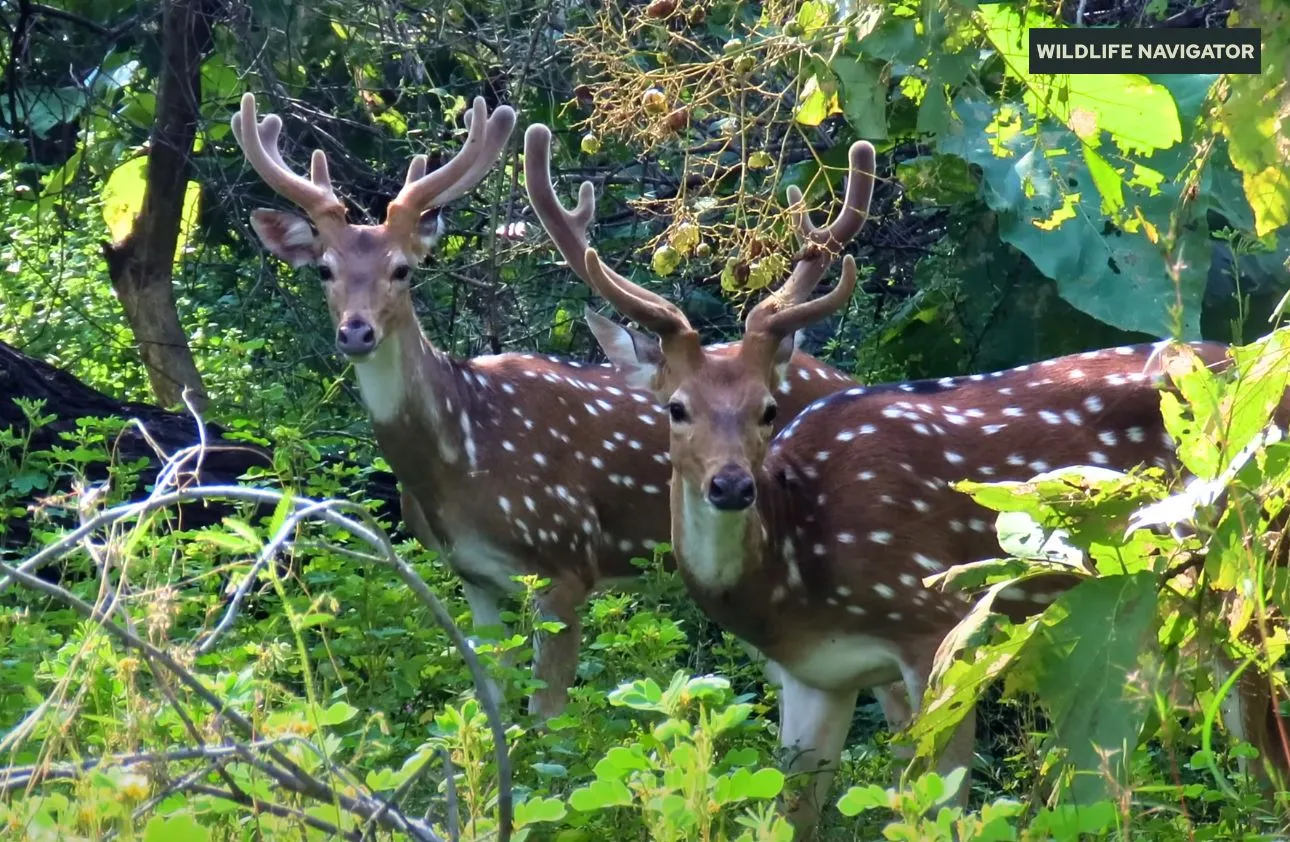
The Chital Deer (Axis axis), also popularly known as the Spotted Deer or Axis Deer, is one of the most graceful and widely recognised wild animals of the Indian subcontinent. With its rust-colored coat decorated with permanent white spots, elegant antlers, and gentle disposition, the Chital is often described as the “beauty of the Indian forests.”
These deer are a common yet captivating sight across India’s protected forests and grasslands, where they move gracefully in large herds. Unlike some other deer species that are elusive or solitary, Chital are highly social animals, often seen in mixed groups that can number in the dozens. Their frequent presence in Indian wildlife reserves makes them one of the first animals visitors encounter on jungle safaris, creating a lasting impression of the country’s rich biodiversity.
Native to the Indian subcontinent, the Chital has also been introduced to other countries such as Sri Lanka, Nepal, Bhutan, Bangladesh, Australia, and even Texas in the United States, where they have established thriving populations. Despite this wide distribution, they remain most closely tied to the landscapes and culture of India, where they play a crucial role in the ecosystem as prey for apex predators like tigers and leopards.
For centuries, the Chital has also held a special place in Indian mythology, folklore, and art, often symbolizing grace, purity, and spirituality. Today, they continue to enchant nature lovers, wildlife photographers, and travellers, making them an iconic species of South Asian wilderness.
Taxonomy, Species & Subspecies
The Chital Deer belongs to the family Cervidae, which includes all true deer. Within this family, it is classified under the genus Axis, a small group of deer native to South and Southeast Asia. Its scientific name, Axis axis, is simple yet memorable—reflecting its position as the most prominent and widely recognized member of the genus.
Scientific Classification of Chital Deer:
- Kingdom: Animalia
- Phylum: Chordata
- Class: Mammalia
- Order: Artiodactyla (even-toed ungulates)
- Family: Cervidae (deer family)
- Genus: Axis
- Species: Axis axis
This makes the Chital part of the same broader family as other well-known deer species such as Sambar Deer (Rusa unicolor), Barasingha (Rucervus duvaucelii), and Hog Deer (Axis porcinus).
Closely Related Species
Although the Chital itself does not have officially recognised subspecies, it is closely related to other members of the Axis genus, which includes:
- Hog Deer (Axis porcinus): Shorter, stockier, and found in grasslands and wetlands.
- Bawean Deer (Axis kuhlii): An endangered and rare deer species native to Bawean Island in Indonesia.
- Calamian Deer (Axis calamianensis): Found in the Calamian Islands of the Philippines, also critically endangered.
These relatives share similar traits but differ in size, habitat preference, and conservation status.
Global Context
Interestingly, while the Chital is native to the Indian subcontinent, it has been introduced to many other parts of the world due to its adaptability, beauty, and use as game animals. Populations thrive in Australia, the United States (especially Texas), Croatia, and New Zealand, where they have naturalised into the local ecosystems. However, in some regions, introduced populations are considered invasive, as they compete with local herbivores.
In India and South Asia, the Chital is by far the most abundant and iconic deer, often spotted in herds grazing peacefully under the shade of sal or teak forests. It represents the “classic deer image” for most people in the region, much like the white-tailed deer in North America or the red deer in Europe.
Physical Characteristics & Adaptations
The Chital Deer is instantly recognizable thanks to its elegant frame and distinctively spotted coat. Among all the deer species in India, it is arguably the most beautiful and photogenic, often drawing attention from wildlife enthusiasts and photographers on safaris.
Size and Weight
- Height: Adult males (stags) stand about 85–90 cm at the shoulder, while females (does) are slightly smaller at around 70–75 cm.
- Weight: Males weigh between 70–85 kg, whereas females typically weigh 30–45 kg.
This moderate size makes them smaller than the mighty Sambar deer but larger than Hog deer.
Coat and Colouration
One of the most striking features of the Chital is its reddish-brown coat patterned with white spots, which remain throughout its life (unlike some other deer species whose coats change seasonally).
- The underparts, inner legs, and throat are whitish.
- A dark stripe runs along the spine from the neck to the tail.
- Their tail is short with a white underside, which they flash while alarmed—acting as a visual warning signal to the herd.
The spotted coat also serves as an excellent camouflage in dappled forest light, helping them blend into their natural environment and avoid predators.
Antlers
- Only males grow antlers, which can reach up to 1 meter in length.
- Antlers typically have three tines (points), though variations occur.
- They are shed annually and regrown, often larger and stronger with each cycle.
- During the rutting (mating) season, males use their antlers in dramatic sparring contests to establish dominance and win mates.
Eyes, Ears & Senses
- Chital have large, dark eyes that give them excellent vision for spotting predators.
- Their ears are large and sensitive, enabling them to detect even faint sounds in the forest.
- A keen sense of smell helps them detect danger as well as locate food.
Speed & Agility
Chital are graceful runners and can sprint quickly to escape predators. They are also agile jumpers, capable of leaping over obstacles when threatened. This combination of speed and alertness often allows them to evade even skilled predators like leopards.
Survival Adaptations
- Camouflage: Spotted coat helps blend with forest undergrowth.
- Alarm Signals: When alarmed, they stomp their hooves and make sharp barking calls.
- Symbiotic Vigilance: They often stay close to Hanuman langurs, relying on the monkeys’ alarm calls to detect predators early—a fascinating example of interspecies cooperation.
Overall, the Chital’s physical beauty is matched by practical adaptations that make it one of the most successful deer species in South Asia. Its mix of elegance and survival skills allows it to thrive in diverse habitats, from dry forests to lush grasslands.
Habitat, Range & Ecosystem Role
The Chital Deer is one of the most widely distributed wild ungulates of the Indian subcontinent. Its adaptability, combined with its social lifestyle, has allowed it to thrive across a variety of landscapes.
Geographic Range
- Native range: India, Nepal, Bhutan, Bangladesh, and Sri Lanka.
- Introduced populations: Established in countries like Australia, the United States (Texas), New Zealand, Croatia, and the Andaman Islands. These introduced herds often thrive in non-native environments, though in some places they are considered invasive.
In India, Chital are found in almost every national park and wildlife sanctuary across the central and southern regions, as well as parts of the Himalayan foothills. From the sal forests of Corbett to the teak jungles of Kanha, their presence is a defining feature of many Indian forests.
Preferred Habitats
Chital prefer environments where they can balance cover for safety with open spaces for grazing. Their favourite habitats include:
- Moist and dry deciduous forests (most common habitat).
- Grasslands and savannas, especially near river valleys.
- Forest edges and clearings where sunlight promotes grassy growth.
- Water-associated areas: Chital are often found near lakes, streams, or seasonal waterholes, as they need regular access to water.
They generally avoid very dense forests or high-altitude regions, favouring open woodland landscapes where visibility is better and grasses are abundant.
Role in the Ecosystem
The Chital is a keystone herbivore and plays several critical roles in its ecosystem:
- Prey Base:
- Chital are the primary prey species for India’s top predators including tigers, leopards, wild dogs (dholes), and crocodiles.
- Their abundance helps sustain healthy predator populations.
- Seed Dispersal:
- By feeding on fruits, seeds, and vegetation, Chital contribute to natural seed dispersal across forests.
- Their grazing habits also influence plant regeneration patterns.
- Vegetation Control:
- Large herds of Chital regulate grass and shrub growth, preventing overgrowth and maintaining a balance that benefits other herbivores.
- Symbiotic Behaviour:
- Their mutualistic relationship with Hanuman langurs is an extraordinary example of cooperation in nature.
- While Chital feed on fruits dropped by langurs, the deer provide ground-level vigilance, and both species benefit from shared alarm calls when predators are near.
Presence in Protected Areas
Some of the best-known habitats where Chital thrive include:
- Kanha National Park, Madhya Pradesh – Famous for large herds grazing in open meadows.
- Ranthambore & Bandhavgarh, Rajasthan & Madhya Pradesh – Prime tiger habitats where Chital are often spotted.
- Nagarhole & Bandipur, Karnataka – Large populations often seen alongside elephants and gaurs.
- Yala National Park, Sri Lanka – Home to thriving Chital herds alongside leopards.
Their widespread distribution makes them one of the most familiar and important herbivores in South Asia, ensuring that both tourists and predators alike rarely miss them during a jungle encounter.
Behaviour, Lifestyle & Social Structure
The Chital Deer is not only admired for its beauty but also for its fascinating social and behavioural patterns. Unlike solitary deer species, Chital are highly social animals that prefer living in large groups, making them an integral part of forest life.
Daily Activity
- Chital are primarily diurnal—most active during early mornings and late afternoons.
- During the hotter hours of the day, they usually rest under shade or near water sources.
- At night, they remain relatively quiet but stay alert to potential predators.
Herd Structure
- Chital are gregarious and live in mixed herds that typically range from 10 to 40 members, though larger herds of over 100 individuals have been recorded in food-rich habitats.
- A typical herd includes adult males, females, fawns, and sub-adults, creating a dynamic and protective social structure.
- The dominance hierarchy is clear, especially during the breeding season when males assert authority.
Male vs. Female Behaviour
- Males (stags): More aggressive during the rut, often seen locking antlers in dominance fights. Outside the rut, they may form small bachelor groups.
- Females (does): Lead the herd when foraging or moving, often accompanied by fawns. They are highly protective mothers.
- Fawns: Stay close to their mothers, relying on camouflage and herd protection for survival.
Symbiotic Relationship with Langurs
One of the most fascinating aspects of Chital behavior is their close association with Hanuman langurs (gray langurs).
- Langurs, from their tree-top vantage points, act as sentinels by spotting predators early and issuing alarm calls.
- Chital, in return, benefit from this early warning system.
- Meanwhile, Chital feed on fruits and leaves dropped by langurs, ensuring a win-win relationship.
Movement & Migration
- While not long-distance migrators like reindeer, Chital move seasonally within their home ranges in search of food and water.
- During the dry season, they gather around waterholes, making them easier to spot for both predators and tourists.
- In lush monsoon months, herds often disperse into meadows and forest edges where grasses are abundant.
Defense & Vigilance
- Chital are extremely vigilant and alert to predators.
- When threatened, they produce a sharp alarm call or bark, often alerting the entire forest to the presence of a predator like a tiger or leopard.
- They also rely on their speed and agility, often running in zigzag patterns to confuse predators.
Social Importance in the Forest
Because of their large herds and constant vigilance, Chital often act as the alarm system of the jungle, warning other animals like Sambar deer, wild boars, and peacocks of danger. Their collective behavior ensures higher chances of survival for multiple species in the ecosystem.
Diet & Feeding Habits
The Chital Deer is a herbivore with a highly adaptable diet, which allows it to thrive in diverse habitats ranging from dense forests to open grasslands. Their feeding behavior is a perfect balance between grazing and browsing, ensuring they can utilize whatever vegetation is seasonally available.
General Diet
Chital primarily feed on:
- Grasses – Their staple diet, especially young and tender shoots.
- Leaves and Shrubs – They browse on fresh foliage when grasses are less abundant.
- Fruits and Flowers – They eagerly feed on fallen fruits, berries, and forest flowers.
- Tree Bark and Twigs – Consumed in smaller amounts during scarcity.
This flexibility makes them both grazers (grass-eaters) and browsers (leaf-eaters), unlike species that specialize in only one form of feeding.
Seasonal Feeding Patterns
- Monsoon season: Grasses are lush and abundant; herds graze extensively in meadows and forest edges.
- Dry season (summer/winter): When grasses dry out, they shift towards browsing shrubs, fallen leaves, and fruits. They may also consume seeds dropped by trees.
- Near villages or farmlands: Sometimes, Chital raid crops like rice, maize, or pulses, leading to human-wildlife conflict.
Feeding Association with Langurs
One of the most fascinating feeding habits of Chital is their mutualistic relationship with Hanuman Langurs:
- Langurs feed on tree leaves and fruits, often dropping leftovers to the ground.
- Chital benefit by consuming these fallen items, which are otherwise inaccessible to them.
- In return, Chital’s ground-level alertness helps protect both species from predators.
Water Dependence
Chital require regular access to water, which is why they are often found near rivers, lakes, or waterholes. They typically drink at least once or twice a day, making water availability a major factor in their habitat selection.
Foraging Behavior
- Chital usually forage in the early mornings and late afternoons, avoiding the heat of midday.
- They move slowly in herds, with some members always on guard while others graze.
- Fawns often learn what to eat by mimicking adults, gradually expanding their diet as they grow.
Role in the Ecosystem
By feeding on grasses, shrubs, and fruits, Chital play a vital ecological role:
- Maintain grassland balance by preventing overgrowth.
- Promote seed dispersal by consuming fruits and spreading seeds through their droppings.
- Support predator populations by being a reliable prey species.
In essence, the Chital’s diet ensures that it is both a caretaker of vegetation and a sustainer of predators, making it an indispensable part of the food web.
Reproduction & Life Cycle
The reproductive cycle of the Chital Deer is a fascinating blend of instinct, competition, and nurturing care. Unlike some deer species that have sharply defined breeding seasons, Chital exhibit year-round breeding, though certain periods see higher activity depending on food availability and environmental conditions.
Mating Season & Rutting Behaviour
- While mating can occur at any time of the year, rutting peaks during the monsoon season (June–September) when food and water are abundant.
- During this time, males (stags) become highly territorial and display dominant behaviour.
- Stags engage in antler duels, where they lock antlers and push against each other to establish dominance and win mating rights. These fights, though intense, are rarely fatal.
- Dominant stags mark their presence with scent markings and loud bellows, warning rivals and attracting females.
Gestation & Birth
- After successful mating, the gestation period lasts about 7–8 months.
- Females usually give birth to a single fawn, although twins are rare but possible.
- Births typically peak just before or during the monsoon, ensuring that the fawn has access to fresh food and cover during its early months.
Fawn Development
- Newborn fawns are incredibly vulnerable and rely on their spotted coat for camouflage, blending perfectly with forest undergrowth.
- For the first few weeks, fawns stay hidden in tall grass or bushes while the mother forages nearby, returning frequently to nurse.
- Within a month, fawns begin to follow their mothers and join the herd, where the collective vigilance of the group protects them.
Maternal Care
- Chital mothers are highly protective, often placing themselves between their young and potential danger.
- Nursing continues for about 4–6 months, after which the fawn gradually shifts to grazing and browsing alongside adults.
- Herd living ensures that fawns not only receive maternal care but also benefit from the safety of numbers.
Lifespan
- In the wild, Chital typically live between 8–12 years, depending on predator pressure and environmental conditions.
- In captivity, where threats are minimal and food is consistent, they may live up to 15–18 years.
Reproductive Strategy
The Chital’s reproductive cycle ensures continuous population replenishment. Unlike species with short breeding windows, year-round reproduction allows them to maintain stable populations even in predator-rich ecosystems. This abundance is one reason they are the most common deer species in India’s forests and a cornerstone of the food chain.
Conservation Status, Threats & Protection
The Chital Deer is currently classified as Least Concern on the IUCN Red List, thanks to its wide distribution, healthy population size, and adaptability. It is one of the most common deer species in India, often spotted in large herds across protected forests and reserves.
Major Threats
- Habitat Loss: Expanding agriculture, urbanisation, and deforestation reduce grasslands and forests, forcing Chital into fragmented patches.
- Poaching: Hunted for meat, antlers, and hides in some regions despite legal protection.
- Road Kills: Highways and roads cutting through forest corridors pose risks.
- Human-Wildlife Conflict: Crop raiding near villages sometimes makes Chital targets of retaliation.
Natural Predators
Chital are a key prey species for tigers, leopards, dholes (wild dogs), and crocodiles. While predation is natural, it becomes a threat only when combined with habitat shrinkage and human pressures.
Protection & Conservation Efforts
- Chital are legally protected under Schedule III of the Indian Wildlife Protection Act, 1972.
- They thrive in nearly every major national parks and sanctuary of India, including Kanha, Bandhavgarh, Corbett, and Nagarhole.
- Conservation measures like anti-poaching patrols, habitat restoration, and eco-tourism initiatives help sustain populations.
Cultural, Mythological & Human Significance
The Chital Deer has long held a symbolic place in Indian culture. In Hindu mythology, deer are associated with gentleness, purity, and natural beauty. They often appear in stories of Lord Rama and Lord Krishna, and deer motifs are found in ancient temple carvings.
In Buddhism, the deer represents peace and harmony—most famously depicted at Sarnath, where Buddha gave his first sermon in the “Deer Park.”
For local communities, Chital also hold practical importance: while they are valued for eco-tourism, they sometimes come into conflict with farmers due to crop damage. Despite this, they remain admired as one of the most graceful and spiritual animals of India’s forests.
Interesting Facts & Best Places to See Them
The Chital Deer may be one of the most common deer species in South Asia, but it is also one of the most fascinating. From its unique behaviours to its role in eco-tourism, there are plenty of interesting details that make the Chital stand out.
Interesting Facts about Chital Deer
- Permanent Spots: Unlike some deer species that change coats seasonally, Chital retain their white spots throughout their life.
- Symbiotic Friendship: They often live near Hanuman langurs, benefiting from alarm calls and fallen fruits—a rare example of interspecies cooperation.
- Antler Renewal: Male Chital shed their antlers once a year and regrow them, usually larger and stronger with each cycle.
- Alert Bark: When sensing danger, Chital emit a sharp, dog-like bark that can alert an entire forest to a predator’s presence.
- Prey Base for Big Cats: Tigers, leopards, and dholes rely heavily on Chital as a primary food source, making them vital to predator survival.
- Large Herds: Unlike solitary deer, Chital are often seen in herds of 20–40 individuals, sometimes even exceeding 100 in resource-rich areas.
- Introduced Worldwide: Though native to India and nearby countries, Chital now thrive in places like Texas, Australia, and New Zealand, where they were introduced.
- Strong Swimmers: While not commonly known, Chital are capable swimmers and may cross rivers when needed.
- Tourist Favourite: They are usually the first animal spotted on Indian safaris, making them the “face” of many national parks.
- Cultural Icon: Beyond nature, Chital symbolise beauty, gentleness, and spirituality in Indian traditions and religious symbolism.
Best Places to See Chital Deer
If you want to experience the elegance of Chital in the wild, here are some of the best destinations:
In India
- Kanha National Park (Madhya Pradesh): Known for meadows where large Chital herds graze alongside Barasingha and Gaurs.
- Bandhavgarh & Ranthambore (Madhya Pradesh & Rajasthan): Popular tiger reserves where Chital are abundant prey, often spotted near waterholes.
- Jim Corbett National Park (Uttarakhand): One of the best places to see Chital in mixed herds with elephants and peacocks.
- Nagarhole & Bandipur (Karnataka): Dense populations, often seen in large herds near forest streams.
In Sri Lanka
- Yala National Park: Famous for its leopards, but Chital deer are equally plentiful and frequently spotted.
Outside South Asia
- Texas (USA): Large free-ranging herds due to introduction for game hunting.
- Australia & New Zealand: Established populations in forest and farmland regions.
- Croatia: Wild herds roam certain protected areas, though less common.
Tips for Wildlife Enthusiasts
- Best sightings occur early morning or late afternoon near grasslands and water sources.
- During safaris, watch for alarm calls—a Chital’s bark often means a predator like a tiger or leopard is nearby.
- Carry binoculars for observing antler duels during rutting season.
- Photographers can capture excellent shots when herds gather at open meadows with good lighting.