Nawegaon Nagzira Tiger Reserve – Maharashtra, India

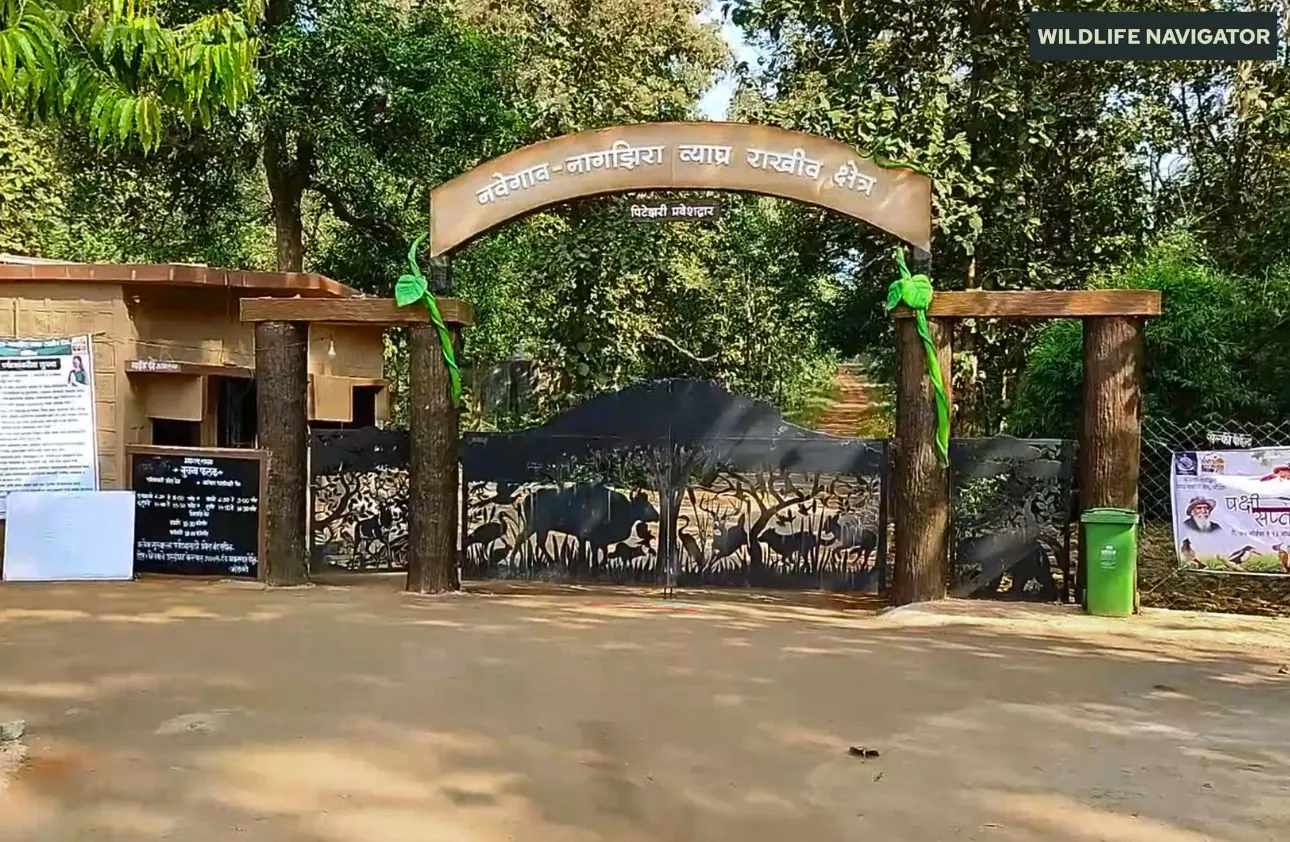
Nawegaon Nagzira Tiger Reserve is one of Central India’s most captivating yet underrated tiger habitats. Spread across approximately 1,324 km², this forested landscape is a harmonious blend of dense teak forests, bamboo thickets, riverine corridors, and open grassland patches that support a wide range of wildlife. Nestled in the Gondia and Bhandara districts of Maharashtra, it forms an integral part of the larger Central Indian Tiger Landscape, serving as a critical link between Maharashtra and the adjoining forests of Chhattisgarh.
What sets Nawegaon Nagzira apart is its unique structural composition. Unlike a single, homogenous forest block, the reserve comprises two distinct protected areas: Nawegaon National Park, established in 1975, and Nagzira Wildlife Sanctuary, which acts as a buffer and corridor. Nawegaon National Park forms the pristine core of the reserve, dominated by mature teak and bamboo forests that provide ideal cover for tigers, leopards, and sloth bears.
Nagzira Wildlife Sanctuary, meanwhile, enhances the ecological connectivity of the region, supporting tiger dispersal, maintaining a healthy prey base, and linking this landscape to other important forested zones. Together, these two areas were officially designated as Nawegaon Nagzira Tiger Reserve in 1999, creating a unified conservation landscape aimed at safeguarding India’s apex predators and the biodiversity that depends on them.
Despite being far quieter than Maharashtra’s more famous tiger reserves, Nawegaon Nagzira offers travellers a rare chance to experience untouched wilderness. Wildlife here moves freely without the constant pressure of tourism, making encounters with herbivores, birds, and even the elusive tiger feel authentic and deeply immersive. For photographers, naturalists, birdwatchers, and slow travellers, the reserve provides a truly wild experience—one where the forest’s rhythms set the pace, and every sighting tells the story of a landscape still dominated by nature itself.
Reserve History and Structure
Nawegaon Nagzira Tiger Reserve is not a single forest patch but a carefully managed mosaic of protected areas, combining the pristine Nawegaon National Park with the ecologically vital Nagzira Wildlife Sanctuary. Understanding this structural composition is key for appreciating the reserve’s significance in tiger conservation and biodiversity management.
Nawegaon National Park
Established in 1975, Nawegaon National Park forms the core area of the tiger reserve. Covering the heart of the Gondia and Bhandara districts, this national park is renowned for its dense teak and bamboo forests, interspersed with riverine corridors and small grassland patches. As a national park, it receives the highest level of legal protection under Indian wildlife law, which means no human habitation, no resource extraction, and strictly regulated tourism.
The park provides critical habitat for apex predators like the Bengal tiger and Indian leopard. Its undisturbed forests also shelter a rich assemblage of herbivores, such as chital, sambar, and nilgai, as well as rare mammals like sloth bears and dhole. The combination of rugged terrain, mature forest cover, and perennial water sources makes Nawegaon National Park the ecological heart of the tiger reserve.
Nagzira Wildlife Sanctuary
Adjacent to the national park is Nagzira Wildlife Sanctuary, which plays a complementary and essential role in the landscape. While slightly more accessible than Nawegaon National Park, Nagzira remains a strictly protected area, serving as a buffer and corridor that allows tigers and other wide-ranging wildlife to disperse safely.
The sanctuary’s forest patches, bamboo thickets, and waterholes not only support a diverse prey base but also maintain connectivity with surrounding forests in Maharashtra and Chhattisgarh. This linkage is crucial for genetic flow, ensuring healthy populations of tigers and other species across the region.
Formation of Nawegaon Nagzira Tiger Reserve
In 1999, the integration of Nawegaon National Park and Nagzira Wildlife Sanctuary led to the creation of Nawegaon Nagzira Tiger Reserve. This unified management approach ensures that the two areas work together to protect large-ranging predators, maintain prey populations, and preserve the ecological integrity of the landscape.
Key points of this integration include:
- Core & Buffer Structure: Nawegaon National Park functions as the core zone, while Nagzira Wildlife Sanctuary serves as the buffer and dispersal corridor.
- Enhanced Tiger Conservation: By combining the two areas, the reserve provides enough contiguous habitat for tigers to breed, hunt, and disperse safely.
- Ecosystem Connectivity: The unified reserve links to other forested regions, forming part of the greater Central Indian Tiger Landscape.
This structure ensures that the reserve is more than just a protected area—it is a living, connected ecosystem where apex predators and their prey can coexist naturally, and where the forest’s ecological processes continue largely undisturbed.
Geography and Landscape
Nawegaon Nagzira Tiger Reserve lies in the northeastern part of Maharashtra, encompassing parts of Gondia and Bhandara districts. This region forms a key component of Central India’s forested landscapes, linking tiger populations across Maharashtra and neighbouring Chhattisgarh. The reserve’s terrain, river networks, and forest types create a rich mosaic of habitats that support tigers, leopards, herbivores, and a diversity of birdlife.
Terrain & Landforms
The reserve features gently undulating plateaus, rolling hills, and expansive teak-dominated forests. Open grassland patches and bamboo thickets intersperse the dense woodland, providing grazing areas for herbivores and hunting grounds for predators. Occasional rocky outcrops, ridges, and streamside gullies add microhabitat variety, offering shelter for shy and nocturnal species such as sloth bears, wolves, and dhole packs.
The mixture of moist and dry deciduous forests, along with riverine vegetation, ensures that different wildlife species have access to suitable cover, food, and water throughout the year. This varied topography allows tigers to patrol large territories and helps maintain a balanced predator–prey ecosystem.
River Systems
Water is the lifeblood of Nawegaon Nagzira, especially during the dry summer months. Key rivers and streams include:
- Wainganga River – forming part of the reserve’s northern drainage, supporting riparian forests and attracting a variety of birds and mammals.
- Nagzira Streams – smaller perennial and seasonal watercourses that crisscross the sanctuary, serving as watering spots for herbivores and predators alike.
- Seasonal Waterholes – scattered across open forest and grassland areas, these are vital during summer when larger rivers shrink.
These water systems support lush riverine vegetation, including species like arjun, jamun, and syzygium, creating microhabitats for amphibians, reptiles, and aquatic birds. They also play a crucial role in maintaining the reserve’s ecological balance, sustaining both flora and fauna through seasonal fluctuations.
Landscape Connectivity
One of Nawegaon Nagzira’s greatest conservation strengths is its connectivity with other forested landscapes. The reserve forms an essential corridor linking Maharashtra’s forests with neighbouring Chhattisgarh and northern Central India.
This connectivity allows:
- Tiger and Leopard Dispersal: Young predators can safely migrate to establish new territories.
- Genetic Flow: Ensures healthy, genetically diverse populations of tigers, leopards, and prey species.
- Wide-ranging Species Survival: Large mammals like gaur, sloth bear, and dhole benefit from uninterrupted habitat corridors.
By combining core protected areas with buffer zones and integrating riverine, grassland, and forested patches, Nawegaon Nagzira maintains a landscape capable of supporting large predators and their prey over the long term.
Flora of Nawegaon Nagzira Tiger Reserve
The flora of Nawegaon Nagzira forms the foundation of its rich wildlife ecosystem. The reserve is dominated by dry and moist deciduous forests, with mature teak (Tectona grandis) and bamboo thickets forming the primary canopy. Other common tree species include mahua, saja, tendu, haldu, bija, and jamun, while riverine areas support arjun and syzygium species, creating lush corridors along streams and waterholes.
Vegetation varies across different zones:
- Core Forests: Dense teak and bamboo cover, ideal for tigers and leopards.
- Grasslands & Open Patches: Provide grazing areas for herbivores like chital, sambar, and gaur.
- Riverine Strips: Lush corridors with fruiting trees that attract birds, reptiles, and smaller mammals.
This diverse plant life not only supplies food and shelter but also maintains ecological balance. Seasonal flowering and fruiting cycles sustain herbivores and smaller mammals, while leaf litter enriches soil and supports insect life. Riverine vegetation ensures water availability even during dry months, supporting aquatic and semi-aquatic species. Collectively, the flora of Nawegaon Nagzira creates a thriving, multi-layered habitat essential for sustaining its large predator–prey network.
Wildlife of Nawegaon Nagzira Tiger Reserve
Nawegaon Nagzira supports a diverse array of wildlife, from apex predators to small mammals, birds, and reptiles. The reserve’s intact forests, grasslands, and riverine habitats make it a thriving ecosystem for Central India’s characteristic species.
Flagship Predators
- Bengal Tiger – Elusive but present across core and buffer zones.
- Indian Leopard – More adaptable, often seen in forested slopes and rocky areas.
Herbivore Diversity
- Chital (Spotted Deer)
- Sambar Deer
- Nilgai (Blue Bull)
- Gaur (Indian Bison)
- Wild Boar
Other Mammals
- Sloth Bear – Found in bamboo thickets and fruiting tree areas.
- Indian Wolf – Uses open woodland patches.
- Dhole (Wild Dog) – Packs occasionally recorded in deeper forests.
- Jackal, fox, civets, porcupine, and other small mammals.
Avifauna
- Indian Peafowl
- Hornbills
- Kingfishers
- Eagles and raptors
- Waterbirds along rivers and seasonal streams
Reptiles & Others
- Monitor Lizard
- Indian Python
- Common snakes, including krait and rat snake
- Turtles and amphibians near streams and waterholes
This diverse assemblage of species highlights the reserve’s ecological richness, making it a hotspot for wildlife enthusiasts, photographers, and naturalists seeking authentic encounters with Central India’s forest fauna.
Conservation Importance & Challenges
Nawegaon Nagzira Tiger Reserve plays a vital role in Central India’s tiger conservation landscape. By combining Nawegaon National Park and Nagzira Wildlife Sanctuary, it provides large, contiguous habitats for tigers, leopards, and their prey, ensuring safe breeding and dispersal. The reserve also acts as a key corridor linking forests in Maharashtra and Chhattisgarh, supporting genetic flow and landscape-level connectivity for wide-ranging species.
Conservation Importance:
- Supports stable populations of Bengal tiger, Indian leopard, and other carnivores.
- Maintains a rich prey base of herbivores like chital, sambar, nilgai, and gaur.
- Protects unique dry and moist deciduous forests, riverine habitats, and bamboo thickets.
- Part of the greater Central Indian Tiger Landscape, critical for regional biodiversity.
Challenges:
- Human–wildlife conflict in surrounding villages.
- Poaching threats to tigers and prey species.
- Habitat fragmentation due to roads, mining, and agriculture.
- Limited tourism revenue is affecting local community involvement.
Ongoing conservation initiatives—including anti-poaching patrols, habitat restoration, and community engagement programs—are gradually strengthening the reserve’s protection. Despite these challenges, Nawegaon Nagzira remains a thriving stronghold for tigers and other wildlife, offering a rare opportunity to witness Central India’s forests in their natural, undisturbed state.
Safari Experience in Nawegaon Nagzira Tiger Reserve
Exploring Nawegaon Nagzira via a jungle safari offers a truly immersive experience. Unlike heavily visited tiger reserves, this landscape remains quiet, allowing wildlife to move freely. Visitors can enjoy authentic encounters with herbivores, birds, and occasionally tigers, making every safari a memorable experience.
Safari Zones & Entry Points
Nawegaon Core Zone
- Safari Type: Morning / Evening
- Entry Gate: Nawegaon Gate
- About the Zone: The heart of the tiger reserve, featuring dense teak forests, bamboo thickets, and perennial water sources. Highest chances of predator sightings.
- Safari Access: Sharing: Nawegaon Gate | Full Vehicle: Nawegaon Gate
Nagzira Sanctuary Zone
- Safari Type: Morning / Evening
- Entry Gate: Nagzira Gate
- About the Zone: Slightly more open, with grassland patches and streams. Good for spotting herbivores, sloth bears, and rich birdlife.
- Safari Access: Sharing: Nagzira Gate | Full Vehicle: Nagzira Gate
Buffer & Peripheral Routes
- Scenic drives through forest edges, small streams, and open woodland.
- Occasional leopard sightings and excellent opportunities for photography and birdwatching.
What to Expect During a Safari
- Dense teak and bamboo forests are interspersed with quiet meadows.
- River crossings and seasonal waterholes attract wildlife.
- Common sightings: chital, sambar, nilgai, gaur, and sloth bears.
- Tigers and leopards are rare but highly rewarding to spot.
- Rich birdlife along rivers and forest edges for birdwatchers and photographers.
Ideal Safari Timings
- Morning Safari: Best for predators, birds, and general wildlife activity.
- Evening Safari: Excellent for herbivore sightings and sloth bears.
- Safaris focus on slow, immersive exploration rather than chasing predators.
Best Time to Visit Nawegaon Nagzira Tiger Reserve
The ideal period to explore Nawegaon Nagzira is October to June, when the reserve is open, and wildlife activity is high. Each season offers a unique experience for photographers, birdwatchers, and safari enthusiasts.
Season-wise Breakdown:
- October – February (Winter):
- Pleasant weather, clear skies, and lush post-monsoon greenery.
- Best for photography, birdwatching, and long forest drives.
- March – June (Summer):
- Dry forests improve visibility for wildlife spotting.
- Animals concentrate near water sources, enhancing tiger and predator sightings.
Monsoon Closure:
- July – September:
- The reserve closed due to heavy rainfall, slippery tracks, and the wildlife breeding season.
Visiting during the recommended months ensures maximum wildlife sightings, comfortable travel conditions, and safer safari experiences.
How to Reach Nawegaon Nagzira Tiger Reserve
Nawegaon Nagzira is well-connected by air, rail, and road, making it accessible for wildlife enthusiasts travelling from Maharashtra and other regions of India.
Nearest Airports
- Nagpur Airport (~150 km): Best option with regular domestic flights and good road connectivity to the reserve.
- Raipur Airport (~230 km): An Alternative for visitors coming from Chhattisgarh or eastern India.
Nearest Railway Stations
- Gondia Railway Station (~30 km): Closest and well-connected to major cities such as Nagpur, Mumbai, Delhi, and Kolkata.
- Bhandara Road Railway Station (~50 km): Another nearby access point for trains from regional and long-distance routes.
By Road
- Accessible via NH 543 and connecting state highways.
- Main entry routes: Gondia → Nawegaon Gate | Bhandara → Nagzira Gate.
- Taxis, private cabs, and local jeeps are available from both towns.
Nearby Major Cities
- Nagpur: 150 km
- Gondia: 30 km
- Bhandara: 50 km
These routes make Nawegaon Nagzira a convenient yet off-the-beaten-path destination for wildlife travel.
Accommodation Options Near Nawegaon Nagzira
Forest Rest Houses / Eco‑tourism Complexes
- The reserve is managed by official eco‑tourism complexes — you can book stays via the reserve’s official booking portal.
- Facilities are simple, modest — typically basic rooms or dormitory‑style accommodations managed under forest department governance.
- Example units from one listing: “Holiday Home” (basic suite), “Dormitory” (for larger groups), “Lata Kunj” / “Madhu Kunj”, etc.
- This option appeals especially to wildlife enthusiasts, budget travellers, or visitors who prefer minimal disturbance and a more “in‑forest” feel.
Private Lodges / Resorts / Guesthouses
If you prefer more comfort, there are several private lodges, resorts, and eco‑camps around the reserve area. Some popular choices:
| Name / Property | What It Offers |
|---|---|
| Nagzira Tiger Resort | AC rooms, meals (breakfast, lunch, dinner), jungle‑stay packages; good for travellers seeking comfort + easy safari access near the sanctuary gate. |
| Nagzira Nature Camp | Rooms and tents, nature‑camp vibe; attractive for birdwatchers / nature‑lovers wanting a bit of wilderness + comfort. |
| Muba Jungle Camp | Tent stays, often with meals and safari/trekking arrangements; good for budget‑conscious adventurers. |
- These lodges usually offer amenities like beds with attached bathrooms (or acceptable wash‑rooms), meals/restaurant services, and sometimes guided nature walks or safari packages.
- For comfort-oriented travellers (families, photographers, etc.), private lodges/resorts offer a balanced compromise: proximity to forest + amenities.
Hotels & Guest‑houses in Nearby Towns / Buffer Areas
- Outside the immediate forest zone but within reachable distance (in towns like Gondia, Sakoli, or near the park gates), there are hotels/guest houses where you can stay if you don’t mind a daily commute to the reserve.
- Good for travellers who prefer town comforts (shops, transport, connection) + easy access to the forest for safari outings.
What Type of Stay to Choose — Based on Your Travel Style
- For immersive nature experience / budget‑conscious / minimal footprint → Forest Rest Houses or tent‑style cottages via official booking.
- For comfort + convenience + easy safari access → Private lodges/resorts like Nagzira Tiger Resort, Nagzira Nature Camp, Muba Jungle Camp.
- For town comforts or fallback options (especially if forest stays are full) → Hotels/guest‑houses in nearby towns (Gondia, Sakoli, etc.).
Best Time to Visit Nawegaon–Nagzira Tiger Reserve
Nawegaon–Nagzira Tiger Reserve offers rewarding wildlife experiences throughout most of the year, but each season brings a different charm. The peak safari season is from October to June, when the forest gates remain open, and wildlife sightings are at their best. Winter months—from November to February—are ideal for pleasant weather, misty landscapes, birdwatching, and jungle photography.
As temperatures rise in March to June, water sources shrink, pushing animals closer to lakes and ponds—making this period perfect for spotting tigers, leopards, sloth bears, and herbivores. The reserve remains closed during the monsoon (July–September) due to heavy rains and the breeding season.
Best Time Summary
- October–February: Pleasant weather, great for birdwatching & photography.
- March–June: High wildlife visibility, especially around waterholes.
- July–September: Park closed (monsoon & breeding season).
How to Reach Nawegaon–Nagzira Tiger Reserve
Nawegaon–Nagzira Tiger Reserve is well-connected by road, rail, and air, making it accessible for travellers across Maharashtra, Chhattisgarh, MP, and beyond. The reserve has multiple entry gates, so the best route depends on the zone or range you plan to visit—Nagzira, Navegaon, Chorbahuli, or Koka.
Nearest Airports
- Dr. Babasaheb Ambedkar International Airport, Nagpur (120–140 km) – Closest and most convenient.
- Raipur Airport (220–250 km) – Secondary option.
Nearest Railway Stations
- Gondia Junction (45–60 km) – Major railhead with excellent connectivity.
- Tirora (35–45 km) – Nearest small station.
- Bhandara Road (60–70 km) – Good option from Nagpur–Raipur routes.
By Road
- Well-connected via NH-53 and NH-543.
- Nagpur → Bhandara → Sakoli → Nagzira Gates.
- Gondia → Tirora → Nagzira & New Nagzira Gates.
- Navegaon Gate is accessible via the Gondia–Arjuni Morgaon route.
Internal Travel
- Safari jeeps are available only inside designated zones.
- Private vehicles are not allowed beyond the entry gate.
Entry Fees & Safari Charges
Below are the most recent publicly available rates for Nawegaon–Nagzira Tiger Reserve (NNTR), compiled from updated tourism sources and the forest department’s ecotourism portal. Rates may vary by gate/zone, so travellers should reconfirm while booking.
Entry Fees (Per Person)
- Indian Adult: ₹30
- Indian Child / Student: ₹15
- Foreign Tourist: ₹60
- Camera Charges: Usually included; reconfirm for professional gear.
- Guide Fee (Mandatory): ₹300 per safari
Vehicle / Jeep Entry Charges
- Vehicle Entry (Private Car): ₹100 (allowed only till designated parking)
- Tourist Jeep Permit: Included in safari package
- Jeep Safari Charges (Full Jeep – 6 Seater)
- Weekdays: ₹5,200 per safari/per jeep
- Weekends / Holidays: ₹5,700 per safari/per jeep
- Safari Timings
- Morning: ~6:30 AM – 9:30/10:00 AM
- Evening: ~3:30 PM – 6:30 PM
(Varies slightly by season and gate.)
- Seasonal Closure
- Closed from 1 July to 30 September (monsoon + breeding season)
Conclusion
Nawegaon Nagzira Tiger Reserve is one of Maharashtra’s most rewarding yet underrated wildlife destinations—a landscape where teak–bamboo forests, serene lakes, and thriving biodiversity come together to create a truly immersive jungle experience.
Whether you’re here for big cats, birdlife, peaceful forest trails, or simply to disconnect from the noise of city life, NNTR offers a slower, richer, and more intimate style of wildlife tourism.
Its unique structure—combining national park, sanctuary, and tiger reserve areas—makes it a crucial stronghold for tigers, leopards, sloth bears, and an exceptional variety of birds. As conservation efforts strengthen and eco-tourism improves every year, the reserve continues to gain prominence among serious wildlife travellers and photographers.