Keoladeo National Park – The Heart of Bharatpur Bird Sanctuary


Keoladeo National Park, formerly known as Bharatpur Bird Sanctuary, is one of India’s most celebrated wildlife destinations and a paradise for bird enthusiasts. Spread across 29 square kilometres in the Bharatpur district of Rajasthan, this wetland ecosystem stands as a living testament to the harmony between nature and human conservation efforts. Once a royal hunting reserve for the Maharajas of Bharatpur, it has evolved into one of Asia’s most important wintering grounds for migratory birds.
Every year, Keoladeo transforms into a vibrant mosaic of colour and sound, hosting thousands of winged visitors from distant lands such as Siberia, Central Asia, and Europe. During the peak season, the wetlands come alive with flocks of storks, pelicans, cranes, and ducks gliding across the shimmering water bodies. The park’s rich biodiversity, combined with its accessibility and scenic beauty, makes it a favourite among photographers, ornithologists, and eco-travellers alike.
Recognised as a UNESCO World Heritage Site, Keoladeo National Park is not just a bird sanctuary—it’s an ecological marvel that highlights the importance of wetlands in sustaining life. For anyone seeking an immersive encounter with nature, Keoladeo offers an unforgettable glimpse into India’s vibrant avian world and its enduring conservation legacy.
Geography and Landscape
Keoladeo National Park lies in the Bharatpur district of eastern Rajasthan, strategically positioned between Agra and Jaipur, making it easily accessible from major tourist circuits. Encompassing nearly 29 square kilometres, the park forms part of the Indo-Gangetic plains, characterised by low-lying terrain and a network of seasonal wetlands. Its geographical location places it within the semi-arid zone of northwestern India, where the delicate balance between water and dry land creates a thriving ecosystem for both resident and migratory species.
Location and Setting
Keoladeo National Park is bordered by human settlements on three sides, demonstrating how wildlife can coexist with local communities. It lies close to the Gambhir and Banganga river basins, which play a vital role in sustaining its marshlands.
Topography and Elevation
At an average elevation of 174 meters, Keoladeo’s landscape is predominantly flat with shallow depressions that fill with monsoon rain and canal water. These depressions form a mosaic of marshes, grasslands, and dry scrub patches, supporting varied habitats within a compact area.
Major Valleys and Rivers
Keoladeo National Park’s water system is maintained through the Ajan Bund, a historic dam built to control flooding and ensure water availability. The Gambhir and Banganga rivers feed this wetland, regulating its seasonal rhythm and biodiversity.
Climate and Seasons
The park experiences a semi-arid climate, with hot summers (up to 45°C), a short but intense monsoon, and cool winters that bring migratory birds. The best time to visit is from October to March, when the park teems with life and color.
Visual Appeal
Visually, Keoladeo National Park is mesmerising—shimmering water bodies dotted with lotus blooms, golden grasslands swaying in the wind, and silhouettes of storks and cranes against the setting sun. Its tranquil beauty and constant bird calls create a living symphony of nature that enchants every visitor.
History and Recognition
The story of Keoladeo National Park is a fascinating journey from a royal hunting ground to a world-renowned wildlife sanctuary. Its transformation reflects India’s evolving relationship with nature — from conquest to conservation.
Early Exploration
In the mid-19th century, the marshes of Bharatpur were transformed into a private duck-hunting reserve by the Maharajas of Bharatpur. The area, naturally prone to seasonal flooding, was modified by constructing the Ajan Bund in 1760 to control water levels and create ideal conditions for waterfowl. For decades, Keoladeo became a favoured hunting ground for British viceroys, royal guests, and Indian nobility. Records mention extravagant hunts where thousands of ducks were shot in a single day — a reflection of the colonial era’s extravagance.
Formation of the National Park
After India’s independence, awareness about the ecological importance of wetlands began to grow. Keoladeo was first declared a bird sanctuary in 1956, marking the end of hunting traditions. Later, recognising its exceptional biodiversity, it was elevated to the status of a National Park in 1982 under the Wildlife (Protection) Act. This shift represented a landmark in India’s conservation history, prioritising protection over sport.
UNESCO World Heritage Site
In 1985, Keoladeo National Park earned global recognition as a UNESCO World Heritage Site for its outstanding wetland ecosystem and avian diversity. The park serves as a crucial stopover for migratory birds along the Central Asian Flyway, including rare species like the Siberian Crane (historical visitor).
Conservation Milestone
Over the years, the park has faced challenges such as water scarcity and grazing pressures. However, its management success — balancing ecology with local livelihoods — has made Keoladeo a model of wetland conservation in India. Continuous efforts by forest officials, scientists, and local communities ensure that this jewel of Rajasthan remains a haven for wildlife and a beacon for sustainable tourism.
Flora of Keoladeo National Park
Keoladeo National Park’s vegetation reflects a remarkable blend of wetland, woodland, and grassland ecosystems, all thriving within its compact 29 sq km area. Despite being located in Rajasthan’s semi-arid region, the park supports lush greenery thanks to the artificial water management system that maintains seasonal marshes and pools. The vegetation here not only provides habitat and food for birds but also helps regulate the park’s delicate hydrological balance.
Major Vegetation Zones
Keoladeo features three distinct vegetation types, each supporting different wildlife communities:
- Aquatic and Semi-Aquatic Vegetation – Dominated by water-loving plants like Vallisneria, Hydrilla, and Potamogeton, these species sustain fish, amphibians, and wading birds.
- Woodland and Scrub Areas – The dry patches host species like Acacia nilotica (Babul), Azadirachta indica (Neem), and Prosopis juliflora. These provide nesting and perching spaces for birds.
- Grasslands – Seasonal grasslands filled with Vetiveria zizanioides (Khus), Cynodon dactylon (Doob), and Desmostachya bipinnata serve as feeding grounds for herbivores like deer and Nilgai.
Unique Features
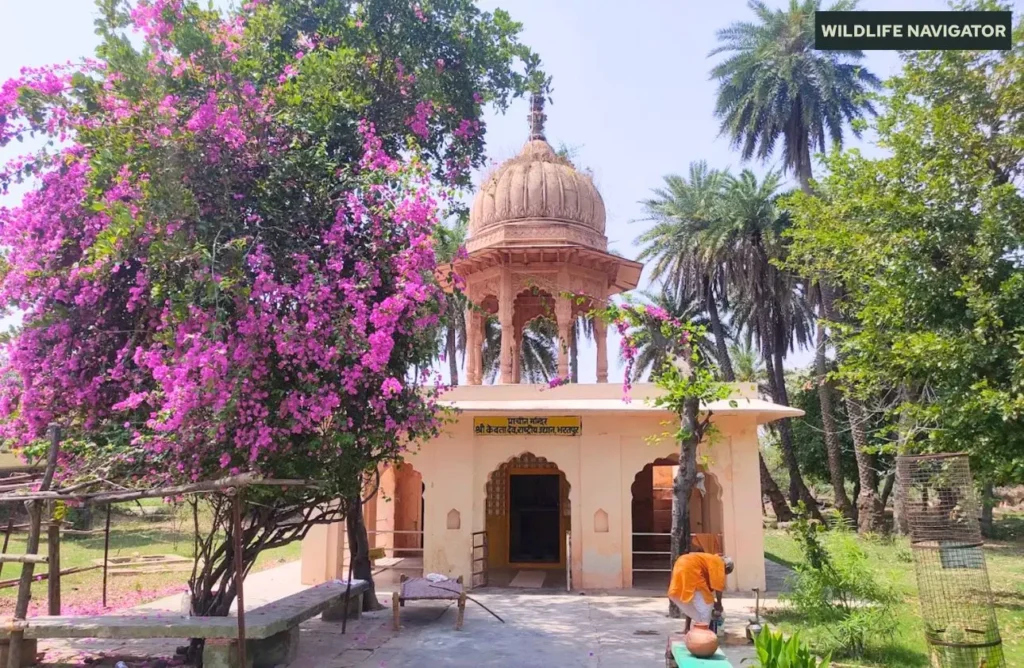
- The Keoladeo Temple, from which the park derives its name, stands surrounded by ancient Kadamb (Neolamarckia cadamba) trees, adding cultural and ecological significance.
- Over 370 plant species have been identified, representing both terrestrial and aquatic ecosystems.
- Seasonal variation dramatically alters the park’s landscape — lush green during monsoon, golden in winter.
- Native plants play a key role in supporting the food chain, from insects and fish to birds and mammals.
Keoladeo’s flora forms the living foundation of this dynamic wetland — every tree, reed, and grass blade contributing to an intricate ecological web that sustains thousands of migratory birds each year.
Fauna of Keoladeo National Park
Keoladeo National Park is one of the richest bird habitats in the world, home to a dazzling diversity of wildlife that thrives within its wetlands, woodlands, and grasslands. Despite its compact area, the park shelters over 370 bird species, 50 fish species, 13 snake species, 7 turtle species, and a variety of mammals and amphibians — making it an ecological hotspot of northern India.
Major Mammals Found
While the park is most famous for its birds, it also sustains a healthy population of herbivores and small predators.
- Nilgai (Blue Bull) – The largest antelope in India, often seen grazing in open grasslands.
- Sambar and Chital Deer – Commonly spotted along the wetland edges.
- Wild Boar – Found foraging in the forested areas and marshes.
- Golden Jackal – Frequently seen near water bodies, scavenging or hunting small prey.
- Asian Palm Civet, Fishing Cat, and Indian Mongoose – Elusive species that thrive in the dense thickets and reed beds.
Birdlife
Keoladeo’s true magic lies in its avifauna. The park hosts both resident and migratory birds, some arriving from as far as Siberia, Mongolia, and Europe during winter.
- Waterbirds – Painted Stork, Open-billed Stork, White Ibis, and Eurasian Spoonbill.
- Migratory Species – Bar-headed Goose, Northern Pintail, Gadwall, and the rare Siberian Crane (historic visitor).
- Waders and Shorebirds – Common Sandpiper, Red-wattled Lapwing, and Black-tailed Godwit.
- Birds of Prey – Marsh Harrier, Crested Serpent Eagle, and Shikra.
- Forest and Grassland Birds – Indian Roller, Rufous Treepie, Coppersmith Barbet, and various woodpeckers.
Reptiles and Smaller Species
- The park is home to the Indian Python, Monitor Lizard, and Flapshell Turtle.
- Frogs, toads, and numerous insects thrive during the monsoon season, providing food for fish and birds.
- Several species of butterflies and dragonflies add colour and vibrancy to the wetlands.
Keoladeo’s fauna is a living showcase of nature’s interdependence — where every species, from the smallest insect to the tallest crane, contributes to the intricate balance of this wetland ecosystem.
Trekking and Exploration
Exploring Keoladeo National Park is a sensory experience — the calls of migratory birds, rustling reeds, and reflections on still waters create a world unlike any other. The park is designed for eco-friendly exploration, allowing visitors to move through its wetlands without disturbing the wildlife. Whether on foot, by cycle, or in a rickshaw guided by local naturalists, every route reveals a different rhythm of this living sanctuary.
Access Points
- The main entrance is the Bharatpur Gate, located about 2 km from Bharatpur city.
- Bharatpur is well-connected by road and rail to major cities:
- Agra – 55 km, Jaipur – 185 km, Delhi – 180 km.
- The nearest airport is Agra Airport, while Jaipur International Airport serves as the major gateway for international travellers.
Popular Trekking Routes
While the park is relatively flat, it offers well-marked trails ideal for walking, cycling, or rickshaw safaris.
- Central Trail (Main Wetland Loop) – Passes through major wetlands such as Sapan Mori, Kadamb Tank, and the Keoladeo Temple area.
- Siberian Route – A scenic stretch often frequented by migratory waterfowl during winter.
- Circular Track – Perfect for cycling, offering panoramic views of marshlands and woodland patches.
- Photography Trail – Preferred by photographers for early morning and sunset shots of birds in flight.
Trekking Guidelines
- Entry is allowed from sunrise to sunset; early mornings offer the best birdwatching opportunities.
- Silent observation is key — noise disturbs nesting and feeding birds.
- Plastic-free zone – visitors must carry back all waste.
- Hiring a trained local guide or rickshaw guide enhances the experience, as many are expert bird spotters.
- Carry binoculars, a field guide, and a refillable water bottle for a comfortable visit.
Adventure Meets Conservation
Keoladeo’s exploration is not just a leisure activity — it’s an education in conservation. Every visitor contributes to sustaining the park’s ecosystem by supporting eco-tourism and local livelihoods. Watching a pair of cranes dance in the golden light or a stork feed its young reminds travellers that true adventure often lies in patience, observation, and respect for the wild.
Nearby Attractions
Keoladeo National Park’s location in Bharatpur, Rajasthan, makes it a perfect base for exploring nearby cultural landmarks, architectural marvels, and other natural wonders. Within a few hours’ journey, travellers can discover ancient forts, spiritual sites, and wildlife sanctuaries — creating a diverse and enriching itinerary that blends nature, history, and heritage.
Deeg Palace (34 km)
- A magnificent 18th-century palace complex, once the summer retreat of the Bharatpur rulers.
- Known for its Rajput-Mughal architecture, fountains, and landscaped gardens.
- Best visited during the monsoon season, when the water palaces and pavilions come alive.
Lohagarh Fort (5 km)
- Meaning “Iron Fort,” this structure in Bharatpur city is famed for its impregnable design and historic battles against the British.
- The fort houses ancient temples, museums, and viewpoints offering glimpses of the old city.
Sariska Tiger Reserve (130 km)
- Located in the Alwar district, this dry deciduous forest is home to Royal Bengal Tigers, leopards, and various birds.
- Offers a contrasting experience to Keoladeo’s wetlands — perfect for wildlife enthusiasts seeking variety.
Fatehpur Sikri (22 km)
- A UNESCO World Heritage Site, once the capital of Emperor Akbar.
- Famous for architectural gems like the Buland Darwaza and Jama Masjid.
- Ideal for a day trip combined with a visit to Keoladeo.
Taj Mahal, Agra (55 km)
- One of the Seven Wonders of the World, this marble masterpiece on the banks of the Yamuna River needs no introduction.
- Early morning or sunset visits are recommended for the best light and fewer crowds.
Mathura and Vrindavan (65–70 km)
- Sacred twin cities associated with Lord Krishna’s birth and childhood.
- Known for their colourful temples, ghats, and festive celebrations like Holi and Janmashtami.
Together, these destinations create a unique Golden Triangle of Culture and Nature — where visitors can experience royal heritage, spiritual devotion, and rich biodiversity within a short radius of Bharatpur.
Accommodation Options
Visitors to Keoladeo National Park will find a wide range of accommodation options catering to different travel styles — from heritage hotels and eco-lodges to modest guesthouses run by local families. Most stays are located in Bharatpur town, just a few minutes from the park’s main entrance, allowing easy access for early-morning birdwatching or late-evening photography sessions.
Bharatpur Town Stays
The town surrounding the park offers several comfortable and eco-conscious lodges:
- The Bagh Resort – A luxury heritage resort surrounded by landscaped gardens and traditional architecture, ideal for travellers seeking comfort and tranquillity.
- Hotel Sunbird – A popular mid-range choice known for its friendly service, clean rooms, and proximity to the park gate.
- Iora Guesthouse – A cozy, budget-friendly homestay option with personalized hospitality and home-cooked meals.
Forest Rest Houses
For a more immersive experience, visitors can stay at government-managed forest rest houses, located close to or within the park’s boundary:
- Shanti Kutir Rest House – Offers simple yet scenic accommodation near the park’s core area.
- Keoladeo Forest Lodge (ITDC) – Situated near the entrance, this heritage lodge provides colonial-style rooms amid nature.
Note: These need to be booked in advance through the Rajasthan Forest Department.
Eco-Lodges and Homestays
Several sustainable stays have emerged in recent years, focusing on eco-tourism and community support:
- Kadamb Jungle Camp – A rustic lodge built in harmony with its surroundings, promoting bird conservation.
- Spoonbill Guesthouse – Run by a local birding family, offering guided tours and authentic Rajasthani meals.
- Regal Village Homestays – Provide cultural experiences, traditional cuisine, and insight into local life.
Whether you prefer a luxurious resort, a heritage bungalow, or a humble homestay, Bharatpur’s accommodation scene blends comfort with conservation — ensuring that every traveller contributes to the park’s sustainable tourism ecosystem.
Conclusion
Keoladeo National Park is more than just a bird sanctuary — it is a living, breathing ecosystem that tells the story of how nature and humanity can coexist in balance. What was once a royal hunting ground has transformed into one of the world’s most celebrated wetlands, recognised globally for its biodiversity and conservation success.
Every visit to Keoladeo is a lesson in patience and observation. As you walk or cycle through its misty trails at dawn, the symphony of bird calls, the sight of cranes dancing in shallow waters, and the tranquil reflection of acacias on the ponds create an atmosphere of pure serenity. Beyond its beauty, the park plays a vital ecological role — acting as a natural flood buffer, groundwater recharge zone, and a sanctuary for countless migratory and resident species.
For travellers, Keoladeo offers more than photography opportunities or birdwatching checklists; it offers perspective. It reminds us of the fragility of wetlands and the importance of protecting them for future generations. Whether you’re a birder, wildlife enthusiast, or simply a seeker of calm in nature, Keoladeo National Park stands as a timeless reminder of the wild heart that still beats within India’s landscapes.