Kasu Brahmananda Reddy National Park: Hyderabad’s Urban Wildlife Sanctuary

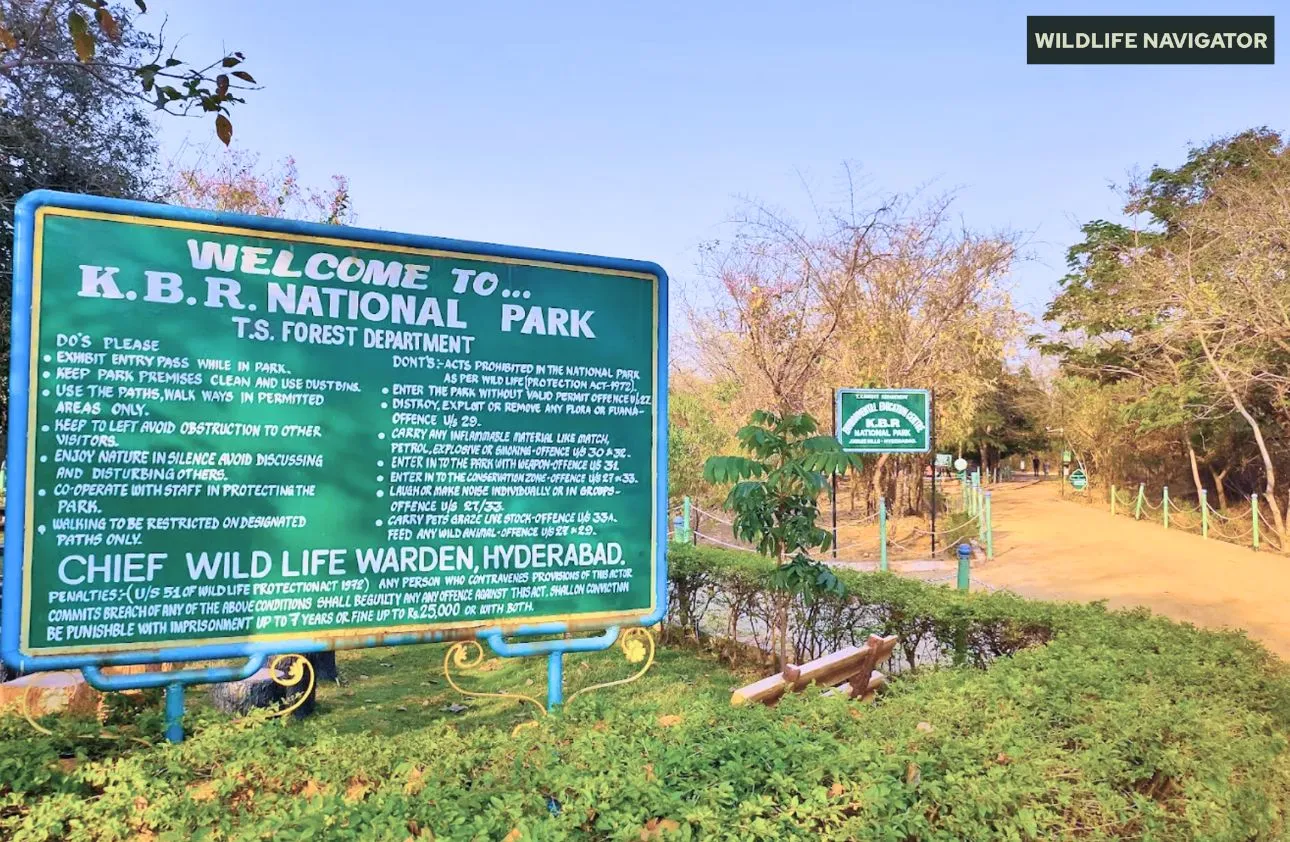
Kasu Brahmananda Reddy National Park (KBR National Park). Spread across approximately 390 acres, this lush green oasis offers a serene escape from city life while preserving an astonishing variety of flora and fauna within its boundaries. It stands as a living reminder that even in a rapidly expanding metropolis, nature can flourish when given space and protection.
KBR National Park is not just a natural retreat; it is a harmonious blend of ecology, history, and culture. Once the private property of the Nizam of Hyderabad, the area today shelters diverse ecosystems, scenic walking trails, and the elegant Chiran Palace, which lends historical charm to its wilderness. Locals and travellers alike flock here for morning walks, birdwatching, and quiet contemplation, making it one of Hyderabad’s most beloved green lungs.
More than a park, KBR is a symbol of balance — between man and nature, tradition and modernity. It showcases how thoughtful conservation can coexist with urban development, offering both ecological value and a peaceful refuge for those seeking a breath of fresh air in the city.
Geography and Landscape
Location and Setting
Kasu Brahmananda Reddy National Park is located right in the heart of Hyderabad, Telangana, surrounded by the upscale neighbourhoods of Jubilee Hills and Banjara Hills. Covering around 390 acres (approximately 156 hectares), the park forms an essential ecological zone in the midst of an urban sprawl. Despite being enveloped by bustling roads and modern architecture, KBR Park remains a tranquil refuge — a living example of urban biodiversity conservation.
The park also encompasses the Chiran Palace complex, once a royal estate of the Nizam’s family, blending architectural grandeur with natural beauty. Its strategic location makes it easily accessible to residents, tourists, and nature enthusiasts seeking a green escape within city limits.
Topography and Elevation
Situated on the Deccan Plateau, KBR National Park showcases the region’s characteristic landscape — undulating terrain, granite boulders, rocky outcrops, and patches of dry deciduous forest. The soil is predominantly red and loamy, supporting hardy vegetation adapted to arid conditions.
Scattered rock formations create natural shelters for small mammals, reptiles, and birds, while the park’s trails wind through mixed scrub and woodland, offering a scenic and slightly rugged terrain ideal for nature walks and exploration.
Climate and Seasons
The park experiences a typical Deccan climate, marked by:
- Hot summers (March–June): Temperatures can soar above 40°C, though the tree cover provides cooling shade.
- Monsoon (July–September): Moderate rainfall rejuvenates the landscape, transforming it into a lush green canopy.
- Pleasant winters (October–February): The most comfortable and visually appealing season, with mild temperatures and clear skies — perfect for outdoor activities and wildlife observation.
Throughout the year, the park offers a different visual and ecological experience — from dry golden hues in summer to vibrant greenery post-monsoon, making every visit distinct and rewarding.
Visual Appeal and Scenic Highlights
Kasu Brahmananda Reddy National Park’s charm lies in its ability to merge natural serenity with royal heritage. As soon as visitors step through its gates, the contrast between Hyderabad’s busy streets and the calm of the park is striking. Tall trees line the walking paths, sunlight filters through the canopy, and the air feels cooler — a refreshing change from the city’s urban rush.
The park features well-maintained walking and jogging trails that meander through thick foliage, rocky slopes, and open clearings. Early mornings are especially magical, with mist-laden paths, birdsong echoing from treetops, and soft golden light painting the forest floor. Throughout the day, fitness enthusiasts, photographers, and families share the trails harmoniously, each finding their own connection with the space.
At the heart of the park lies the historic Chiran Palace, once the residence of the sixth Nizam’s son, Prince Mukarram Jah. The palace’s regal architecture, surrounded by age-old banyans and flowering trees, adds a touch of grandeur to the park’s natural landscape. From certain points, visitors can spot the contrast of heritage structures framed by greenery, symbolising Hyderabad’s unique blend of modernity and tradition.
Scenic viewpoints and resting spots offer glimpses of peacocks displaying their plumage, monkeys swinging playfully across branches, and seasonal wildflowers in bloom. Every element — from the whispering leaves to the sound of distant temple bells — contributes to the park’s tranquil, almost meditative atmosphere.
History and Recognition
Early Background
The land that now forms Kasu Brahmananda Reddy National Park once belonged to the Nizam of Hyderabad, serving as part of his royal estate and hunting grounds. Known as the Chiran Palace complex, it was gifted to Prince Mukarram Jah in the 1960s. The estate was a blend of cultivated gardens, orchards, and natural forest — a reflection of Hyderabad’s royal heritage intertwined with its ecological wealth.
Over the years, as the city expanded rapidly, the palace grounds became one of the last remaining patches of dense greenery within urban Hyderabad. Recognising its ecological and cultural value, conservationists and local citizens advocated for its protection from urban development.
Formation of the National Park
In 1998, the Government of Andhra Pradesh declared the area as Kasu Brahmananda Reddy National Park, named in honour of Kasu Brahmananda Reddy, a former Chief Minister of Andhra Pradesh and an influential political figure known for his progressive policies. The establishment of the park aimed to conserve Hyderabad’s urban biodiversity and create a sustainable green space for recreation, education, and research.
The Telangana Forest Department now manages the park, ensuring the preservation of its natural ecosystems, historical structures, and the delicate balance between wildlife and human activity.
Conservation Milestone
KBR National Park stands as a model of urban conservation in India. Despite being encircled by dense residential zones and commercial hubs, it continues to sustain a thriving population of native flora and fauna. Regular reforestation, anti-encroachment drives, and awareness programs have helped maintain its ecological integrity.
The park also plays a vital role as an environmental education hub, inspiring schools, nature groups, and citizens to understand the importance of urban green spaces. It remains a symbol of Hyderabad’s commitment to preserving its natural heritage amid modernisation.
Flora of Kasu Brahmananda Reddy National Park
Kasu Brahmananda Reddy National Park is a vibrant showcase of the southern tropical dry deciduous forest ecosystem, typical of the Deccan Plateau. Despite its location in the midst of Hyderabad’s urban sprawl, the park supports a remarkably rich and self-sustaining vegetation structure — from towering native trees to dense undergrowth and seasonal shrubs.
The vegetation is drought-resistant and adaptive, thriving on the park’s rocky terrain and limited rainfall. The diversity of plant species not only stabilises the soil and moderates temperature but also provides shelter and food for a wide range of wildlife. During the monsoon, the dry forest bursts into colour — trees flush green, wildflowers bloom across the forest floor, and the air becomes fragrant with natural aromas.
Below are some of the notable plant species found in the park:
Prominent Tree Species
- Teak (Tectona grandis) – A dominant tree species, valued for its hard wood and ecological importance.
- Neem (Azadirachta indica) – Commonly seen throughout the park; its dense canopy offers shade and purifies the air.
- Flame of the Forest (Butea monosperma) – Known for its fiery orange-red blossoms in spring.
- Sandalwood (Santalum album) – A prized species found sporadically within the park.
- Tamarind (Tamarindus indica) – A hardy native tree often attracting birds and fruit bats.
- Indian Rosewood (Dalbergia latifolia) – A deciduous tree providing rich habitat for insects and birds.
- Ficus species (Ficus benghalensis, Ficus religiosa) – Host trees for many bird and insect species.
Shrubs, Herbs, and Grasses
- Lantana (Lantana camara) – Common but invasive shrub, forming dense thickets.
- Cassia (Senna auriculata) – Bright yellow flowers that attract pollinators.
- Aloe vera and Calotropis gigantea – Xerophytic plants adapted to the dry conditions.
- Lemongrass and Cymbopogon species – Found along open trails, releasing a refreshing aroma.
Seasonal and Ornamental Plants
- Gulmohar (Delonix regia) – Adds vibrant colour to summer landscapes.
- Jacaranda (Jacaranda mimosifolia) – Recognised for its purple blooms.
- Bougainvillea – Common near walkways, enhancing the park’s visual beauty.
These trees and plants form multiple forest layers — canopy, understory, and ground vegetation — providing nesting, feeding, and sheltering opportunities for hundreds of wildlife species. The floral diversity also ensures the park remains a pollinator haven, attracting butterflies, bees, and birds throughout the year.
Fauna of Kasu Brahmananda Reddy National Park
Despite being located in the heart of Hyderabad, Kasu Brahmananda Reddy National Park supports an impressive array of wildlife, making it one of India’s most vibrant examples of urban biodiversity. The park’s mix of dry deciduous forest, scrubland, and open grass patches creates diverse habitats for mammals, reptiles, amphibians, and a thriving bird population.
The fauna here have adapted remarkably to the city’s surroundings — living in harmony with human visitors who frequent the park for walks and recreation. Each dawn, the forest echoes with bird calls, the rustling of leaves, and the soft movement of animals beginning their daily routines.
Mammals
KBR Park is home to several small and medium-sized mammals typical of the Deccan region. While large predators are absent, the mammal population reflects a healthy ecological balance.
Commonly sighted species include:
- Spotted Deer (Axis axis) – Often seen grazing in open meadows and near walking trails.
- Indian Palm Civet (Paradoxurus hermaphroditus) – Nocturnal and shy, found among dense foliage.
- Small Indian Mongoose (Herpestes auropunctatus) – Commonly seen darting across paths in search of insects and small prey.
- Indian Hare (Lepus nigricollis) – Found in grassy clearings.
- Five-striped Palm Squirrel (Funambulus pennantii) – Ubiquitous and active throughout the day.
- Indian Pangolin (Manis crassicaudata) – Rarely seen, but reported from forest interiors.
- Fruit Bats – Roosting in tall trees, especially near fruiting Ficus species.
Birds
Birdlife is one of the park’s major attractions. Over 100 species of resident and migratory birds have been recorded here, making it a paradise for birdwatchers and photographers.
Commonly seen bird species include:
- Indian Peafowl (Pavo cristatus) – The park’s most majestic resident, often displaying its plumage during the monsoon.
- Rose-ringed Parakeet (Psittacula krameri)
- White-browed Bulbul (Pycnonotus luteolus)
- Asian Koel (Eudynamys scolopaceus)
- Purple Sunbird (Cinnyris asiaticus)
- Black Drongo (Dicrurus macrocercus)
- Shikra (Accipiter badius) – A small raptor often seen gliding above the canopy.
- Spotted Dove (Spilopelia chinensis)
- Coppersmith Barbet (Psilopogon haemacephalus)
- Indian Roller (Coracias benghalensis) – Telangana’s state bird, adding color to the skies.
During early mornings and post-monsoon months, the park comes alive with bird calls, offering some of the best urban birdwatching experiences in southern India.
Reptiles and Amphibians
The park’s rocky terrain and warm climate create favourable conditions for a variety of reptiles and amphibians.
Commonly found species include:
- Monitor Lizard (Varanus bengalensis)
- Rat Snake (Ptyas mucosa)
- Indian Cobra (Naja naja)
- Garden Lizard (Calotes versicolor)
- Geckos and Skinks near stone walls and fallen logs.
- Frogs and Toads emerge during the monsoon season around moist zones.
Insects and Butterflies
The floral diversity supports an abundant population of butterflies, bees, and other pollinators.
Common butterflies include:
- Common Mormon
- Lemon Pansy
- Plain Tiger
- Common Crow
- Blue Tiger
These colourful visitors add vibrancy to the park’s already lively ecosystem.
In essence, KBR National Park is a self-sustaining wildlife enclave within city limits, demonstrating how careful conservation can preserve biodiversity even in urban environments.
Best Time to Visit Kasu Brahmananda Reddy National Park
The best time to visit Kasu Brahmananda Reddy National Park is from October to February, when Hyderabad’s weather turns pleasantly cool and the park bursts with greenery after the monsoon. During this period, the trees are lush, flowers bloom vibrantly, and bird activity peaks — making it ideal for morning walks, photography, and wildlife spotting.
Ideal Visiting Periods:
- Winter (Oct–Feb): Cool, green, and best for birdwatching and walks.
- Monsoon (Jul–Sep): Lush vegetation and scenic charm.
- Summer (Mar–Jun): Dry but manageable in early hours; fewer visitors.
Visitor Information
- Timings: 5:00 AM – 10:00 AM & 4:00 PM – 7:00 PM (closed mid-day)
- Entry Fee: Nominal charge for maintenance (varies by age and activity)
- Accessibility: Centrally located; easily reachable from Jubilee Hills, Banjara Hills, and Road No. 2.
- Facilities: Drinking water points, seating areas, and restrooms are available near entry gates.
How to Reach Kasu Brahmananda Reddy National Park
Kasu Brahmananda Reddy (KBR) National Park is centrally located in Hyderabad, making it easily accessible by road, metro, and public transport. Here’s a detailed guide:
By Road / Car / Taxi
- The park is situated near Jubilee Hills and Banjara Hills.
- Exact Address: KBR National Park, Jubilee Hills Road No. 31, Hyderabad, Telangana 500033.
- Private cars, taxis, and app-based cabs (Ola, Uber) can reach the park easily.
- Parking is available near the entrance.
By Public Transport
- Bus: TSRTC buses connect nearby neighbourhoods like Jubilee Hills, Banjara Hills, and Panjagutta.
- Metro: The closest metro station is Jubilee Hills Check Post. From there, a short cab or auto-rickshaw ride will take you to the park.
By Air
- The nearest airport is Rajiv Gandhi International Airport (Hyderabad), about 35 km away.
- From the airport, take a taxi or app-based cab; it takes roughly 50–60 minutes, depending on traffic.
Tips for Visiting
- Enter the park early in the morning for cooler weather and active wildlife sightings.
- Wear comfortable shoes for walking trails and bring water, sunscreen, and a hat.
- Follow park guidelines: no littering, no loud music, and avoid feeding wildlife.
Conservation and Community Role
Kasu Brahmananda Reddy National Park serves as a vital ecological and social asset in urban Hyderabad, demonstrating how cities can harmonise development with nature conservation. The park’s management is overseen by the Telangana Forest Department, which ensures protection of its flora, fauna, and historical structures.
Urban Conservation Efforts
- Reforestation and Planting Drives: Native trees are planted regularly to maintain forest cover and support wildlife habitats.
- Anti-Encroachment Measures: Efforts to prevent unauthorised construction and protect green space from urban sprawl.
- Habitat Restoration: Rocky outcrops, ponds, and scrub areas are maintained to provide shelter for mammals, reptiles, and birds.
Community Participation
Local residents and nature enthusiasts actively contribute through:
- Eco-awareness Programs: Educational walks, workshops, and nature talks for students and visitors.
- Volunteering Activities: Tree planting, clean-up drives, and monitoring biodiversity.
- Citizen Science Initiatives: Recording bird species, butterfly counts, and wildlife sightings to aid park management.
Significance
By safeguarding KBR National Park, the community ensures that Hyderabad continues to have a green lung, a refuge for urban wildlife, and a natural space for recreation and learning. The park exemplifies how collective responsibility between authorities and citizens can sustain biodiversity even within a bustling city.
Conclusion
Kasu Brahmananda Reddy National Park stands as a green jewel in the heart of Hyderabad, offering a rare glimpse of thriving nature amidst urban life. Its blend of rich biodiversity, scenic landscapes, and historical heritage makes it more than just a park — it is a symbol of the city’s commitment to conserving its natural and cultural legacy.
Visitors to KBR Park experience the harmony of trees, birds, mammals, and historical structures, all coexisting within a bustling metropolis. It demonstrates that even in rapidly growing cities, thoughtful conservation can preserve ecological balance and provide spaces for recreation, education, and wellness.
By visiting responsibly and supporting conservation initiatives, every visitor contributes to maintaining the park’s vital role as an urban sanctuary, ensuring that Hyderabad’s residents and wildlife alike continue to enjoy its serene landscapes for generations to come.
Frequently Asked Questions (FAQ) – Kasu Brahmananda Reddy National Park
1. What is Kasu Brahmananda Reddy National Park known for?
It is known as an urban wildlife sanctuary in Hyderabad, home to diverse flora and fauna, scenic walking trails, and the historic Chiran Palace. It’s also one of the city’s green lungs, providing a peaceful escape from urban life.
2. Where is KBR National Park located?
The park is located in Jubilee Hills, Hyderabad, Telangana, covering around 390 acres near Banjara Hills.
3. What are the best times to visit KBR National Park?
The best time to visit is from October to February, during winter, when the weather is cool and greenery is at its peak. Early mornings and late afternoons offer the best experience for walks and wildlife spotting.
4. What wildlife can be seen at KBR National Park?
Visitors can spot:
- Mammals: Spotted deer, Indian palm civet, mongoose, squirrels.
- Birds: Peafowl, parakeets, koels, sunbirds, drongos.
- Reptiles: Monitor lizards, snakes, geckos.
- Insects: Butterflies and bees.
5. How can I reach KBR National Park?
- By Road: Via Jubilee Hills/Banjara Hills; taxis, cabs, or private cars are convenient.
- By Public Transport: TSRTC buses or nearest metro station at Jubilee Hills Check Post.
- By Air: About 35 km from Rajiv Gandhi International Airport.
6. Is there an entry fee?
Yes, a nominal entry fee is charged, which helps maintain the park and its facilities. Charges may vary for adults, children, and guided tours.
7. Are pets allowed inside the park?
No, pets are not permitted to protect the wildlife and maintain the park’s ecological balance.
8. What facilities are available for visitors?
Facilities include walking/jogging trails, benches, restrooms, drinking water points, and shaded areas for relaxation.